Overview
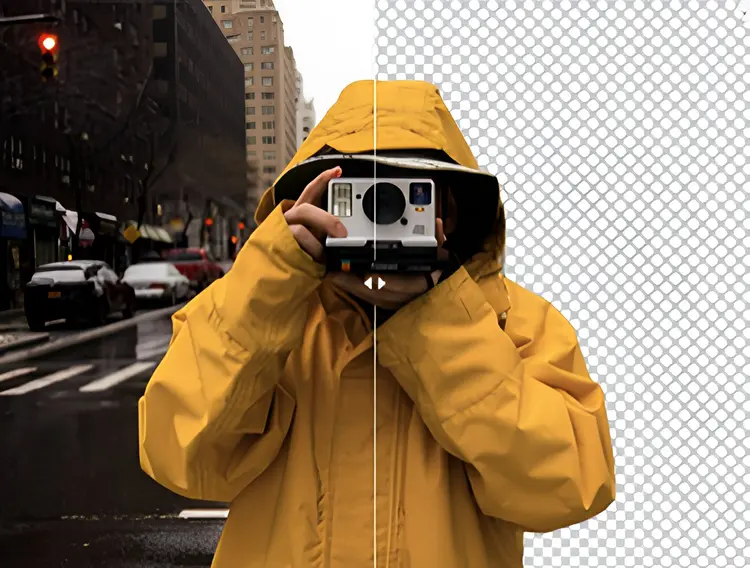
Video Erase Object removes unwanted people, objects, or visual elements from video footage without leaving visible traces or flickering artifacts. If you have ever filmed a scene only to notice a distracting passerby, an accidental prop, or a logo you cannot license, this tool handles the cleanup frame by frame. On Picasso IA, you upload your video alongside a mask clip that marks what to remove, and the model fills the gap with background that matches the surrounding motion and texture. The result holds up across the full clip, with no jump cuts, no color inconsistency, and audio kept intact if you choose.
How It Works
- Upload your original video file and a matching mask video that defines the region to erase (the mask uses white to mark what should be removed, black for everything to keep).
- Toggle auto-trim on if your clip is longer than 5 seconds and you only need the first portion; otherwise trim your clip to under 5 seconds before uploading.
- Choose your output format from MP4 (H.264 or H.265), WebM VP9, MOV, MKV, or GIF depending on where you plan to use the result.
- Decide whether to keep the original audio track in the final file.
- Hit generate. The model processes the clip frame by frame, filling each erased region with consistent background drawn from the surrounding footage.
Frequently Asked Questions
Do I need programming skills or technical knowledge to use this?
No, just open Video Erase Object on Picasso IA, adjust the settings you want, and hit generate.
What is a mask video and how do I create one?
A mask video is a black-and-white clip the same length as your source video, where white areas mark what should be removed. You can create one in any video editor that supports per-frame painting or rotoscoping, or draw a static white shape if the object does not move across the scene.
How long can my video be?
Videos must be 5 seconds or shorter. If your clip is longer, enable auto-trim to process only the first 5 seconds, or trim it yourself before uploading.
What output formats are available?
You can export as MP4 (H.264 or H.265), WebM VP9, MOV (H.265 or ProRes KS), MKV (H.264, H.265, or VP9), or GIF. MP4 H.264 is the default and works in virtually every player and editor.
Will the audio from my original video be affected?
No. The original audio is preserved by default. If you want a silent output, toggle audio preservation off before you generate.
What if the erased area is large or the background is complex?
The model is built for temporal consistency, tracking background patterns across frames rather than filling each one in isolation. Results are strongest when the background behind the erased region is relatively uniform. For busy or complex scenes, processing the clip in shorter segments can improve output quality.
Can I use the output files commercially?
Yes. Picasso IA does not add watermarks or place restrictions on the files you generate, so you can use them in client work, social content, or any other project.