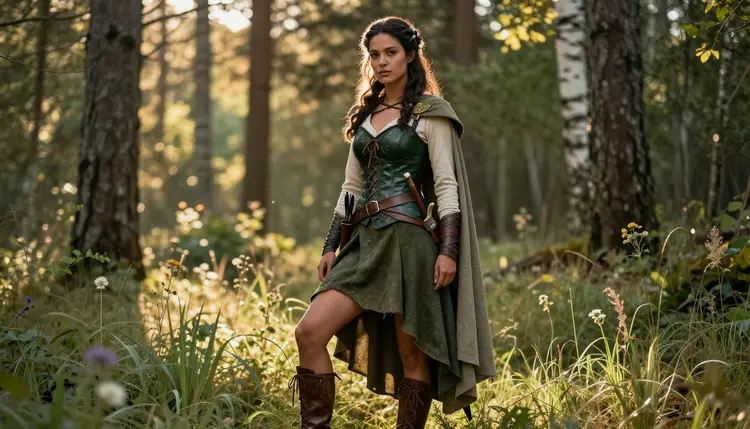
Every fandom has an archetype its fans keep coming back to: the armored queen who leads a charge, the countess who commands a candlelit hall, the caped figure who watches a city from a rooftop. The trouble is that generating the actual character from that franchise runs into two separate problems at once, a filtered model that refuses the prompt outright, and a result that legally belongs to someone else's intellectual property no matter how good it looks.
Picasso IA's toolkit makes it just as easy, and a great deal safer, to build an original character who carries the same archetype without borrowing anyone else's name, face, or costume design. This page walks through doing that with Recraft V4.1 Pro, one of six models on Picasso IA confirmed to generate mature and suggestive content directly, with no content filter standing between a costume prompt and the finished image. Five steps to build the character, six costume archetypes to start from, and the rules every one of them has to follow.
Every image below is that idea in practice: an original design, built from a written description rather than a franchise name, generated with Recraft V4.1 Pro at no filter and no compromise on detail.
Typing a specific character's name into a prompt does two things at once, and neither is what most people actually want. First, if the character is even mildly suggestive in the source material, a filtered model reads the name itself as a flag and refuses the prompt before it gets anywhere near the costume description. Second, and more permanently, the output stays legally tied to whoever owns that character, not to the person who typed the prompt, which matters the moment anyone wants to post it, sell it, or print it on anything.
An original, fan-inspired character sidesteps both problems in one move. Instead of naming a character, describe the archetype: the armor style, the silhouette, the color story, the pose a fan of that kind of character would recognize instantly, without a single word that points back to a specific owned property. The result reads as exactly the kind of design that made the trope popular in the first place, and it belongs to whoever generated it.
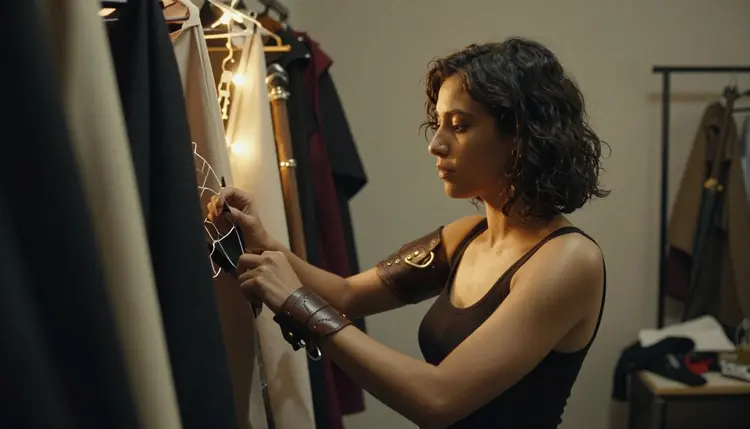
The shot above is a good starting point for thinking about a fan-inspired character before a single full-body image gets generated, a costume built from real materials, adjusted like it would be backstage before a shoot, not lifted from a reference picture of someone else's character. That level of intent, deciding what the leather looks like and how it closes rather than asking a model to imitate a known design, is what separates an original character from a reskinned copy.
Most of the more than 488 models in the Picasso IA catalog apply a content filter, and a costume built around laced leather, a fitted bodice, or a cropped jacket reads as mature enough to trip it, original character or not. When that happens, the app shows a message that the model does not support the content and offers to carry the prompt over to one that will actually run it, so nothing typed gets lost.
Recraft V4.1 Pro is one of six models on Picasso IA confirmed to skip that filter entirely. It shares that status with Seedream 4.5 and Qwen Image 2, both strong photographic and multi-detail options for the same kind of prompt, Picasso Image Editor Pro for touching up a generated image afterward, and Picasso Video and LTX 2.3 Pro for turning a finished character into a short video. Recraft V4.1 Pro's own strength is illustration and stylized rendering, which suits a costume-driven original character particularly well: it follows a detailed material and construction description closely instead of smoothing everything into one generic look.
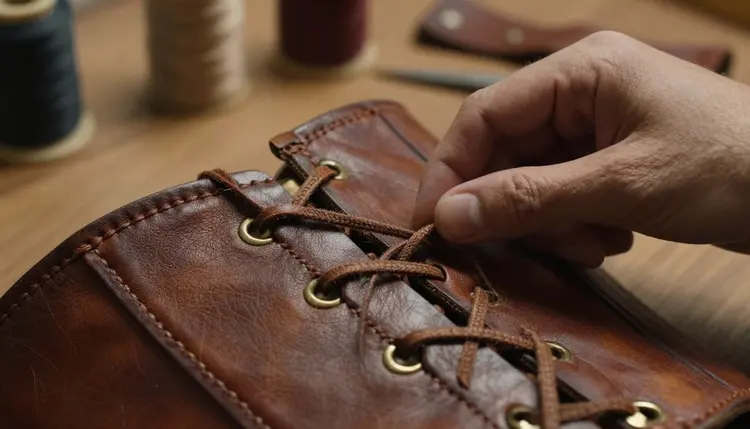
The close-up above is the kind of detail a filtered model tends to refuse before it ever gets rendered, laced leather, stitched seams, a bodice built like a real costume rather than a flat texture. Recraft V4.1 Pro renders it because the prompt is a construction description, not a request the model reads as a flag to block.
Building a fan-inspired original character is mostly a naming discipline: describe the trope, never the trademark, and keep the same wording every time that character comes back. Five steps get from a blank prompt box to a finished, reusable character.
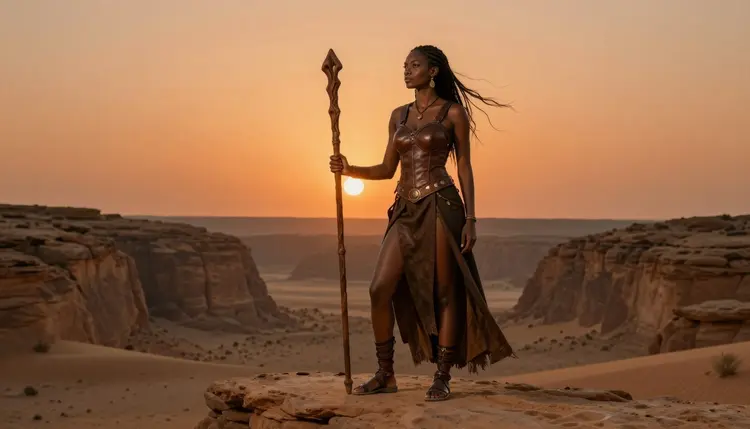
The warrior-queen character above is the kind of result these five steps are built to produce, recognizable as an archetype, original in every specific detail.
- Pick an Archetype, Not a Character. Choose the trope you actually want, a warrior queen, a gothic countess, a rooftop vigilante, instead of a specific name from a show or game, so nothing in the prompt points back to intellectual property that is not yours to use.
- Write an Original Costume Description. Describe the materials, silhouette, and color palette in your own words, weathered leather pauldrons over a fitted underlayer, rather than naming a franchise's signature look, so the design is genuinely new instead of a reskin.
- Open Recraft V4.1 Pro in the Toolkit. Select it before writing the prompt so the first generation actually renders in one pass instead of bouncing to a filtered model and losing the attempt.
- Generate and Check Against the Archetype, Not a Copy. Look at the result and confirm it reads as its own design; if any detail leans too close to a specific existing character, adjust the wording and generate again.
- Lock the Description and Reuse It Every Time. Once the face, costume, and color palette read as one consistent character, keep that exact wording for every future image of her, so a whole set stays recognizably the same person.
The character above already covers one of the six archetypes this guide works with, the warrior queen, armored, weathered, built for a front line rather than a throne room. The other five follow the same rule, an original design built around a trope, never a specific owned character.
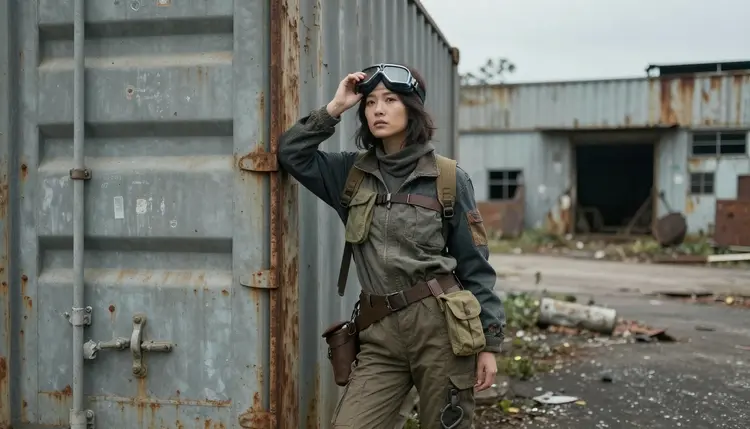
The scavenger-adventurer above trades armor plating for a practical, worn-in look, a fitted jacket, strapped gear, the kind of costume that reads as lived in rather than ceremonial. It is a favorite for anyone who wants a character that looks like she has actually been somewhere.
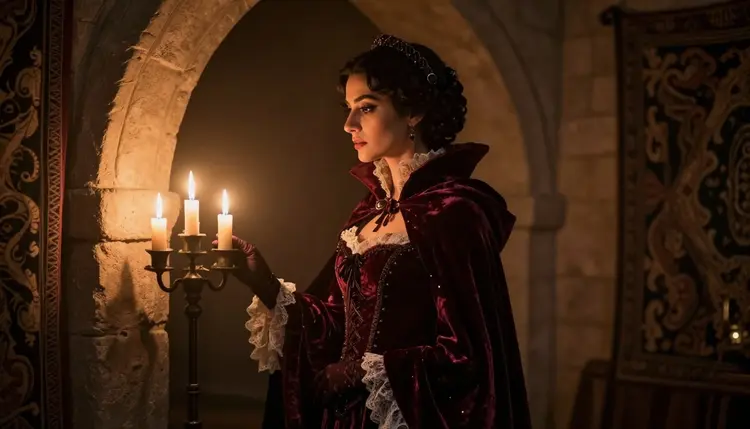
The gothic countess shifts the mood entirely, velvet and lace instead of leather, a candlelit hall instead of open desert. The archetype is instantly familiar to anyone who likes dark romantic fiction, and nothing about the prompt behind it names a single existing character to get there.
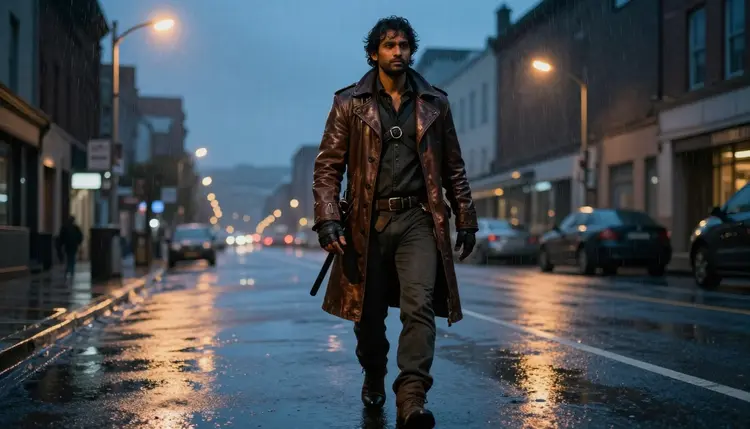
A leather duster rogue on a rain-slicked street is proof this approach works just as well for a male original character as it does for a female one. The costume language, worn leather, a long coat, low light, does all the work of establishing the archetype without a single proper noun.
An original character only stays recognizable across several images if the description stays exactly the same every time it is used. That means naming materials and colors precisely, oiled brown leather rather than just jacket, and never letting a detail drift between one generation and the next just because it seemed obvious the first time.
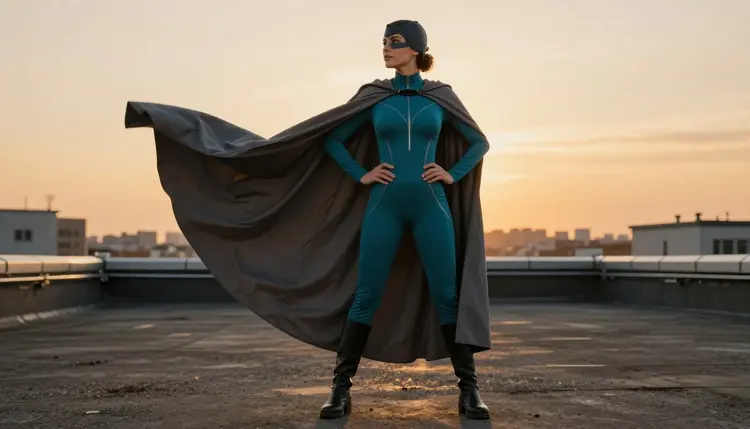
The caped-vigilante above is the fifth archetype in this set, built the same way as the rest, a silhouette and a cape treatment described from scratch rather than borrowed from a specific hero. Generating the full set of poses for a character like this in one sitting, rather than returning to it weeks later, is the single biggest thing that keeps the cape, the boots, and the color story identical from one image to the next.
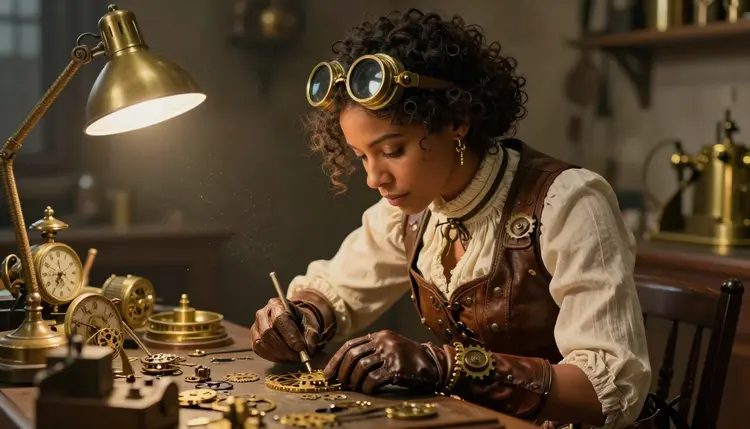
The steampunk inventor closes out the set of six archetypes, goggles, a leather apron, brass gears on a cluttered workbench, a completely different mood from the warrior queen at the top of this page while following the same rule, every piece of the costume is described, not copied.
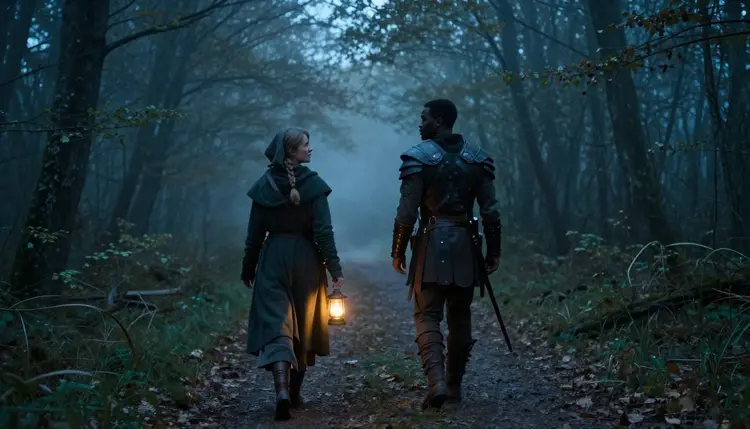
Consistency does not stop at a single character either. The scene above pairs two original characters from a set, walking together down a misty trail, and it works for the same reason a single-character set does, both costumes were locked down as written descriptions first, so they hold together in a shared scene instead of drifting into two unrelated designs.
Every character built this way must be an adult, eighteen or older: this page and every tool on Picasso IA are for adults only, 18+. Every subject also has to be fictional, no minors in any costume or art style, and no real person's likeness, public figure or not, without their consent, doubly true for a character built to evoke someone recognizable. Prompts that cross either line are refused and are against the platform's terms.
Fan-inspired does not mean copying a specific owned character either. The whole point of building an original design around a trope is that nothing in the final image, or in the prompt behind it, names or closely imitates a property that belongs to someone else. Recraft V4.1 Pro running without a content filter has nothing to do with that boundary; the absence of a filter lifts the block on mature or suggestive content in general, not the separate rule about whose likeness or whose intellectual property a character can resemble.
Generations on Picasso IA are private by default. What happens in the toolkit stays tied to the account that generated it and is not posted anywhere public on its own, and what gets shared afterward, and where, is a decision for the account holder, subject to local law and wherever it ends up being posted, not something the tool decides on its own.
Is Recraft V4.1 Pro really uncensored for a fan-inspired original character?
Yes. Recraft V4.1 Pro is one of six models on Picasso IA confirmed to generate mature and suggestive content directly, with no content filter blocking a costume-driven original character prompt, laced leather and all.
What does fan-inspired actually mean if the character still has to be original?
It means borrowing the trope, not the trademark: the armor style, the silhouette, the mood a fan of that kind of character responds to, described in your own words rather than pulled from a specific owned property.
Can I name the specific character or franchise I am inspired by in the prompt?
No. Naming a specific owned character both risks a filter refusal and ties the result to someone else's intellectual property. Describe the archetype and the costume details instead, and the design stays fully original.
Can I generate a real person's likeness this way?
No. Every character on Picasso IA, fan-inspired or not, must be a fictional adult, eighteen and older, invented rather than based on anyone real. Public figures, celebrities, and any real person's likeness without consent are never supported.
How many costume archetypes does this guide actually cover?
Six: a warrior queen, a scavenger-adventurer, a gothic countess, a leather duster rogue, a caped vigilante, and a steampunk inventor, each built as an original design around a trope rather than a copy of an existing character.
Which other models besides Recraft V4.1 Pro can generate this kind of content?
Five others are confirmed filter free: Seedream 4.5 and Qwen Image 2 for the initial generation, Picasso Image Editor Pro for edits, and Picasso Video and LTX 2.3 Pro for turning a finished character into a short video.
How do I keep the same original character consistent across several images?
Reuse the exact wording for the face, costume, and colors in every prompt rather than rewriting it each time, and generate the full set of poses in one sitting so nothing drifts between the first image and the last.
Can I turn a finished fan-inspired character into a short video?
Yes. Picasso Video animates a chosen still into a short clip, and LTX 2.3 Pro can generate motion directly from a prompt, and both are confirmed filter free, so the character can move without losing the design locked in earlier.
Do I need to pay before I can try Recraft V4.1 Pro?
No. New Picasso IA accounts start with free credits that cover a first round of costume generations with Recraft V4.1 Pro. Full pricing and plan tiers are listed on the pricing page for anyone who wants to generate more regularly.
Can I generate a scene with more than one original character in it?
Yes. Writing both characters' locked descriptions into the same prompt, the way the two-character forest scene on this page was built, keeps each design intact while placing them together in one shared scene.