A search for an NSFW low-poly art AI generator usually pictures a very specific thing: flat-shaded triangles, hard geometric edges, the faceted look of an early 3D game or a stylized indie title, applied to a grown-up, romantic scene. That exact picture is worth naming honestly before anything else on this page, because no diffusion model, uncensored or not, actually builds one. Low-poly is not a style toggle. It is the output of a real 3D mesh pushed through a renderer, and that is a different machine entirely from the one behind Picasso IA's image and video models.
What those models do instead is close in spirit and, for a lot of prompts, better looking in practice: bold, angular composition, real architecture with hard edges and deliberate geometry, rendered either as a graphic illustration or as a photograph, with nothing softened or hidden to get past a content filter. Recraft V4.1 Pro leads that work on Picasso IA, one of six models on the platform confirmed to run with no content filter at all, and the one built as a design and illustration engine first, which is exactly the skill set that reads geometry, structure, and hard edges as a first language.
This page covers what low-poly art actually is and why it sits outside what any prompt-based generator can build, what Recraft V4.1 Pro renders in its place, a five-step process for writing a prompt that leans into that geometric strength, and when a photographic model fits the brief better. Every figure shown or described is a fictional adult, eighteen and over.
Low-poly is a rendering technique before it is a look. A 3D artist builds a mesh out of a small, deliberate number of polygons, usually triangles, and a renderer shades each flat face as a single color or gradient rather than smoothing the surface between them. The result is the faceted, gem-cut appearance most people recognize from early PlayStation-era games, a wave of geometric indie titles that revived the aesthetic on purpose, and a strand of print and icon design that borrowed the same flat, angular shapes.
None of that comes from a prompt word. It comes from an actual wireframe, built vertex by vertex in software like Blender or a game engine, then lit and shaded by a renderer built for exactly that kind of geometry. The facets are structural, not decorative. A true low-poly render can be rotated and the flat shading holds because there is a real mesh underneath it, not a 2D image that merely looks angular from one angle.
That distinction matters for anyone typing "low poly" into an AI art prompt. A diffusion model has no mesh to shade. It has learned, from millions of images, what low-poly renders tend to look like on the surface, faceted shapes, flat gradients, sharp edges, and can echo that surface impression to varying degrees. What it cannot do is build the geometry a real low-poly render is made of, which is why the word alone rarely produces a clean result, on Picasso IA or anywhere else.
Six models on Picasso IA are confirmed to generate adult content with no content filter standing in the way: Seedream 4.5, Qwen Image 2, Recraft V4.1 Pro, Picasso Image Editor Pro, Picasso Video, and LTX 2.3 Pro. All six are diffusion-based generators, trained on photographs and illustrations rather than on 3D wireframes, and that training is the whole reason a low-poly mesh is out of reach for every one of them. Removing a content filter changes what a model will attempt. It does not add a 3D rendering pipeline underneath it.
Typing "low poly" into any of the six tends to produce one of two results: a photoreal model like Seedream 4.5 mostly ignores the term and returns a normal photographic scene, since it has little faceted-render training to draw on, while an illustration-leaning model like Recraft V4.1 Pro reaches for flat color blocks and hard angles because that is closer to territory it already knows. Neither is a real low-poly mesh, and this page will not pretend otherwise. What Recraft V4.1 Pro does instead, described in the next section, is the honest, closest alternative on this catalog.
Worth saying plainly: this is not a limitation specific to adult content. General-audience AI generators hit the exact same wall for the same reason. The six models above are simply the ones on Picasso IA confirmed to run a suggestive prompt without a filter stepping in first, faceted or not.
Recraft V4.1 Pro is built as a design and illustration engine, and that background is a real strength whenever a prompt leans on structure: hard edges, flat planes, deliberate angles, strong architectural geometry. It will not construct a wireframe mesh, but it treats a triangular window, an angled staircase, or a geometric wall panel as a genuine compositional element, which is the closest a text prompt gets to the faceted spirit of low-poly without claiming to be something it is not.

A screen's cool glow against dusk light is its own kind of geometry, a grid of light against a soft gradient sky, and Recraft V4.1 Pro holds that contrast cleanly rather than flattening it into a single mood.
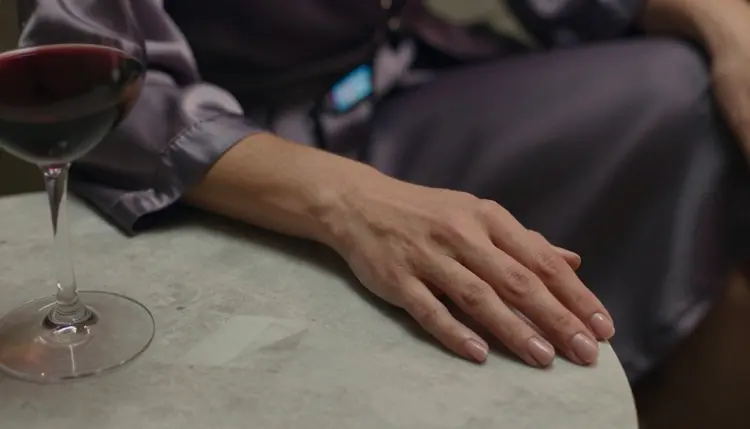
A tight, detail-first crop is a compositional choice on its own, and the hard reflective plane of a marble table gives the model a clean edge to build the whole frame around.
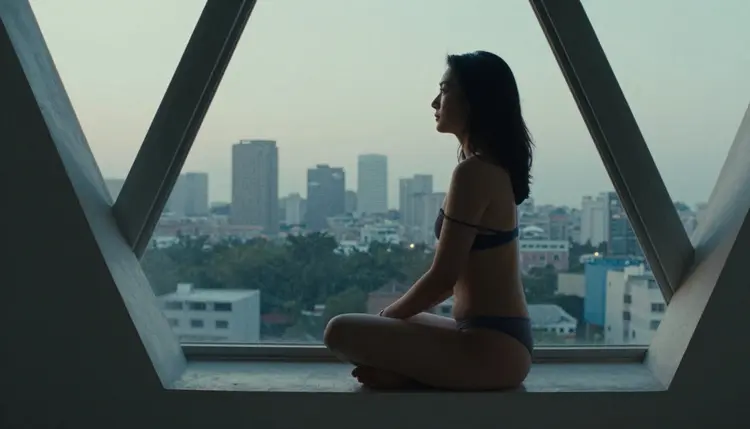
A triangular nook is about as close as real architecture gets to a single low-poly facet, and naming that shape directly, rather than just "window," is what makes Recraft V4.1 Pro treat it as the frame's main structural line instead of an afterthought.
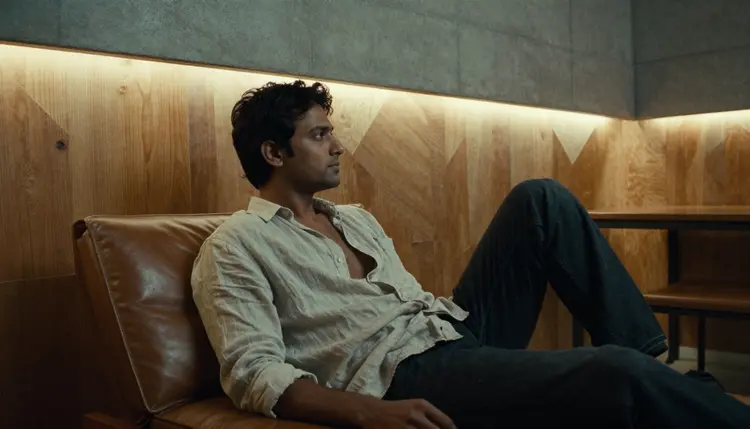
A wall built from angled wood panels reads almost like a faceted backdrop once it is named as geometric rather than simply wood, and that single word shift is often the difference between a flat background and a real compositional anchor.
Getting a strong, deliberate geometric result out of Recraft V4.1 Pro follows a short, repeatable process rather than a lucky single prompt.
- Name the geometry before the subject. Open with the structural language itself, triangular nook, angled stairwell, geometric paneling, so the model sets its hard edges and flat planes before it even reaches the figure in the scene.
- Choose Recraft V4.1 Pro over a bare "low poly" request. A single style word under-delivers on any diffusion model; naming the actual shapes, materials, and angles gives Recraft V4.1 Pro something concrete to build the composition around.
- Add hard-edge materials by name. Concrete, brushed steel, glass panels, and polished marble all carry sharp real-world edges, and naming the material does more for a faceted, deliberate look than any adjective like angular on its own.
- Generate a batch and judge the structure, not just the pose. A tight, consistent batch means the geometric language landed; a scattered one usually means the structural noun was too vague, window instead of triangular nook.
- Refine one structural detail at a time. Send the closest result back through a fresh prompt or Picasso Image Editor Pro and change a single element, the stair angle, the panel pattern, the window shape, rather than rewriting the whole scene from zero.
Not every brief wants Recraft V4.1 Pro's graphic, design-forward edge. When the goal is a warm, believable photograph that happens to sit inside strong architecture, Seedream 4.5 is the better tool: it is the one of the six built for a hyper-realistic, photographic look, skin and fabric and light rendered the way a camera would catch them, with the geometry supplied by the room itself.

A floor-to-ceiling window at dusk turns into its own grid of light and shadow once two figures are placed against it in silhouette, a photographic result rather than an illustrated one, but with the same structural discipline this page keeps coming back to.
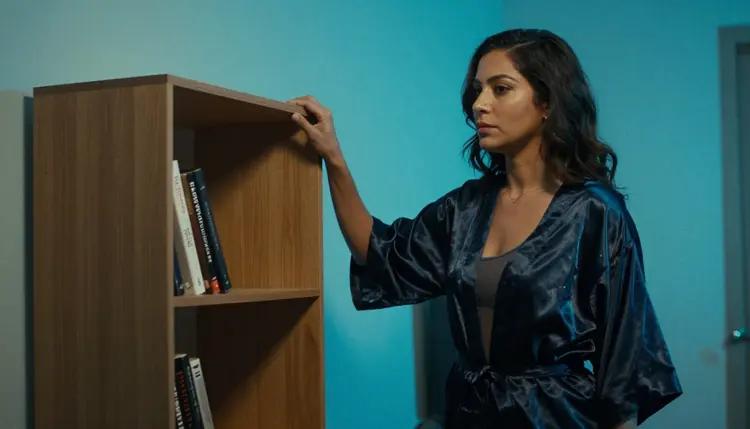
A bookshelf built from angled, repeating wood compartments is a naturally photogenic structure, and describing it as geometric rather than simply as shelving pulls the whole photograph toward a tighter, more deliberate composition.
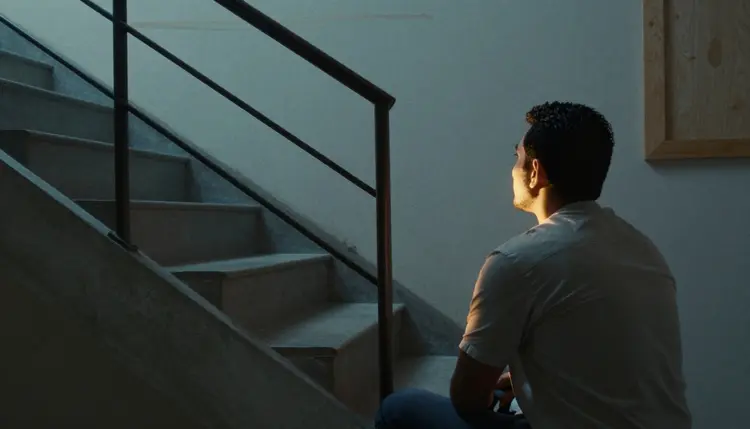
Concrete stairs read as hard, angular lines even in a warm, soft-lit photograph, proof that a photorealistic result and a strong geometric backbone are not opposites; they simply come from naming the architecture with the same care as the light.
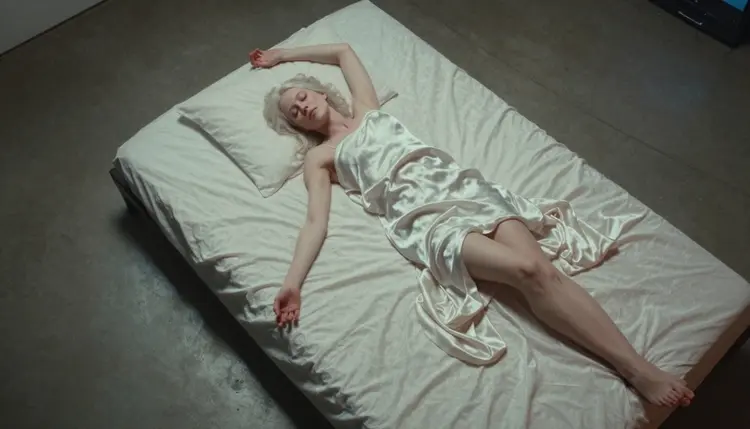
An overhead angle is itself a structural choice, turning draped fabric into folds and planes the way a top-down architectural photograph would, and Qwen Image 2 is a solid pick whenever several such elements, the sheets, the frame, the light, need to hold together consistently in one unusual angle.
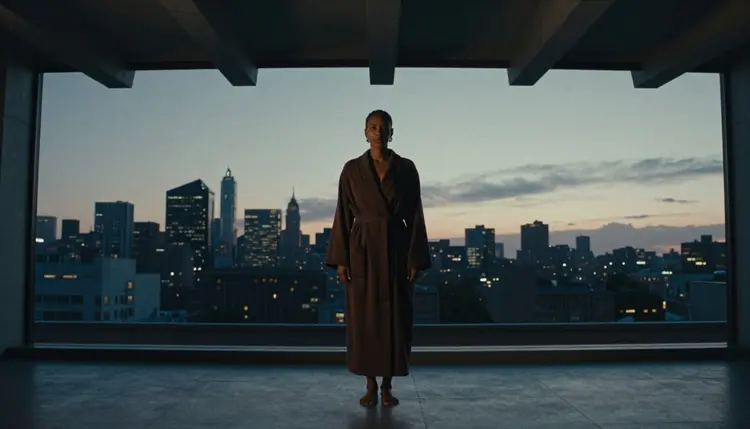
A lit skyline at night is a grid of thousands of small, glowing rectangles, arguably the closest thing a real city offers to a faceted field, and a centered figure against it gives Seedream 4.5 a strong, symmetrical structure to render with photographic precision.
Picasso IA is an 18+ platform, and every figure across the images and prompts on this page is a fictional adult character, eighteen or older, generated from a text description rather than based on any real person. No real likeness without explicit consent, no public figures, and nothing built to resemble a minor in any style, render, or architectural setting whatsoever; a geometric backdrop does not change that rule any more than a photographic one does.
Removing a content filter changes what kind of scene a model will attempt, not who is allowed to appear in it. Prompts that try to generate a real likeness or anything resembling a minor are refused, and attempting them violates the platform's terms regardless of which confirmed model is running the request.
Generations on Picasso IA stay private by default. Nothing created here is published, shared, or shown to anyone else unless the account holder actively chooses to do that, and that default holds whether the result leans photographic, illustrated, or somewhere between the two.
Does Picasso IA actually generate true low-poly 3D art?
No, and this page says so directly rather than letting a search term set the wrong expectation. True low-poly art comes from a 3D mesh shaded by a dedicated renderer, and no diffusion-based model on Picasso IA, or on any other AI image platform, builds that kind of geometry. What the catalog offers instead is a bold, angular alternative built from real architecture and design language.
Why can't Recraft V4.1 Pro or any other uncensored model on Picasso IA render a literal faceted mesh?
Recraft V4.1 Pro, like the other five confirmed models, is a diffusion generator trained on photographs and illustrations rather than on 3D wireframes. It has learned what a low-poly render tends to look like on the surface and can echo that impression with flat planes and hard edges, but it has no mesh to shade, which is the actual mechanism behind a genuine low-poly image.
Which model comes closest to a low-poly-inspired look on Picasso IA?
Recraft V4.1 Pro, since it is built as a design and illustration engine rather than a photorealism one. It treats triangular shapes, angled walls, and hard-edged materials as real structural elements in a composition, which is the closest a text prompt gets to the faceted spirit of low-poly without claiming to render an actual mesh.
What is the real difference between geometric illustration and true low-poly rendering?
Geometric illustration is a 2D image that borrows the visual language of hard edges and flat planes. True low-poly rendering is a 3D object, built from a vertex mesh and shaded face by face, that can be rotated and lit from any angle while the underlying geometry stays consistent. A diffusion model produces the first kind of result, never the second.
Is Seedream 4.5 or Qwen Image 2 the better pick for the photographic scenes shown on this page?
Seedream 4.5 is the stronger choice when the goal is a single, hyper-realistic photograph, skin, fabric, and light rendered the way a camera would catch them. Qwen Image 2 tends to hold up better when a scene has several distinct elements, an unusual angle, draped fabric, a window frame, that all need to stay consistent together in one shot.
Are all six of Picasso IA's uncensored models actually free of a content filter?
Yes. Seedream 4.5, Qwen Image 2, Recraft V4.1 Pro, Picasso Image Editor Pro, Picasso Video, and LTX 2.3 Pro are the six models confirmed to run adult prompts on Picasso IA with no content filter standing in the way, and that confirmation covers geometric and architectural prompts the same way it covers any other subject.
Who is allowed to appear in these geometric or architectural scenes?
Only fictional adults, eighteen or older, described through a text prompt rather than based on a real person. No real likeness without consent, no public figures, and nothing resembling a minor in any style or setting; that rule applies to every image on Picasso IA regardless of how it is framed or which model rendered it.
Can a geometric still image be turned into a video?
Yes, through a separate step. Picasso Video animates a finished still into a short clip, and LTX 2.3 Pro generates cinematic video directly from a scene description; both are confirmed filter-free. Settling on a still first is the efficient order, since an image generation costs less than a video one, and only the chosen frame needs to move.
Why do architectural details like stair edges or window frames sometimes come out wrong?
Sharp, repeating structures, a staircase, a paneled wall, a window grid, are genuinely hard for any image model to keep consistent, filtered or not. A simpler structural description, followed by a fix through Picasso Image Editor Pro, solves it faster than rewriting the whole prompt.
How many generations does it usually take to land a strong geometric composition?
There is no fixed number, but three or four rounds of generating a small batch, keeping the closest result, and adjusting a single structural detail is a normal path to something worth keeping. A single very long prompt trying to describe every angle at once is usually harder for the model to satisfy than a shorter prompt refined over a few passes.