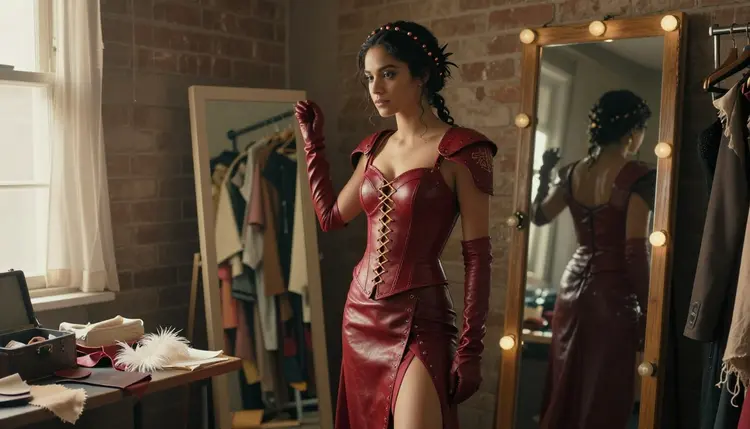
An original character costs nothing to keep. No franchise to license, no face that belongs to someone else, no name that a filtered model reads as a flag before it even looks at the costume. Picasso IA's toolkit is built to generate exactly this kind of character in full, mature detail, and the model behind it is Recraft V4.1 Pro, one of six models on the platform confirmed to render suggestive, adult content directly, with no content filter standing between a prompt and the finished image.
This page is a working guide to building one: five steps from a first line of personality to a finished, reusable design, plus a set of costume and setting ideas wide enough to carry a character across a whole project instead of one lonely image. Every photo below is that process in practice, nine different original characters, nine different costumes, none of them borrowed from a real person or an existing property.
Whatever the character is for, a tabletop reference sheet, a game companion, an illustration series, or simply a private design that exists nowhere else, the same workflow and the same limits apply: adults only, fiction only, private by default.
Typing a real person's name into a prompt, a celebrity, an influencer, anyone identifiable, runs straight into two walls at once. It is against the rules on Picasso IA regardless of what a model would otherwise render, and it strips the person on the other end of the prompt of any real creative ownership over the result, since the likeness was never theirs to generate in the first place.
An original character sidesteps both problems by design. Nothing about the face, the body, the costume, or the personality points back to anyone real, which means there is no consent to violate and no identity to misuse. What is left is pure design work, deciding what a character looks like, wears, and does, built from a written description rather than copied from a photograph of someone who exists.
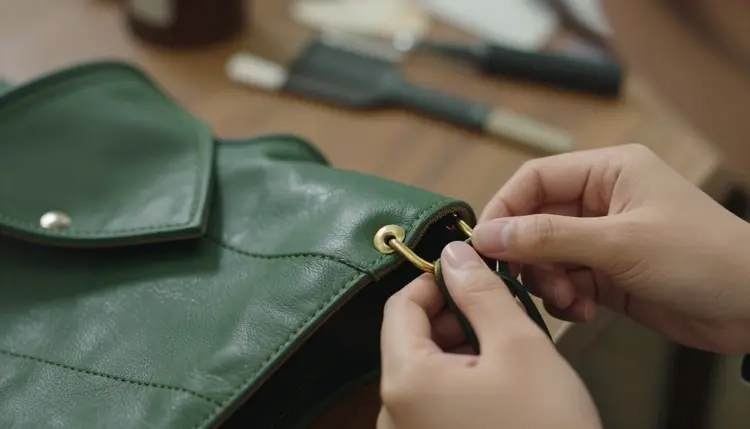
The detail above is a good example of what that design work actually looks like up close, laced leather, brass fittings, a costume built the way a real one would be constructed, adjusted by hand rather than assembled from a reference photo of a real outfit on a real person. That level of invention, deciding what the leather looks like and how it closes, is the whole difference between an original character and a copy.
Most of the more than 488 models in the Picasso IA catalog run a content filter, and almost any costume with a fitted bodice, bare shoulders, or tactical strapping reads as mature enough to trip it. When that happens, the app shows a short notice that the model will not run the prompt and offers to carry it over to one that will, so nothing typed is lost, only delayed.
Recraft V4.1 Pro is one of six models on Picasso IA confirmed to skip that filter entirely. It shares that status with Seedream 4.5 and Qwen Image 2, both strong picks for photographic detail on the same kind of prompt, Picasso Image Editor Pro for touching up a generated image afterward, and Picasso Video and LTX 2.3 Pro for turning a finished character into a short video. Recraft V4.1 Pro's particular strength is illustration and stylized rendering, and it follows a detailed, material by material costume description closely instead of flattening everything into one generic look, which matters a great deal once a character's whole identity rests on a specific costume.
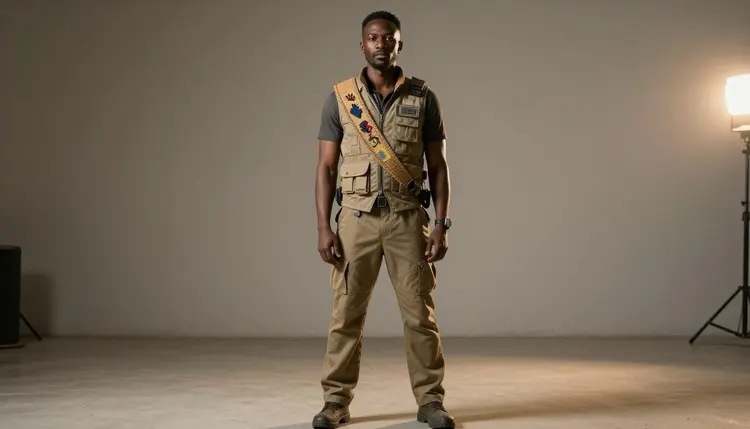
The tactical vest above is a plain example of the kind of prompt a filtered model tends to refuse outright, fitted straps, exposed shoulders, a bare studio with nothing to soften the read. Recraft V4.1 Pro renders it because the prompt describes a costume, not because it ignores any rule the platform actually enforces.
Building an original character is less about art skill and more about naming discipline: deciding who the character is once, writing it down precisely, and reusing that exact wording every time the character comes back. Five steps cover the whole process.
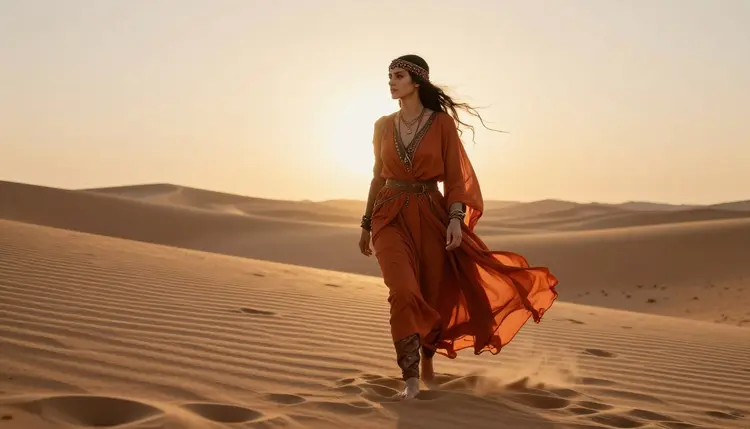
The desert wanderer above is the kind of result these five steps are built to produce, a specific person with a specific costume and a specific setting, none of it improvised on the spot.
- Decide Who the Character Is First. Settle on a personality before writing a single line about appearance, calm or reckless, guarded or warm, since that choice quietly shapes every costume and pose that follows.
- Write the Physical Description Once. Lock in face shape, build, skin tone, hair, and any signature feature in one paragraph, and treat that paragraph as final rather than rewriting it for each new image.
- Design an Original Costume From Materials, Not References. Describe fabric, color, and construction in plain language, oiled leather, hammered brass, raw silk, instead of naming an existing outfit or franchise, so the design is genuinely new.
- Open Recraft V4.1 Pro in the Toolkit. Select it before writing the prompt so the first generation renders directly instead of bouncing to a filtered model and losing the attempt.
- Generate a Full Set in One Sitting. Run several poses and settings back to back using the same locked description, which is what keeps the face, the costume, and the mood identical from the first image to the last.
A single costume tells a viewer almost nothing about who a character actually is. Range comes from putting the same invented person into several different settings and outfits and watching the personality hold steady underneath.
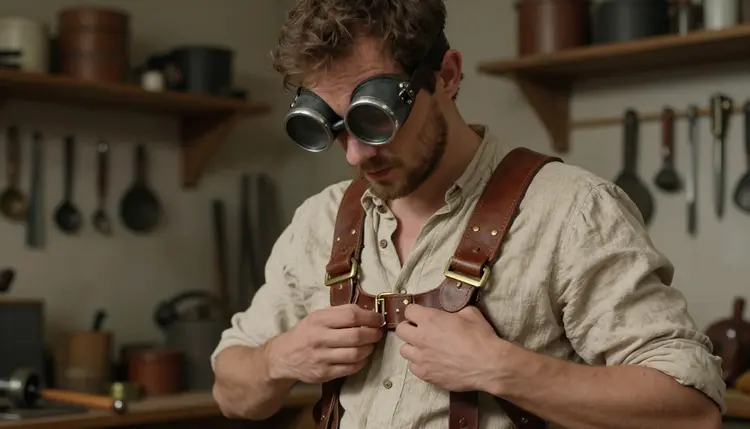
The steampunk artisan above trades desert minimalism for clutter and brass, gears, tools, a workshop that looks lived in rather than staged. It is a favorite setting for a character built around craft or invention rather than combat.
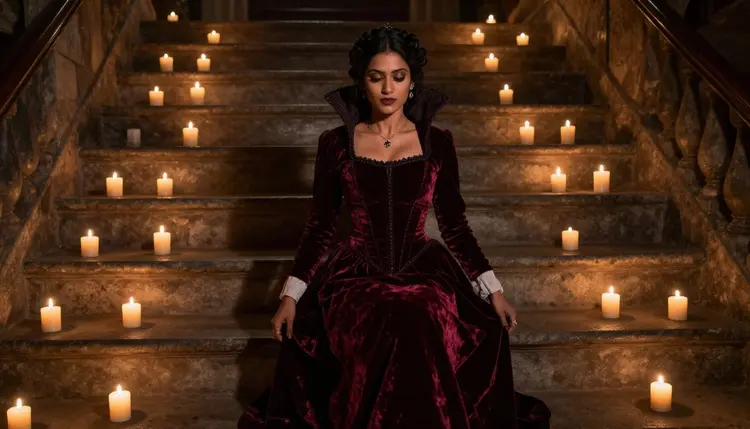
The gothic noble above shifts the mood again entirely, velvet and candlelight instead of leather and daylight. Nothing about either costume names an existing outfit or franchise, both are built the same way, from a written description of fabric, color, and construction rather than a copied reference.
An original character only reads as one person across several images if the description behind it never drifts. That means naming details precisely, weathered oak staff rather than just staff, and resisting the urge to improvise a detail differently just because the first version seemed close enough.
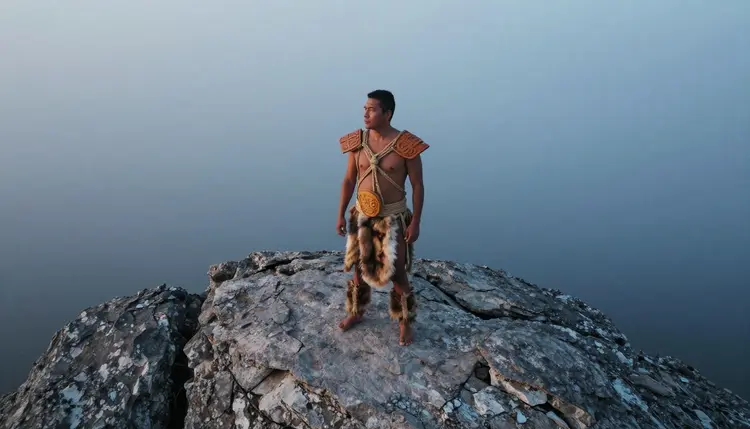
The tribal warrior above is proof the same discipline works for a male character as well as a female one, fur, carved wood, a specific dawn light, none of it left to chance in the prompt.
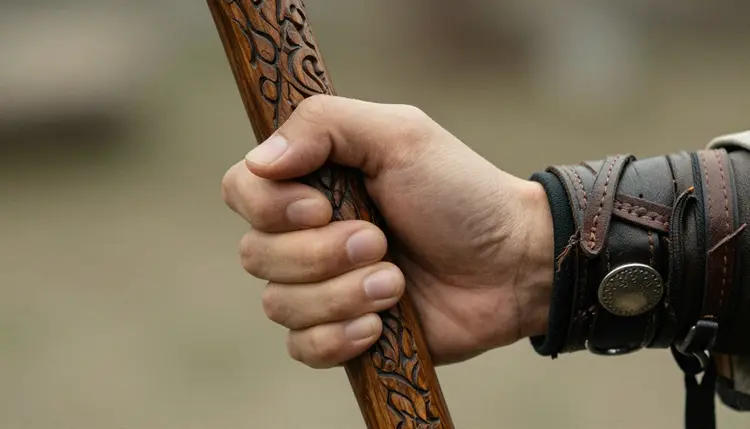
A close-up like the one above is worth generating on its own, not as an afterthought. A signature prop rendered in detail once, then described the same way in every later prompt, is often what makes a full set of a character actually read as consistent rather than a collection of similar-looking strangers.
Every character built this way has to be an adult, eighteen or older. Picasso IA and every tool inside it are for adults only, 18+, without exception. Every character also has to be fictional, no minors in any costume, art style, or age presentation, and no real person's likeness, public figure or private individual, generated without that person's consent. Prompts that cross either line are refused and sit outside what the platform's terms allow.
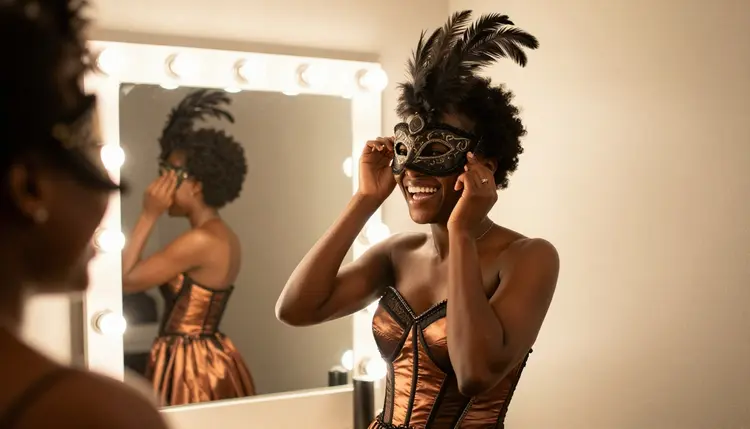
The masquerade moment above is a reminder that every face on this page, from the desert wanderer to the woman above, is invented start to finish, a costume, a mood, and a personality that exist because someone described them, not because they belong to anyone real.
Recraft V4.1 Pro running without a content filter has nothing to do with that boundary. The absence of a filter lifts the block on mature and suggestive content in general, not the separate rule about who a character is allowed to resemble or how old that character has to be.
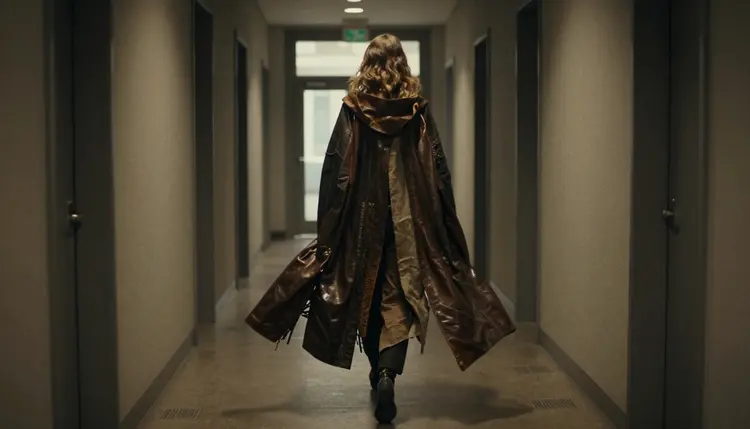
Generations on Picasso IA are private by default, the way the cloaked figure above disappears down an empty hallway rather than into a public feed. What happens in the toolkit stays tied to the account that generated it and is not posted anywhere on its own, whatever gets shared afterward, and where, is a decision that belongs to the account holder, not the tool.
Is Recraft V4.1 Pro really uncensored for an original NSFW character?
Yes. Recraft V4.1 Pro is one of six models on Picasso IA confirmed to generate mature and suggestive content directly, with no content filter standing between a costume-driven original character prompt and the finished image.
What actually makes a character original instead of a copy?
A character counts as original when nothing about the face, costume, or name points back to a real person or an existing property, every detail comes from a written description rather than a photograph or a franchise reference.
Can I generate a real person's likeness with this tool?
No. Every character on Picasso IA has to be a fictional adult, eighteen and older, invented rather than based on anyone real. Public figures and private individuals alike are never supported without their consent, and prompts that try are refused.
Which other models on Picasso IA are confirmed filter free besides Recraft V4.1 Pro?
Five others: Seedream 4.5 and Qwen Image 2 for the initial generation, Picasso Image Editor Pro for edits, and Picasso Video and LTX 2.3 Pro for turning a finished character into motion.
How do I keep the same original character looking consistent across many images?
Reuse the exact wording for the face, costume, and colors in every prompt instead of rewriting it each time, and generate the full set of poses in one sitting so nothing drifts between the first image and the last.
Can an original character built this way be used for a tabletop or game project?
Yes. A locked description that renders the same face and costume every time is exactly what a character sheet, an NPC portrait, or a game companion needs, and nothing about the design belongs to anyone but the person who wrote it.
Do I need any special writing skill to describe a costume that actually works?
No. Naming materials, colors, and construction in plain language, oiled leather rather than jacket, does more work than polished prose, specific and literal beats clever every time.
Can I turn a finished original character into a short video?
Yes. Picasso Video can animate a chosen still into a short clip, and LTX 2.3 Pro can generate motion directly from a prompt, and both are confirmed filter free, so the character can move without losing the design already locked in.
Is there a cost to try Recraft V4.1 Pro for a first character?
No. New Picasso IA accounts start with free credits that cover an initial round of generations with Recraft V4.1 Pro. Full pricing and plan tiers are listed on the pricing page for anyone generating more regularly after that.
Can more than one original character appear together in the same generated scene?
Yes. Writing both characters' locked descriptions into a single prompt keeps each design intact while placing them together in one shared scene, the same way a full set of solo images is built from one description at a time.