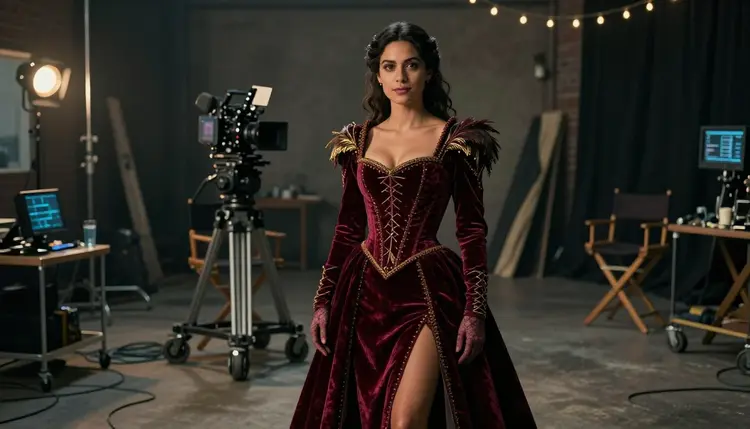
Two of Picasso IA's six confirmed uncensored models could not work more differently, and picking between them by name recognition alone tends to waste a newcomer's first few credits on the wrong tool. Recraft V4.1 Pro draws a single still image: a costume, a color palette, a line style, built the way an illustrator would build a character sheet. LTX 2.3 Pro builds a short moving clip straight from a sentence, camera framing, motion and light generated together in one pass. Both are confirmed filter free, and both are genuinely good at what they do, but "which one to start with" is a real question with a real answer, and it depends on the idea, not on which name sounds more familiar.
This page settles that question honestly. It covers what Recraft V4.1 Pro and LTX 2.3 Pro are each confirmed to generate with no content filter, where the two genuinely differ once the filter question is out of the way, a five-step process for deciding between them on any given idea, how a prompt should be written differently for each one, and the rules that apply to every character either model produces. Every image and every clip pictured on this page shows a fictional adult, eighteen and over, invented for the scene and nobody else.
Most of the 488 models in Picasso IA's catalog run a content filter, and a flirty, intimate or suggestive prompt is exactly what that filter exists to catch, on a still-image model and on a video model alike. Send a prompt like that to a filtered model and the app does not quietly soften it: it returns a message that the model does not support the content, then offers to carry the same prompt over to one that actually will. Recraft V4.1 Pro and LTX 2.3 Pro are two of exactly six models across the whole catalog confirmed to generate adult content with no content filter, alongside Seedream 4.5, Qwen Image 2, Picasso Image Editor Pro and Picasso Video. A romantic or suggestive scene runs on either one the same way any other prompt does: nothing to reword, nothing to disguise to sneak past a filter that simply is not there.
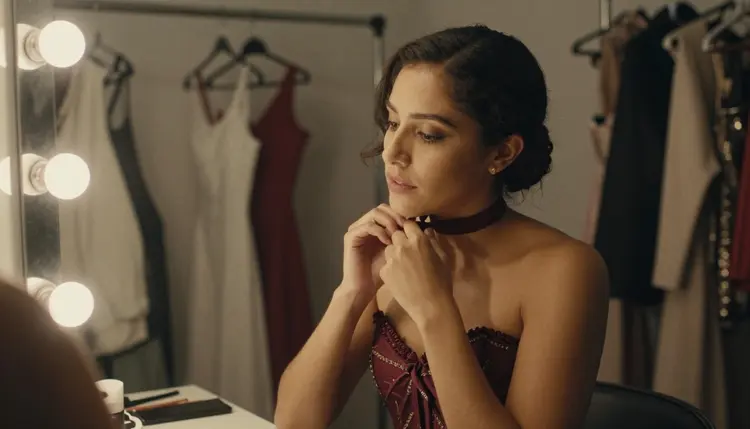
Being filter free is the floor both models share, not the whole comparison. Recraft V4.1 Pro is an illustration and design engine at heart: it reads a costume, a fabric, a color scheme and a pose the way a comic artist would, and it renders one still image per generation, fast and cheap to try again when a first attempt misses. LTX 2.3 Pro, built by Lightricks, does something else entirely: it reads a full scene description and produces a short clip, the camera move, the motion and the light all generated together from a text prompt alone, no starting image required. Both sit inside the toolkit next to the full catalog of 488 models, and every claim in this comparison is drawn from what each model is actually built to do, not a guess.

Recraft V4.1 Pro's strength shows the moment a character exists only as an idea for a look. Name the armor plating, the fabric, the cape, a color palette and a pose, and the model renders it as a clean illustrated still, ink outline and flat color the way a drawn comic panel would carry it. That makes Recraft V4.1 Pro the natural first stop for character design, cosplay concepts, pin-up style pieces and any brief where the point is one striking image rather than movement. A result lands in seconds, and a weak generation costs little to try again, which matters most while someone is still learning how a model reads a prompt.
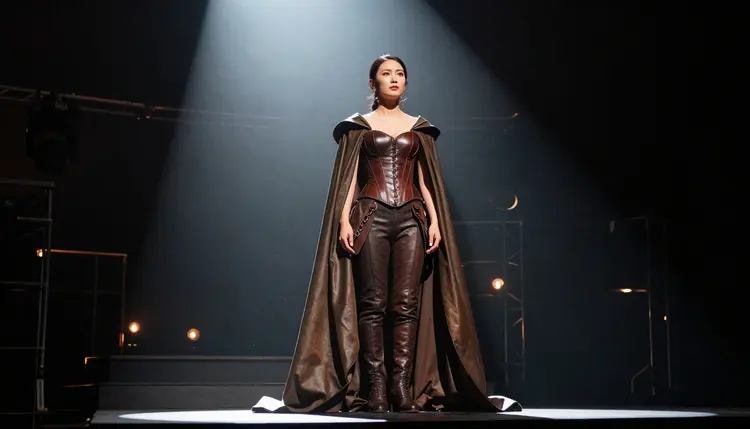
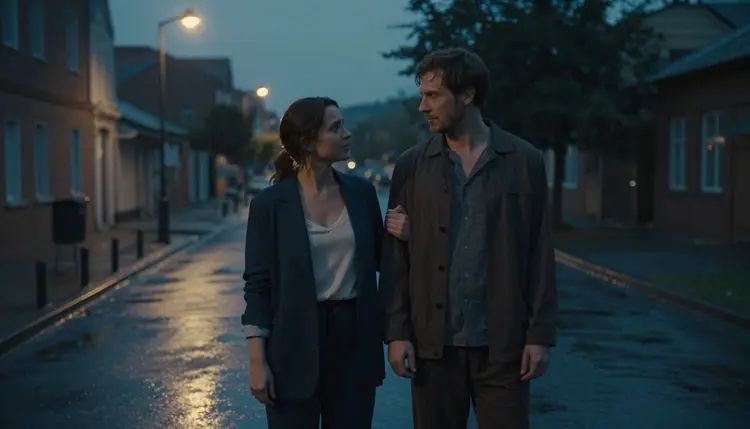
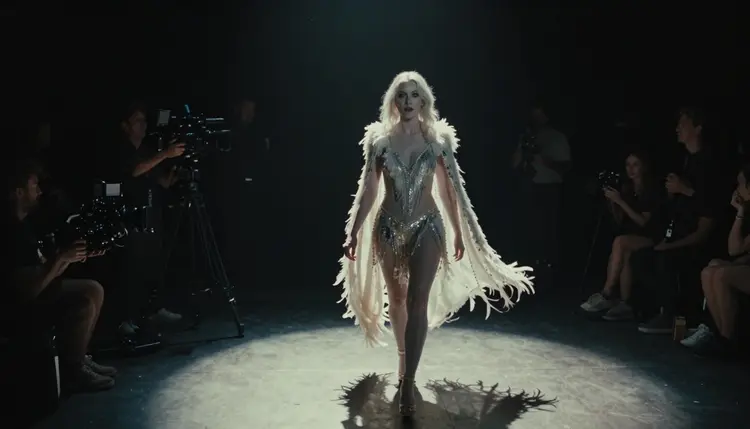
LTX 2.3 Pro earns its place on a different kind of brief, the kind that only makes sense once something is actually moving. Two people closing the distance on a rain damp street, a robe slipping off a shoulder as a figure turns toward the camera, a slow walk across a lit stage: none of that reads the same frozen as a single frame, and LTX 2.3 Pro builds the whole clip, camera move included, from one written scene with nothing to upload first. It spends more credits and more time per generation than a still image does, and it rewards a prompt that already knows exactly what should happen across a few seconds, a harder thing to write well on a first attempt than a costume description tends to be.
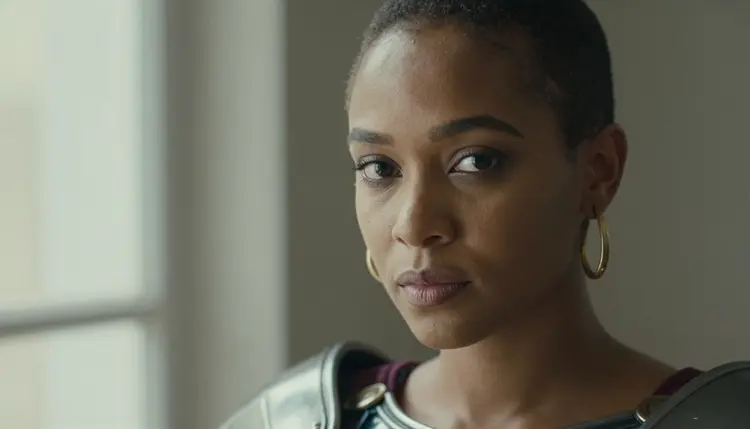
Neither model is simply the better one. A concept that lives in a costume and a pose favors Recraft V4.1 Pro's illustrated still; a concept that only exists as movement favors LTX 2.3 Pro's ability to build a whole scene from a sentence. The honest answer to which one to start with depends on which kind of idea showed up first, not on either model's name.
Deciding between the two does not take a long trial. Five short steps settle it for almost any idea.
- Write the Idea Down in One Line. Notice whether the sentence describes a look, a costume or a face, or an action unfolding over a few seconds, since that alone points at one model over the other.
- Pick Recraft V4.1 Pro for a Still Character or Costume. Start here when the idea is a design: an outfit, a color palette, a pose, one striking frame rather than motion.
- Pick LTX 2.3 Pro for a Scene That Moves. Start here when the idea only works as movement: two people approaching each other, a turn, a walk, anything that would look flat frozen as a single image.
- Open the Toolkit and Run the First Prompt on Free Credits. Both models sit inside the same catalog, so trying the one that actually matches the idea costs nothing extra to switch to later.
- Move to the Other Model Once the First Idea Is Working. A costume finished on Recraft V4.1 Pro often becomes the next LTX 2.3 Pro scene, and a strong frame from an LTX 2.3 Pro clip is worth refining separately on Recraft V4.1 Pro.
Running through those five steps on a real idea, rather than reading about both models in the abstract, is what actually shows which one fits. The two are cheap enough on free credits that testing the wrong guess first costs almost nothing.
For LTX 2.3 Pro, write the entire moment as one prompt: who is in frame, what they are wearing, where the scene is set, what the light source is doing, and what happens across the clip. A couple stepping toward each other on a rain damp street at dusk, a hand slowly reaching across a table under a single lamp: because the clip is generated from nothing but the words, a vague prompt tends to produce a vague result, while a concrete one tends to hold together across the whole motion.
For Recraft V4.1 Pro, the winning move is naming the exact pieces of a look instead of a general mood. A leather corset, a flowing cape, gold cord lacing, silver hair, a spotlight from one side: each concrete noun gives the model something specific to draw, where a phrase like a hot outfit leaves the actual design entirely to chance. Recraft V4.1 Pro also tends to hold one recurring character's look together better across several separate generations than a fresh description written from scratch each time, which matters for anyone building a character they plan to reuse.
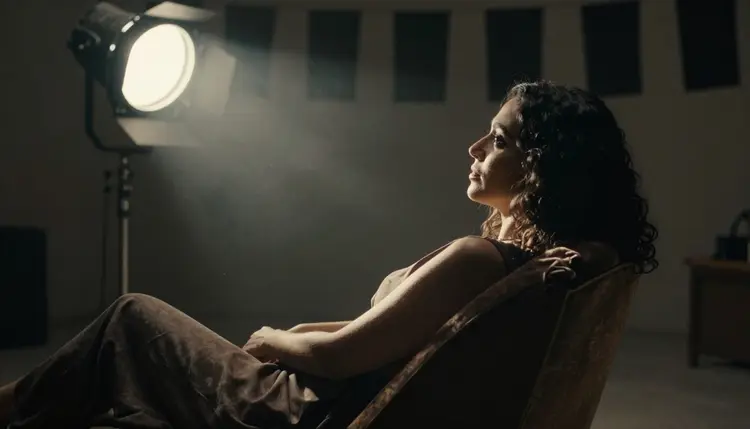
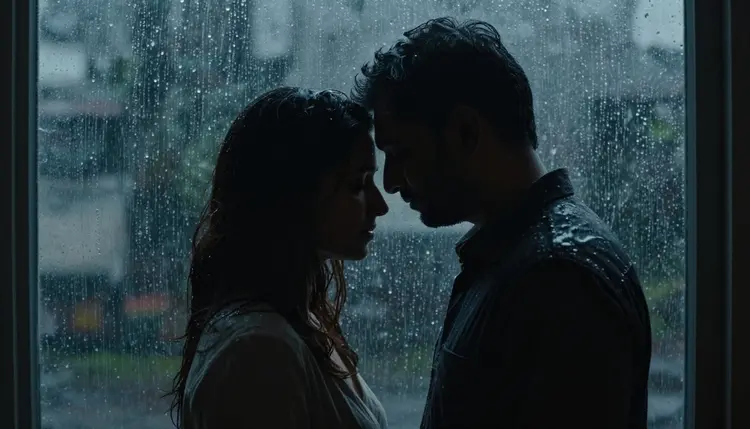
Neither model needs a blunt or explicit word to produce a strong, suggestive result. A robe left untied, a hand resting at a collarbone, two people standing close under low light say more than a direct term ever would, and both Recraft V4.1 Pro and LTX 2.3 Pro read that kind of implication well.
Everything either model generates is for adults, eighteen and over, and that line does not move for any costume, style or scene. Every character pictured on this page, and every character either model can be asked to generate, must be a fictional adult invented for the piece: no real person's likeness without that person's explicit consent, no celebrity or public figure, and nothing built to resemble a minor, in any wardrobe, pose or setting. Prompts that cross these lines are refused on both models regardless of the filter, since removing a content filter never removed the rules about whose likeness can be generated or how old a character has to read as.
Generations on Picasso IA stay private by default: what gets made here lives in your own account, off any public feed, unless you choose to share it yourself. That privacy covers the platform only, though. Once a still or a clip is downloaded, what happens to it next, where it is posted and who sees it, is governed by local law and by the rules of wherever it lands, and legal to generate on Picasso IA is never automatically the same thing as fine to publish anywhere else.
Both models spend credits the same way every generation on Picasso IA does, charged per generation rather than through a separate subscription tier locked to one model. A still image on Recraft V4.1 Pro sits toward the cheap end of what the app charges for any generation, and a short clip on LTX 2.3 Pro costs more, with the exact amount scaling up with resolution and duration. That difference is worth knowing before a first project quietly turns into a long run of video generations without a glance at the running total.
A new account starts with free credits, enough to try a handful of stills on Recraft V4.1 Pro and at least one clip on LTX 2.3 Pro before anything needs to be purchased, which is honestly the fastest way to feel the real difference between the two rather than take a comparison page's word for it. Exact current numbers live on the pricing page instead of being printed here, since plans change more often than this page does.
Are Recraft V4.1 Pro and LTX 2.3 Pro both really uncensored?
Yes. Both are two of exactly six models on Picasso IA confirmed to run with no content filter, alongside Seedream 4.5, Qwen Image 2, Picasso Image Editor Pro and Picasso Video. A flirty or intimate prompt runs on either one the same way any other prompt does, with nothing to reword to get it through.
What is the real difference between Recraft V4.1 Pro and LTX 2.3 Pro?
Recraft V4.1 Pro is an illustration model that renders one still image per generation, built for costume, character and design work. LTX 2.3 Pro is a text-to-video model that generates a short moving clip from a written scene, camera motion and light included. One draws a look, the other builds a moment that moves.
Which model should a complete beginner start with?
Start with Recraft V4.1 Pro when the idea is a look, a costume or a character, since a still generation is faster and cheaper to experiment with while learning how a model reads a prompt. Start with LTX 2.3 Pro directly when the idea only makes sense as motion, since forcing a moving scene into a still image first tends to lose whatever made the idea work in the first place.
Can Recraft V4.1 Pro make a photorealistic image instead of an illustrated one?
Recraft V4.1 Pro is built as a design and illustration engine, so its natural strength is a drawn or comic-style finish rather than photorealism. For a photoreal still, Seedream 4.5, also confirmed filter free, is the better starting point, and a finished Recraft V4.1 Pro illustration can still be turned into an LTX 2.3 Pro clip afterward.
Does LTX 2.3 Pro need a source image to generate a clip?
No. LTX 2.3 Pro builds a clip straight from a text prompt with no image required, which is what separates it from Picasso Video, the other confirmed video model on Picasso IA, which instead animates a still image that already exists.
Do I need different prompt wording for each model?
Yes, a real adjustment helps. LTX 2.3 Pro responds best to a full scene written as one prompt: the subject, the setting, the light and what happens across the clip, together. Recraft V4.1 Pro responds best to exact costume nouns, a fabric, a color, a prop, rather than a general mood word.
Can a Recraft V4.1 Pro illustration and an LTX 2.3 Pro clip be part of the same project?
Yes. A common order is designing a character's look on Recraft V4.1 Pro first, settling the costume and color palette, then writing an LTX 2.3 Pro scene that puts the same character in motion once the design is locked in.
Are Recraft V4.1 Pro and LTX 2.3 Pro free to try on Picasso IA?
New accounts start with free credits, enough to run several Recraft V4.1 Pro stills and at least one LTX 2.3 Pro clip before anything needs to be purchased. Beyond that, both are paid for with credits per generation rather than a subscription tied to one model, and current numbers live on the pricing page.
Can I generate a real person or a celebrity with either model?
No. Every character generated on Picasso IA, on Recraft V4.1 Pro, LTX 2.3 Pro or any other model, must be a fictional adult, eighteen and over. A real person's likeness, including a celebrity or any other public figure, is not permitted without that person's consent, and prompts that attempt it are refused regardless of which model is running.
What happens if I try a model that is not on the confirmed list?
A model without confirmed filter-free status, such as Qwen Image 3 Pro or another well-known name, may simply refuse an adult prompt outright, with the same message either way: content not supported by this model, plus an offer to switch to one of the six confirmed models and carry the prompt over. Trying an unconfirmed model first is worth a shot for a mild idea, but Recraft V4.1 Pro and LTX 2.3 Pro are the two actually guaranteed to run it.