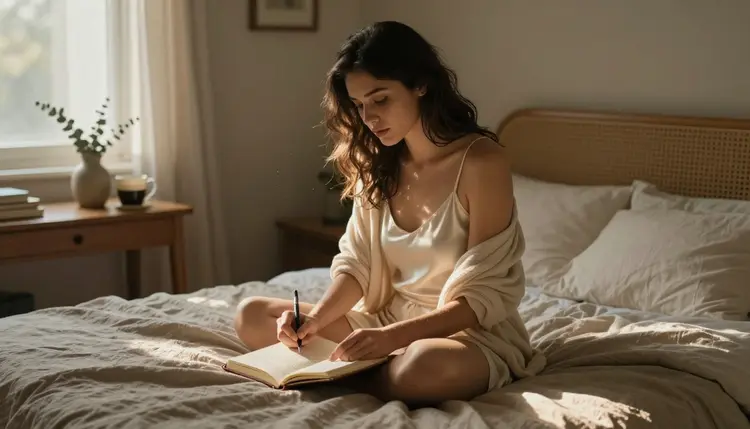
A journal page is where a private moment actually gets written down, and the art that sits beside it should feel the same way: caught mid-thought, not posed for a camera. Qwen Image 2 is one of six models on Picasso IA confirmed to run with no content filter, and it has a particular strength for this brief: it follows a prompt that stacks several details, a specific room, a specific light, a specific object in hand, in one line, which is exactly what a believable journal illustration needs instead of one dramatic pose.
This page covers why the model fits a journal illustration brief, what actually makes an intimate diary-style scene read as genuine, a five-step process for generating a consistent set, and the rules every fictional adult in frame has to follow.
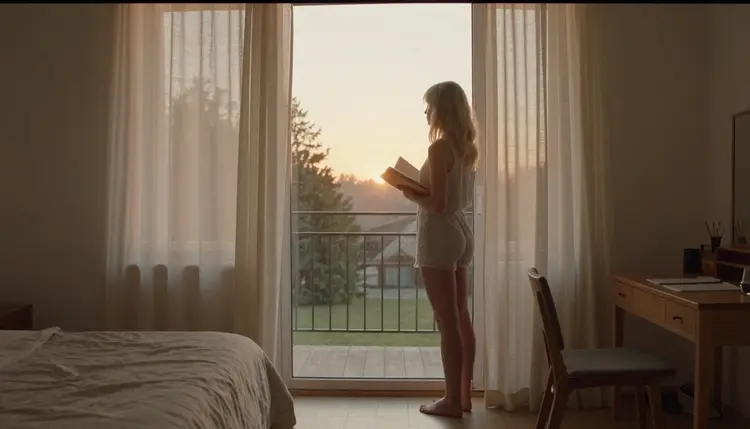
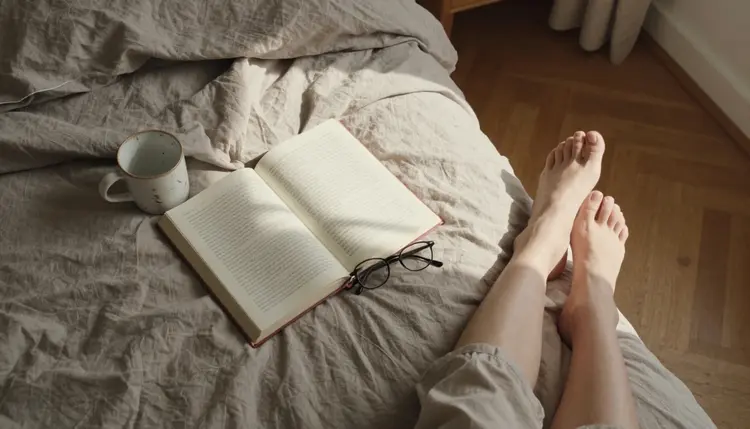
Most of the 488 models in the Picasso IA catalog run a content filter, and a journal illustration built around an open robe at a bedroom window, bare feet tangled in bedsheets, or a diary page left open on a rumpled bed is exactly the kind of prompt that filter exists to catch. Try it on a filtered model and the app returns a Content Not Supported by This Model message, then offers to carry the prompt to a model that will actually run it. Qwen Image 2 is one of those alternatives, confirmed filter-free and open source, so a quiet, suggestive diary scene generates the same way a plain room photo does.
It shares that filter-free status with five other models, each suited to a different piece of a journal project. Seedream 4.5 is the photorealistic, editorial pick for a cover image meant to look like a real photograph tucked between pages. Recraft V4.1 Pro suits a drawn or painted illustration instead, closer to a watercolor diary sketch than a photo. Picasso Image Editor Pro touches up a finished scene afterward, useful for fixing a hand wrapped around a pen. Picasso Video and LTX 2.3 Pro turn a chosen scene into a short, slow clip, useful for a page-turning intro to a journaling app or a video diary. Qwen Image 2 is the one to reach for first when the brief calls for a photographic scene that has to hold several specific details at once. See the full catalog for everything else the app offers.
A journal illustration is not a glamour shot. It works when it reads as a private moment a camera happened to catch rather than a pose held for one, and that means the small, unglamorous details matter more than the pose itself: a coffee ring on the nightstand, a pen left uncapped, sheets that are actually rumpled instead of styled flat, morning light with real shadow instead of a flawless studio glow.
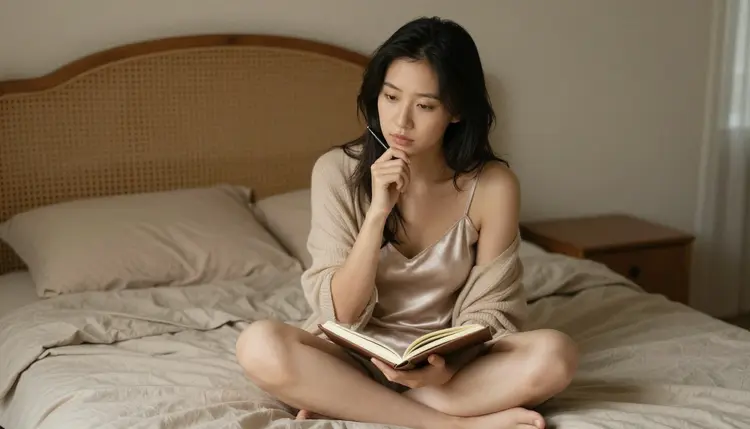
Planning a small set, three to nine scenes around one character and one loose morning, gives a journal project something to actually use across a cover, an interior spread, and a social preview, instead of one image stretched to cover every spot. Keep one variable fixed, usually the character and the room, and let the pose and the light shift between shots: sitting cross-legged with the journal open, standing at the window with it tucked under an arm, lying across the bed with it left open nearby. Consistency in that fixed variable is what makes a set read as one diary rather than five unrelated portraits.
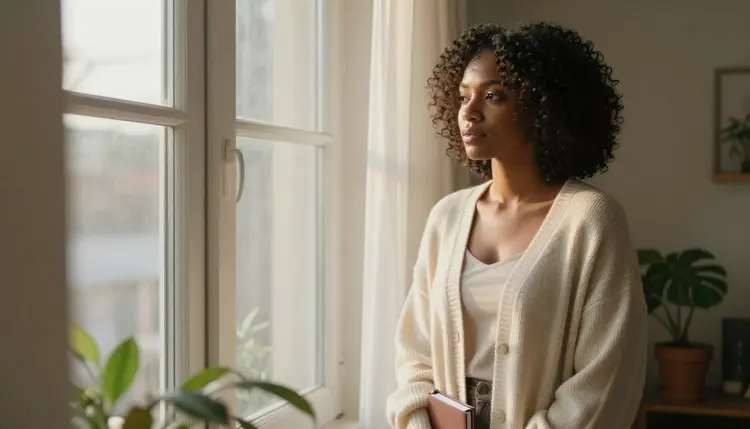
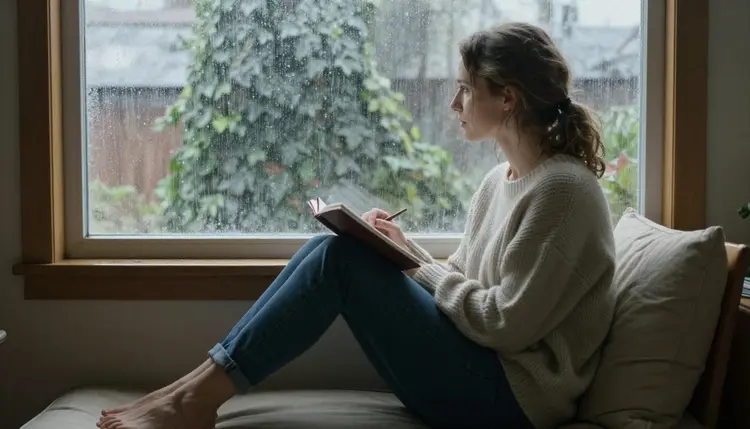
Light is doing most of the emotional work in a scene like this. Early sunrise through a sheer curtain reads as hopeful and a little vulnerable. Grey, rain-streaked window light reads as reflective and slow. A single warm lamp at a vanity reads as private, almost secretive. Naming the actual light source and the time of day, rather than a vague word like cozy, gives the model something concrete to build the whole frame around, and it is the difference between a scene that reads as observed and one that reads as generic.
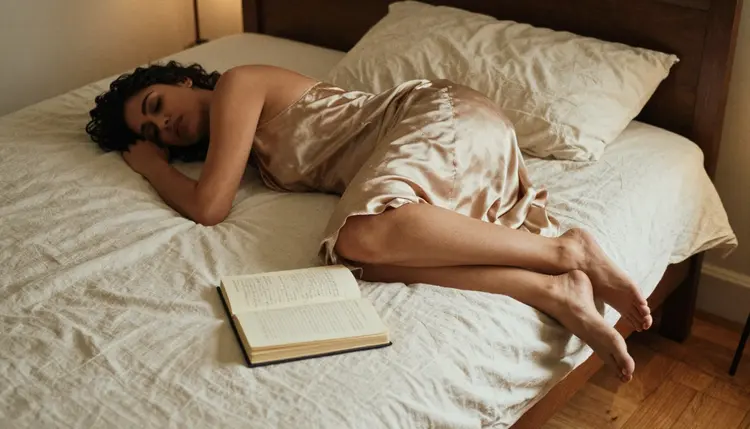
Turning a mood board into an actual set of journal images takes a little planning before the first prompt, and the process itself moves quickly once the character is fixed.
- Fix the Character as One Consistent Fictional Adult. Give her a hair color, a build, and one signature detail, like a robe or a specific journal cover, up front, so every scene in the set reads as the same invented person.
- Stack the Room, the Light and One Prop in a Single Line. Qwen Image 2 handles a prompt naming the bedroom, the sunrise or rain outside, and the journal or pen together far better than a vague mood word alone.
- Open the Toolkit and Select Qwen Image 2. Picking the filter-free model before writing the prompt avoids spending a first generation on a model that refuses the brief outright.
- Generate a Small Set Around One Morning. Keep the character and the room constant, and vary the pose and the light across several prompts, so the results feel like one quiet morning rather than five unrelated rooms.
- Review the Set for a Consistent Diary-Like Feel. Check that the props, the light and the mood repeat across the set, since a scene that suddenly looks like a studio shoot breaks the illusion the rest of the set built.
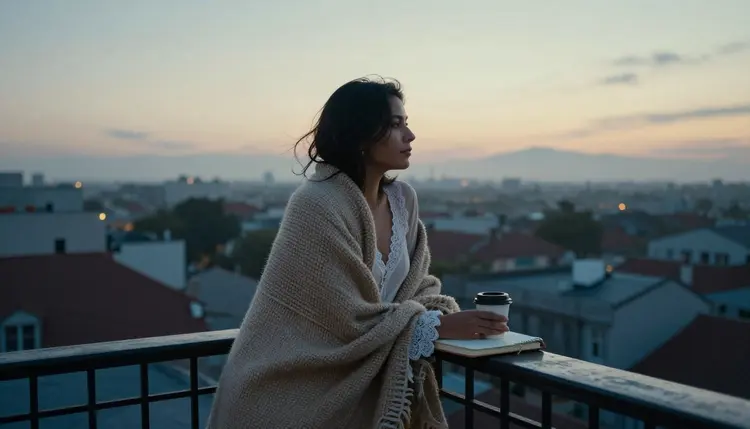
Texture and fabric carry more of a journal scene's intimacy than the pose does. An oversized knit sweater slipping off one shoulder, a thin cotton robe, a blanket pulled up around bare shoulders on a balcony: naming the actual fabric gives the model something exact to render, and it reads as observed rather than staged. A vague word like sexy describes a feeling, not a garment, and leaves the actual look to chance.
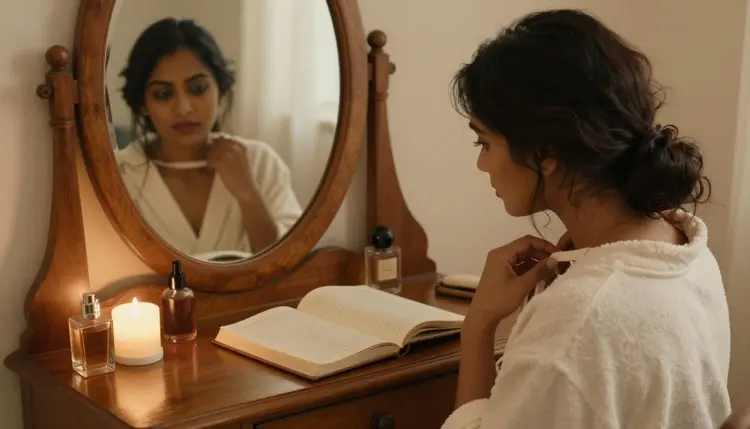
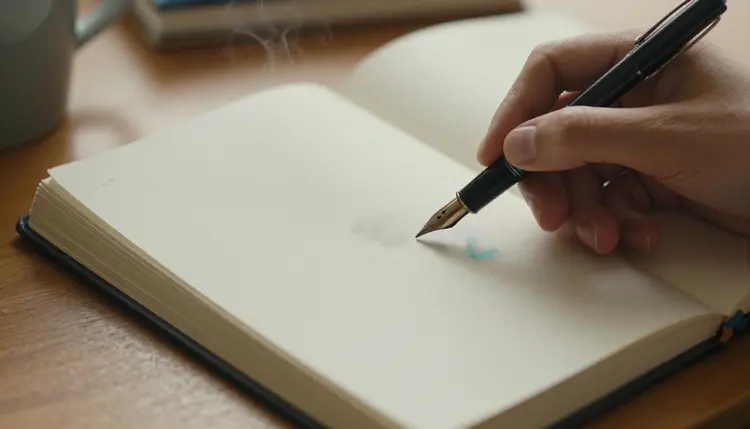
Camera distance changes the read of a journal scene as much as wardrobe does. A close-up on a hand writing, on a pen resting against a chin, or on a coffee mug beside an open page reads as intimate and slow. A wider shot of a full room, a window seat, or a balcony reads as reflective, almost cinematic. Deciding which register a given scene needs, before writing the prompt, keeps a set from feeling like a random mix of distances.
A short reference table for prompting a journal scene:
| Say this | Instead of this | Why it helps |
|---|
| a fictional woman in an oversized sweater, cross-legged on the bed with a journal open | a sexy bedroom photo | gives the model a garment, a pose, and a prop instead of a vague mood |
| close-up on a hand writing with a fountain pen, ink still wet on the page | a hot close-up | names the exact action and object instead of leaving both to chance |
| sitting at a rain-streaked window seat, grey afternoon light | a moody photo | gives the model a specific location, weather, and light source |
| wrapped in a blanket on a balcony at dawn, journal resting on her lap | a romantic photo | reads as intimate and observed, and holds up across a whole set |
A journal scene does not have to feature a woman only; the same fixed-character-plus-room-plus-light approach works just as well for a man writing at a desk or wrapped in a blanket on a balcony. Everyday props tied to journaling itself, a chipped coffee mug, a worn pen, a dog-eared page, ground a scene in the format it is meant to represent, which an abstract portrait alone cannot do.
Every scene generated here is for adults, eighteen and over, and the character in frame must be entirely fictional: an invented person, not someone built from a real photo, and never made to resemble a real person without their consent. No character that reads as a minor, in any pose or setting. Prompts that cross these lines are refused, and attempting them violates the platform's terms.
Qwen Image 2 running with no content filter changes what kind of adult content it will render, not who it can be rendered of. The rule against real people and minors applies on every model in the catalog, filtered or not.
Generations on Picasso IA stay private by default, visible only in your own account unless you choose to download or share them, so building out a full journal set before picking a favorite does not put anything on public view.
Generations on Picasso IA are paid for with credits spent per image, not a separate subscription tier for each model. A new account starts with free credits, enough to run the five-step process above across a small set of scenes before deciding whether to buy more. Image generations sit toward the cheap end of what the app offers, well below the cost of a video generation.
Exact credit amounts and plan pricing change as the catalog evolves, so current numbers live on the pricing page rather than printed here where they would go stale. Fixing one character and one morning, then generating a small set around it, is the efficient way to land on a journal illustration worth keeping.
Does Qwen Image 2 really generate NSFW journal illustrations with no content filter?
Yes. Qwen Image 2 is one of six models on Picasso IA confirmed to run with no content filter, alongside Seedream 4.5, Recraft V4.1 Pro, Picasso Image Editor Pro, Picasso Video, and LTX 2.3 Pro. A journal scene built around an open robe at a window or a diary page on a rumpled bed runs the same way any other prompt does, and every character generated must still be a fictional adult, eighteen and over.
What makes journal illustration different from a regular portrait prompt?
A journal illustration is meant to read as a private, observed moment rather than a posed portrait. That means naming small, unglamorous details, a coffee ring, an uncapped pen, genuinely rumpled sheets, matters as much as the pose, and a specific room and light source do more work than a dramatic angle.
Can I keep the same fictional character across a whole set of journal scenes?
Yes. Write her hair, build, and one signature detail, like a specific robe or journal cover, the same way in every prompt, and vary only the pose, the room, and the light. That fixed description is what makes a cover, an interior spread, and a social preview all read as the same person's diary.
Should a journal illustration be photographic or a painted style?
Either works, but they call for different models. Qwen Image 2 is the filter-free pick for a photographic scene that has to hold several details at once, while Recraft V4.1 Pro is the better starting point for a drawn or painted look closer to a watercolor diary sketch. Pick the one that matches the rest of the project rather than mixing styles across a set.
What kind of light works best for a diary-style scene?
Sunrise through a sheer curtain, grey light on a rainy window, or a single warm lamp at a vanity all read as intimate rather than generic. Naming the actual source and the time of day, instead of a vague mood word, gives the model something concrete to build the frame around.
Can the character in a journal illustration be a man instead of a woman?
Yes. The same fixed character, fixed room, and named light approach works the same way for a man writing at a desk or wrapped in a blanket as it does for a woman, and nothing about the format favors one gender over the other.
How many scenes should I generate for one journal project?
There is no fixed number, but a small set, three to nine scenes around one character and one morning, gives a project real options across a cover, an interior spread, and a preview image, instead of one photo stretched to do every job.
Can I edit a finished journal scene afterward to fix one detail?
Yes. If a hand around a pen or the fold of a blanket comes out wrong in an otherwise good result, Picasso Image Editor Pro can adjust just that area with a plain instruction instead of regenerating the whole scene from scratch. It also runs with no content filter, so an adult scene can be edited the same way it was generated.
Can a journal illustration become a short video clip?
Yes, as a separate step. Picasso Video can animate a finished scene into a short, slow clip, and LTX 2.3 Pro generates cinematic video directly from a prompt; both run with no content filter. Settling on a still image first is the more efficient order, since an image generation costs less than a video one.
Is creating a NSFW journal illustration free to start on Picasso IA?
New accounts start with free credits, enough to try several rooms, lights, and poses before anything needs to be purchased. Beyond that, generations are paid for with credits rather than a flat subscription per model. Current numbers live on the pricing page rather than stated here.