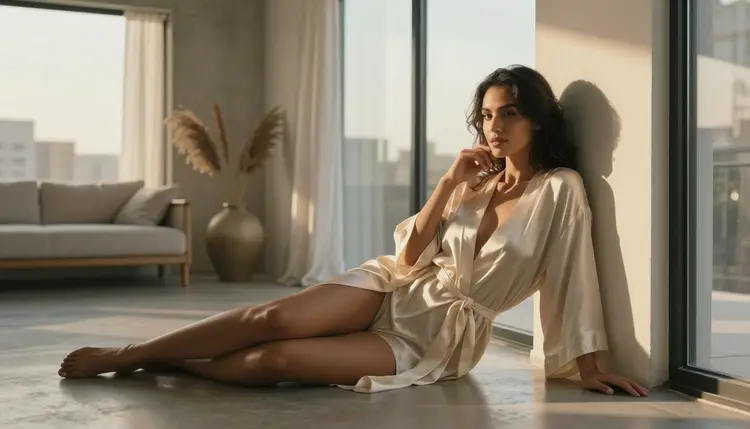
A profile banner is the one image on a page nobody has to click to see. It stretches across the top before a bio, a pinned post, or even a username fully registers, so it sets the tone for everything under it in about a second. Seedream 4.5 is one of six models on Picasso IA confirmed to run with no content filter, and its wide, cinematic instinct fits this kind of strip better than a single centered face ever could: a mood held across a horizontal frame instead of one static portrait.
This page covers why the model suits a banner specifically, the composition choices that keep a wide image readable once a platform crops or overlays it, a five-step process for generating one, and the rules every fictional adult in the frame has to follow.
Most of the 488 models in the Picasso IA catalog carry a content filter, and a banner built around a silk robe, bare shoulders, or a suggestive glance is exactly the kind of prompt that filter exists to catch. Try it on a filtered model and the app shows a Content Not Supported by This Model message, then carries the prompt over to a model that will actually run it. Seedream 4.5 is one of those alternatives, confirmed filter-free: a mature, intimate scene generates the same way any other prompt does.
It shares that filter-free status with five other models, and each one covers different ground for a banner. Qwen Image 2 is the open-source pick for a prompt stacking several details, wardrobe, setting, light, in one line. Recraft V4.1 Pro suits a drawn or painterly banner instead of a photoreal one. Picasso Image Editor Pro touches up a finished banner afterward, useful for fixing a stray fold of fabric. Picasso Video and LTX 2.3 Pro turn a chosen banner into a short animated header, for the handful of platforms that support one. Seedream 4.5 is the one to reach for first when the brief needs a photographic scene with real depth rather than an illustration. Well known models such as Nano Banana, Seedance, Sora, Veo, Kling, GPT Image 1, and DALL-E 3 are part of the wider catalog and excel at other work, but none of them are confirmed to generate adult content without hitting a filter, so an intimate banner prompt is likely to bounce back to the six named above. See the toolkit to start, or the full catalog for everything else the app offers.
A banner is not a portrait stretched sideways. It is judged in a sliver, often a third the height of a normal photo, and most platforms crop the edges or lay a circular profile photo and a username directly over one corner. That changes what a good prompt should ask for: a subject placed to one side rather than dead center, a horizon or a clear background rather than a cluttered one, and enough negative space that nothing important sits where the avatar or the text will land.
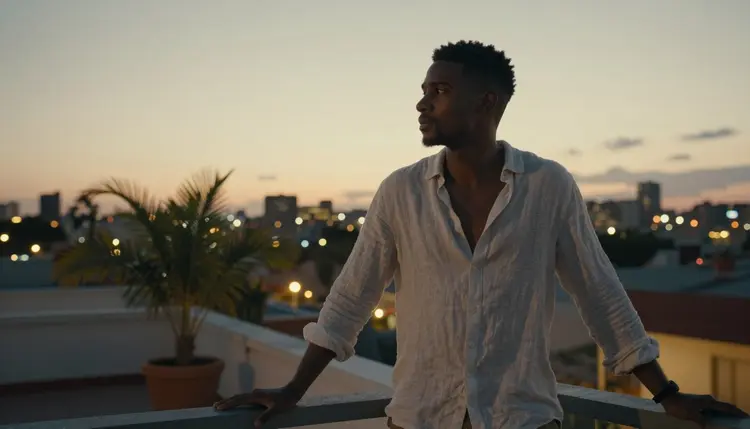
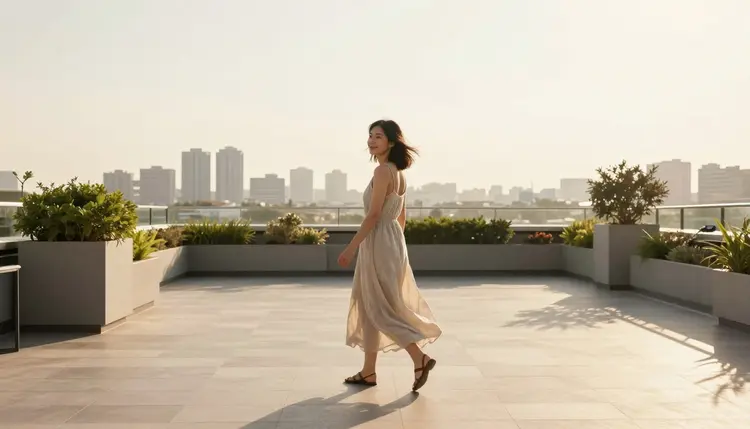
A wide setting reads better across this shape than a tight one does. A skyline at dusk, a sunlit terrace, a poolside chair beside open water: any scene with real horizontal depth fills a banner naturally, where a close portrait leaves awkward empty bands on either side once the platform crops it to its own ratio.
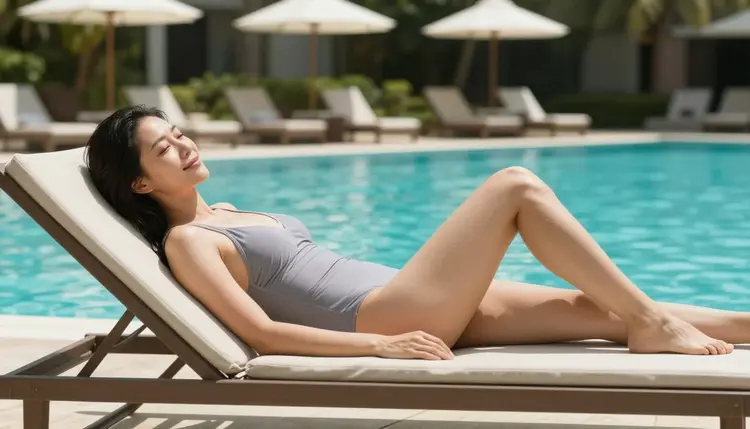
Naming the platform's rough shape in the prompt, wide, cinematic, landscape, three times wider than it is tall, helps the model commit to the format instead of defaulting to a square or portrait crop that then has to be cropped again by hand.
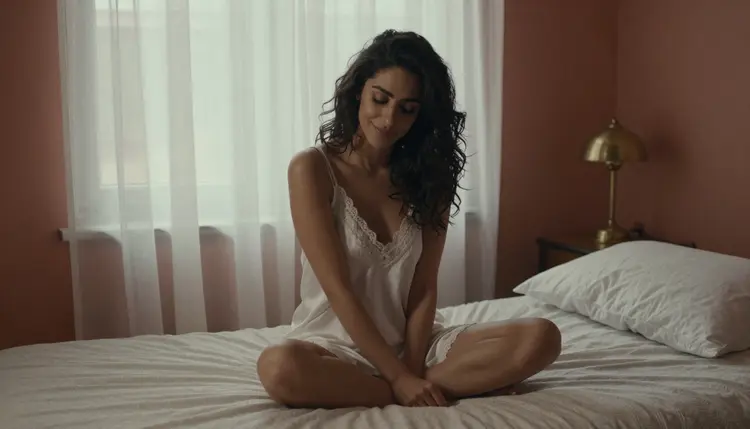
Tone matters as much as composition. A banner and a profile photo that read as the same light, the same season, the same mood, feel like one identity rather than two unrelated images stitched together, so it is worth carrying a consistent light source and color palette across every banner generated for the same profile.
Turning a wide scene into something that actually works behind an avatar, rather than just a nice picture, takes a little planning before the first generation.
- Describe the Subject as One Fixed Fictional Adult. Give the character a hair color, a build, and one distinguishing detail up front, so every version generated for the banner stays the same invented person instead of drifting between attempts.
- Set the Scene in Widescreen Terms. Ask directly for a wide, cinematic, landscape composition, three times wider than it is tall, so the model commits to the shape instead of defaulting to a square crop.
- Open the Toolkit and Select Seedream 4.5. Picking the filter-free model before writing the prompt avoids wasting a first generation on a model that refuses the brief outright.
- Ask for an Off-Center Composition With Clear Space. Request the subject placed to one side, with the opposite side left comparatively plain, so there is room for a profile photo and a username once the banner is live.
- Generate a Batch and Preview It Behind a Profile Photo. Drop a circle over one corner before picking a favorite, since a pose that reads well on its own can clash badly once a real avatar sits on top of it.
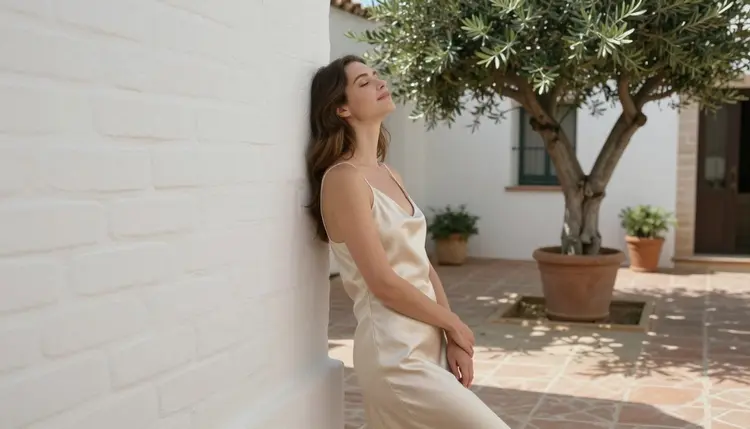
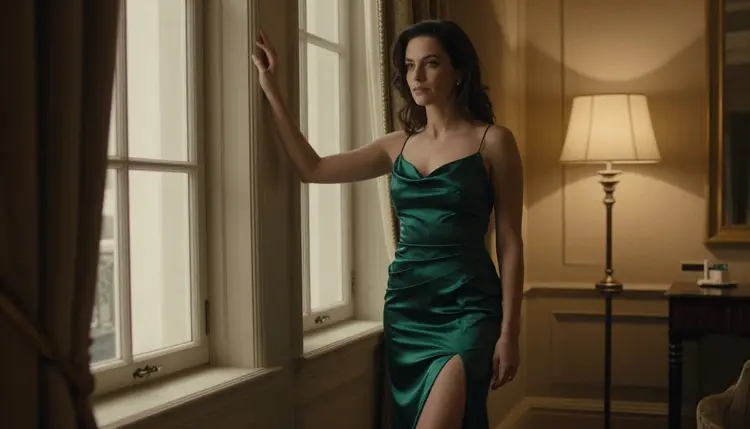
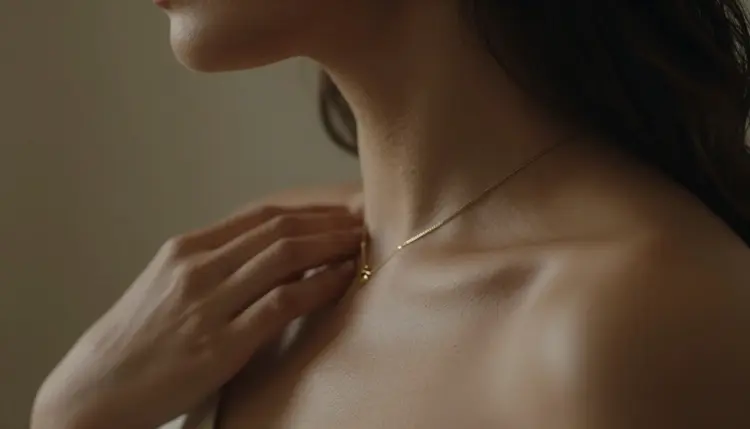
Fabric and setting carry more of the mood than pose does at this size. A robe in cream or emerald silk, a linen shirt left open, a satin dress against a stone window ledge: naming the material and the color gives the model something concrete to render, and it reads as intimate and tasteful rather than plain. A vague word like alluring describes an effect, not a scene, and leaves the actual look to chance.
Direction of gaze matters more here than in a square profile photo, because a banner is often seen in passing rather than studied. A subject glancing back over one shoulder, or looking off toward the horizon rather than straight at the camera, holds attention for the half second a visitor actually spends on it.
| Say this | Instead of this | Why it helps |
|---|
| a fictional woman in an emerald silk robe on a sunlit rooftop, wide cinematic shot | an attractive banner | gives the model a concrete wardrobe, setting, and shape instead of a vague mood |
| glancing back over one shoulder toward the horizon | looking straight at the camera | holds attention for a passing glance, not a studied one |
| subject placed to the left third, open sky to the right | close-up portrait, centered | leaves room for a profile photo and username added by the platform |
| golden-hour light through an open window | soft lighting | gives the model a specific, directional light source instead of a flat one |
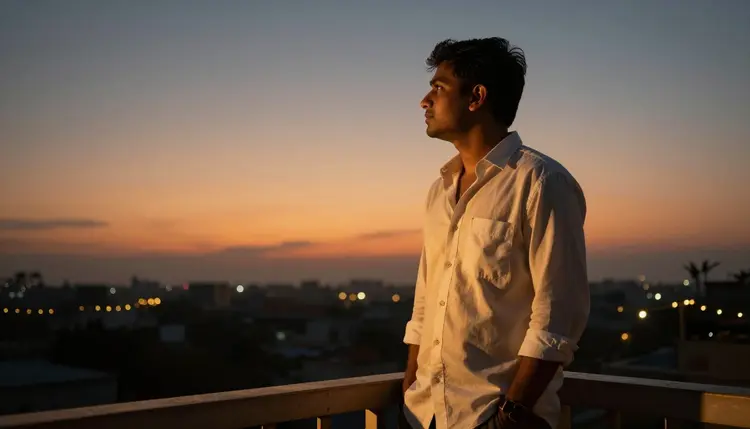
A banner does not have to feature a woman only. A man in an open linen shirt against the same kind of skyline or terrace reads exactly as well, and the same wardrobe-plus-setting-plus-light approach applies regardless of who is in frame.
A more formal, editorial scene fits a polished, curated profile better than a casual one; the same rules on fabric, gaze, and light still decide whether it reads as a banner rather than a random photo.
Every banner generated here is for adults, eighteen and over, and the subject in it must be entirely fictional: an invented person, not a real account holder, not a public figure, and never built to resemble a real person without their consent. No character that reads as a minor, in any wardrobe or setting. Prompts that cross these lines are refused, and attempting them violates the platform's terms.
Seedream 4.5 running with no content filter changes what kind of adult content it will render, not who it can be rendered of; the rule against real people and minors applies on every model in the catalog, filtered or not.
Generations on Picasso IA stay private by default, visible only in your own account unless you choose to download or publish them, so testing a few banner directions before settling on one does not put anything on public view. What you post afterward is still governed by local law and by the rules of whichever platform hosts the finished profile.
Generations on Picasso IA are paid for with credits spent per image, not a separate subscription tier for each model. A new account starts with free credits, enough to run the five-step process above across several wardrobe and setting combinations before deciding whether to buy more. Image generations sit toward the cheap end of what the app offers, well below the cost of a video generation.
Exact credit amounts and plan pricing change as the catalog evolves, so current numbers live on the pricing page rather than printed here where they would go stale. Comparing a small batch with an avatar mockup over the corner, and adjusting one variable at a time, the wardrobe, the setting, the crop, is the efficient way to land on a banner worth keeping.
Does Seedream 4.5 really generate a NSFW profile banner with no content filter?
Yes. Seedream 4.5 is one of six models on Picasso IA confirmed to run with no content filter, alongside Qwen Image 2, Recraft V4.1 Pro, Picasso Image Editor Pro, Picasso Video, and LTX 2.3 Pro. A scene built around a silk robe, bare shoulders, or a suggestive glance generates the same way any other prompt does, and every subject generated must still be a fictional adult, eighteen and over.
What size or aspect ratio should I request for a profile banner?
Most platforms display a banner around three times wider than it is tall, though the exact pixel size varies by site. Ask the model for a wide, cinematic, landscape composition rather than a square one, then crop it to the exact pixel dimensions afterward if a platform needs a precise size.
How do I leave room for my profile photo and username?
Place the subject to one side of the frame, left or right, and keep the opposite side comparatively plain: an open sky, a blurred background, a stretch of wall. That negative space is where a circular profile photo and a username usually sit once the banner goes live.
Can I reuse the same fictional character across multiple banner versions?
Yes. Keep the character's hair, build, and one distinguishing detail written the same way in every prompt, and vary only the setting, the wardrobe color, or the light. Reusing that fixed description is what keeps a whole set of banners looking like the same person rather than a different one each time.
What happens if I try this on a model that is not on the confirmed list?
Most other models apply their own content filter and will refuse a prompt they classify as adult content. When that happens, Picasso IA shows a message that the content is not supported by that model and suggests switching to one of the six confirmed models, carrying your prompt over automatically so you do not need to retype it.
Should a profile banner be a photograph or an illustrated style?
Either works, but they call for different models. Seedream 4.5 is the filter-free pick for a photographic, cinematic look, while Recraft V4.1 Pro is the better starting point for a drawn or painterly banner. Pick the one that matches the rest of a profile rather than mixing styles.
Can the subject in the banner be a man instead of a woman?
Yes. The same approach, a fixed wardrobe, a wide setting, and directional light, works the same way for a man as it does for a woman, and nothing about the format favors one gender over the other.
Can I edit a finished banner afterward to fix one detail?
Yes. If a fold of fabric or a hand comes out wrong in an otherwise good result, Picasso Image Editor Pro can adjust just that area with a plain instruction instead of regenerating the whole banner from scratch. It also runs with no content filter, so an adult banner can be edited the same way it was generated.
Can a profile banner become a short animated header instead of a still image?
Yes, as a separate step, on the handful of platforms that support one. Picasso Video can animate a finished banner into a short clip, and LTX 2.3 Pro generates cinematic video directly from a prompt; both run with no content filter. Settling on a still banner first is the more efficient order, since an image generation costs less than a video one.
Is creating a NSFW profile banner free to start on Picasso IA?
New accounts start with free credits, enough to try several wardrobe, setting, and crop combinations before anything needs to be purchased. Beyond that, generations are paid for with credits rather than a flat subscription per model. Current numbers live on the pricing page rather than stated here.