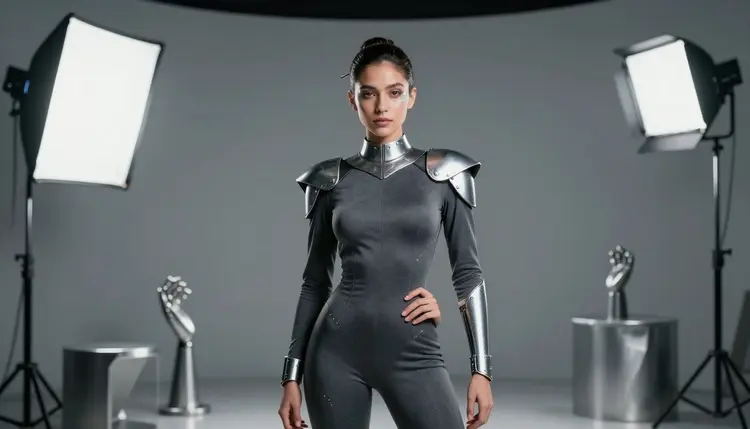
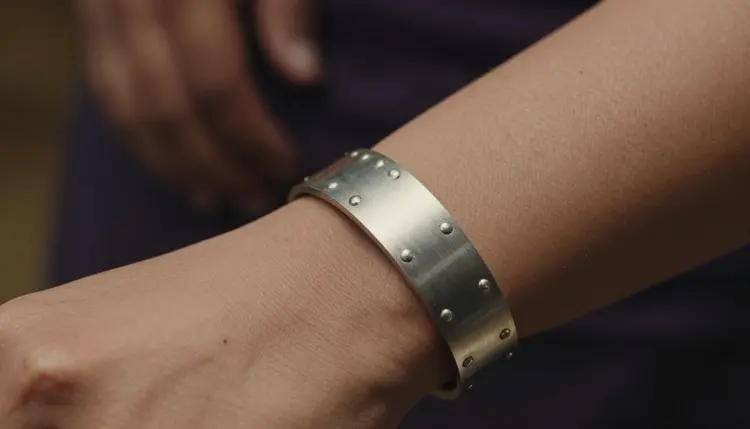
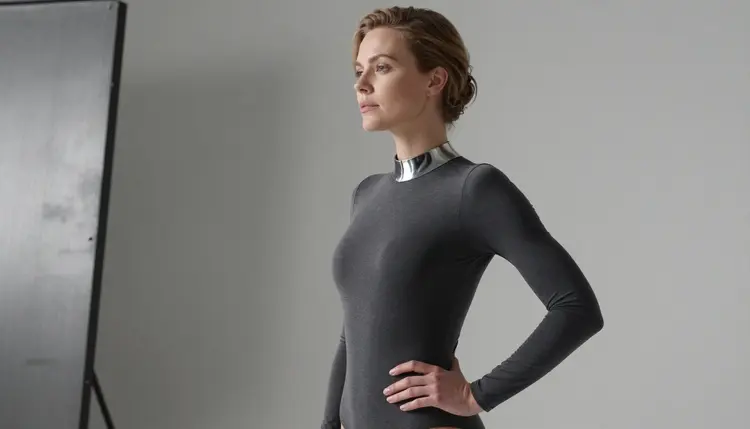
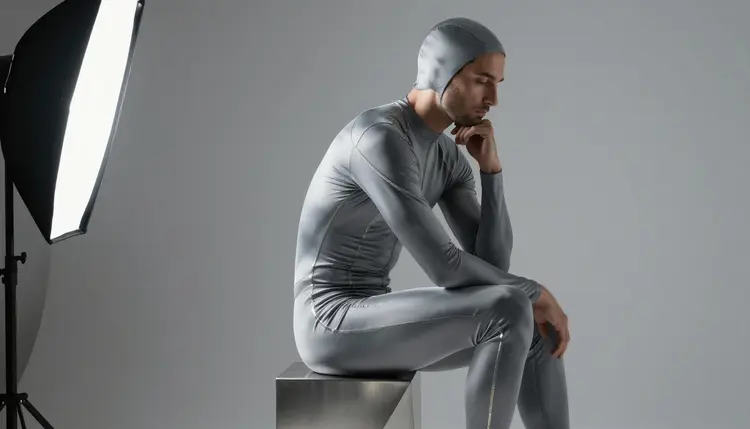
Android companion art on Picasso IA means a fictional synthetic character, not a real android and not a real person: a chrome collar catching the light, a brushed metal cuff at the wrist, a seamed panel running down a jacket sleeve, the visual grammar of a companion that was built rather than born. Out of the catalog's 488 AI models, six are confirmed to generate adult content with no content filter, and Qwen Image 2 is the pinned pick for this exact kind of work, because a companion design lives or dies on whether four or five separate metallic details survive one single generation together, matching, instead of drifting apart across a batch.
This page is built around that one strength. It walks through why Qwen Image 2 holds multi-part consistency where a lot of models let a detail slip, compares it against the other five confirmed models, and lays out the five-step process from a companion brief to a finished piece.
One line before anything else, since it shapes every example on this page: every character shown here is a fictional adult, eighteen or older, a designed companion rather than a real person in costume or a working robot. No real likeness, no public figure, and nothing resembling a minor, in any finish or style.
A companion brief is rarely one idea; it is four or five small, specific pieces that all have to read as one outfit and one character: a collar with a particular chrome finish, a pair of matching cuffs, a seamed panel running along a sleeve, maybe a subtle metallic highlight along a cheekbone to sell the synthetic look. Qwen Image 2 is the strongest starting point for exactly this kind of layered brief. It is one of only six models across Picasso IA's catalog confirmed to generate adult content with no content filter, and its particular strength, the reason it is pinned to this page rather than left as one option among many, is holding several named details together in a single generation instead of nailing one and losing the rest.
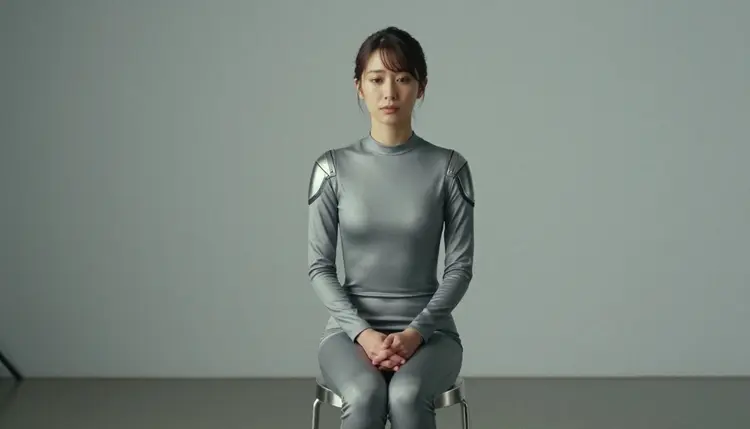
Where a lot of image models redraw a face fresh on every attempt and let a cuff or a collar drift a shade between one output and the next, Qwen Image 2 tends to keep a named material, brushed metal against skin, held constant across a batch. That matters more for android companion art than almost any other style on this page: the appeal of the look sits in how the metal reads against skin and fabric, and a design that changes its own chrome finish between a reference shot and a follow-up generation is a design that never quite locks in.
Qwen Image 2 is not the only model that can draw a companion character, and it is not always the right one. A brief that wants to read as a comic panel or an illustrated finish is a job for Recraft V4.1 Pro instead, and one that wants full photoreal skin and studio light sits closer to Seedream 4.5. Both live alongside Qwen Image 2 inside the toolkit, next to the full catalog.
Six models in the catalog run with no content filter on adult prompts. That is six out of 488, not the whole library: most models here, including several familiar names, are tuned for a general audience and screen an adult companion prompt before it ever renders.
| Model | Type | Best for android companion art | Try it |
|---|
| Qwen Image 2 | Image | Multi-part consistency: a collar, cuffs and a panel seam in one generation | Qwen Image 2 |
| Recraft V4.1 Pro | Image | Illustrated, comic-style companion designs | Recraft V4.1 Pro |
| Seedream 4.5 | Image | Photoreal metallic skin, studio light | Seedream 4.5 |
| Picasso Image Editor Pro | Image editor | Fixing a seam, a cuff or a hand after the fact | Picasso Image Editor Pro |
| Picasso Video | Video | Turning a finished companion design into motion | Picasso Video |
| LTX 2.3 Pro | Video | Cinematic companion video from a scene description | LTX 2.3 Pro |
Four of the six draw or edit still images, and two generate video. Qwen Image 2 carries the most weight on this page since multi-part consistency is exactly what an android companion brief needs, but the other five cover ground it was not built for: an illustrated finish, a fully photoreal one, a fix on a finished piece, or turning a still design into a video clip.
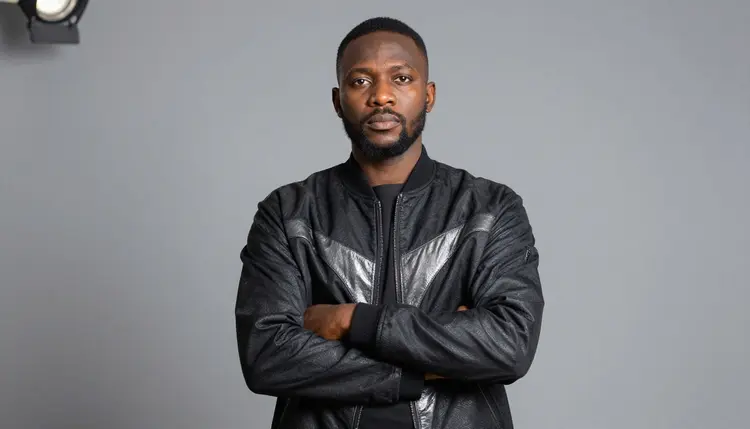
Getting from a companion idea to a finished piece follows the same five-step loop regardless of which model opens it.
- Write the companion brief, not just the character. Name every metallic detail on its own, the collar's finish, the cuff style, where a panel seam runs, plus the pose and setting; a fictional adult companion in a brushed chrome collar, matching wrist cuffs, a seamed jacket panel, standing in a studio, is a complete brief on its own.
- Open the toolkit and select Qwen Image 2. It is the pinned pick for this kind of layered brief, since it holds several named details together instead of losing one on a re-roll.
- Generate a batch and check detail consistency first. A handful of variants from one prompt shows whether the collar, the cuffs and the panel all came through matching; a tight spread across the batch means the brief was specific enough.
- Adjust one detail at a time. Keep the closest result, change the pose, the finish, or a single accessory, and generate again rather than rewriting the whole brief; three or four rounds is a normal distance to a keeper.
- Finish with an edit pass. Send the winning image to Picasso Image Editor Pro to straighten a seam, clean up a cuff, or fix a hand, then download it and check the edges of the frame before calling it done.
Most places to generate this kind of art hand over one model and one outcome. Picasso IA's catalog holds 488 models, and a companion brief refused by one is not a dead end: the app shows a Content Not Supported by This Model message and recommends switching to one of the six confirmed models, carrying the original prompt over so nothing typed gets lost. Switching models is the sanctioned move here, not rewording a companion description with euphemisms to slip past a filter that just refused it; that approach is not supported on Picasso IA, and it usually produces a worse result even when it works.
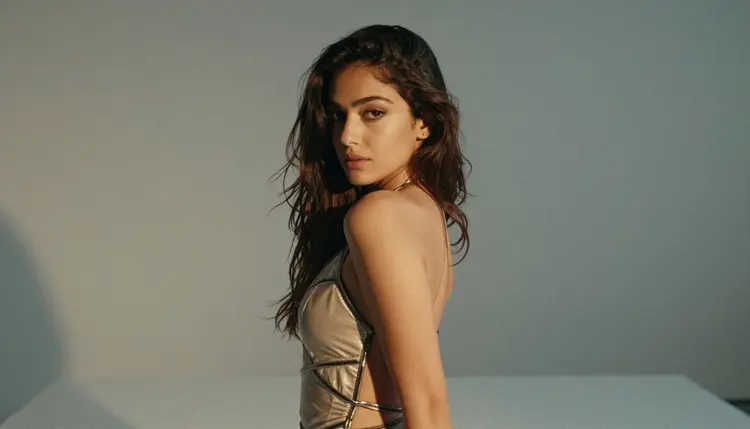
The other difference is that a companion design does not have to stop at a still image. A finished piece from Qwen Image 2 can move into Picasso Video or LTX 2.3 Pro, both confirmed filter-free, and come out as a short clip instead of staying static, the same silver highlight and the same seamed panel carried through into motion.
Nano Banana, Seedance, Sora, Veo, Kling, GPT Image 1, and DALL-E 3 are names a lot of people already know, and none sit on the confirmed list; several apply a filter tuned for a broad, general audience that a fictional adult companion prompt can trip regardless of the wording.
Android companion art on Picasso IA runs under the same short set of rules as every other adult generation on the platform, and a metallic finish does not change any of them.
This is an 18+ platform for fictional adults only. Every companion described on this page is a designed character, eighteen or older, not a real person: no real person's likeness without explicit consent, no public figures, and nothing involving a minor or anyone made to look like one, regardless of how synthetic or stylized a design looks. Prompts that cross these lines are refused by the models and violate the platform's terms.
An uncensored model is not a flawless one. A seamed panel, a matched pair of cuffs, and a chrome collar sitting flush against a jaw are some of the harder details for any image model to render cleanly, filtered or not, so check the joints and the seams, not only the pose, before calling a generation finished.
What gets generated stays private by default. A companion design sits in your own account, not on a public feed, unless you choose to share it, and where a finished piece ends up posting is your own responsibility under local law and each platform's own separate rules.
Generating android companion art spends credits the same way any other generation on Picasso IA does, and a single image sits toward the cheap end of what a generation costs. A short video clip through Picasso Video or LTX 2.3 Pro costs more than a still image, worth knowing before turning a whole companion design into motion.
New accounts start with free credits, enough to try a companion brief across a couple of models and run a full edit pass before spending anything further. Current plans and exact prices live on the pricing page, kept there since they change more often than this page does.
Which model should I use for NSFW android companion art on Picasso IA?
Start with Qwen Image 2; it is one of six models across the catalog confirmed to generate adult content with no content filter, and its particular strength is holding several metallic details, a collar, a pair of cuffs, a panel seam, together in one generation instead of losing one on a re-roll. Reach for Recraft V4.1 Pro instead for an illustrated, comic-style finish, or Seedream 4.5 for a fully photoreal look.
Does Qwen Image 2 really have no content filter for adult companion prompts?
Yes. Qwen Image 2 is one of six models across the catalog confirmed to generate adult content with no content filter. Most other models, including several well-known names, are not on that confirmed list and may refuse an adult companion prompt outright.
What's the difference between Qwen Image 2 and Recraft V4.1 Pro for this kind of art?
Qwen Image 2 is the pick when a brief names several specific pieces, a collar, cuffs, a panel seam, that all need to survive one generation together; it holds multi-part consistency better than most models in the catalog. Recraft V4.1 Pro is an illustration and design model instead, suited to a comic panel or an anime-style finish rather than a photoreal one.
Can a finished android companion design be turned into a video?
Yes. Picasso Video and LTX 2.3 Pro are both confirmed filter-free and both generate video, so a companion design that started as a Qwen Image 2 image can move into either one and come out as a short clip instead of staying a still image. Both live inside the toolkit with the four image models above.
Does Nano Banana or another well-known model generate this kind of art?
Nano Banana is not on the confirmed list, and like most models built for a broad audience it applies a safety layer that can flag and refuse an adult companion prompt. The same applies to other familiar names like Seedance, Sora, Veo, Kling, GPT Image 1, and DALL-E 3; none are confirmed filter-free, and any of them can refuse a prompt the six confirmed models would generate.
What happens if a model refuses my companion prompt?
The generation stops and a Content Not Supported by This Model message takes the image's place, and the app recommends switching to one of the six confirmed models, carrying the original prompt over. The fix is switching models and running the same prompt again, not reworking the description with euphemisms to sneak past the filter that just refused it.
Can I generate android companion art of a real person?
No. A real person's likeness needs explicit consent, and public figures are excluded entirely; both are refused by the models and forbidden under the platform's terms. Every character described on this page is a fictional adult, eighteen or older, a designed companion rather than anyone real, and that rule does not bend for a synthetic or stylized theme.
How do I describe a companion design so Qwen Image 2 gets every detail right?
Name each metallic piece on its own rather than a general theme: the collar's finish, the cuff style, where a panel seam runs, and any highlight on the skin. A brief like brushed chrome collar, matching wrist cuffs, seamed jacket panel, subtle silver cheekbone highlight gives the model something concrete to hold onto across a batch; a vague instruction like a cool robot companion leaves too much to guess.
Why do metallic details sometimes render inconsistently?
Several small named pieces in one brief, a collar, two cuffs, a seam, are some of the harder combinations for any image model to hold steady, filtered or not. Removing a content filter changes what a model will attempt, not how well it locks several details together. A shorter list of pieces on the first pass, then a follow-up edit through Picasso Image Editor Pro naming the exact piece to fix, is what actually solves it.
How much does an android companion image cost, and are there free credits?
A single companion illustration sits toward the cheap end of what any image generation costs on Picasso IA; a video clip through Picasso Video or LTX 2.3 Pro costs more than a still image. New accounts start with free credits, enough to test a companion brief across a couple of models and run a full edit pass before spending anything further. Exact current prices are on the pricing page, since plans change more often than this article does.
Qwen Image 2 is already sitting in the toolkit with the rest of the full catalog. Open it, describe the companion in one line, and run the first prompt on the free credits that come with a new account.