Every original character starts as nothing: no face, no wardrobe, no name, just a feeling of who they might become. Turning that feeling into a set of images that actually reads as one consistent person, not five different strangers who happen to share a haircut, is the real work behind building an NSFW character from scratch. Seedream 4.5 is one of six models on Picasso IA confirmed to run with no content filter, and its photorealistic rendering holds fine detail, a scar, a fabric texture, the exact shade of a tattoo, steady across a whole set instead of drifting with every new prompt.
This page covers why Seedream 4.5 suits building a character from the ground up, what actually keeps that character recognizable across a dozen different looks, a five-step process for taking a concept from a blank page to a finished reference set, prompting tips for keeping the same fictional adult consistent in every frame, and the rules every character built this way has to follow.
Most of the 488 models in the Picasso IA catalog run a content filter, and a character built around an open robe, a fitted corset, or bare shoulders under a leather jacket is exactly the kind of prompt that filter exists to catch. Try it on a filtered model and the app returns a Content Not Supported by This Model message, then offers to carry the prompt to a model that will actually run it. Seedream 4.5 is one of those alternatives, confirmed filter-free, so a mature character concept generates the same way a plain portrait does, without a refusal breaking the flow halfway through a set.
It shares that filter-free status with five other models, each useful at a different stage of a character build. Qwen Image 2 is the open-source pick once a character's description has grown long, since it holds up well when a prompt stacks several fixed traits, hair, build, one signature accessory, in a single line. Recraft V4.1 Pro suits an illustrated or stylized character instead of a photoreal one, closer to concept art than a photograph. Picasso Image Editor Pro fixes one detail on an otherwise finished look, a hand, a strap, a prop, without regenerating the whole image from scratch. Picasso Video and LTX 2.3 Pro bring a finished character to life as a short clip once the design is locked. Seedream 4.5 is the one to reach for first for the photographic reference set a character build actually needs. See the full catalog for everything else the app offers.
A character is not one lucky image, it is the same invented person surviving a change of outfit, angle, and setting without turning into somebody else. That only happens when a handful of traits get fixed before the first prompt and then repeated, close to word for word, in every prompt that follows: hair color and length, build, and one signature detail such as a birthmark, a scar, or a piece of jewelry the character never takes off.
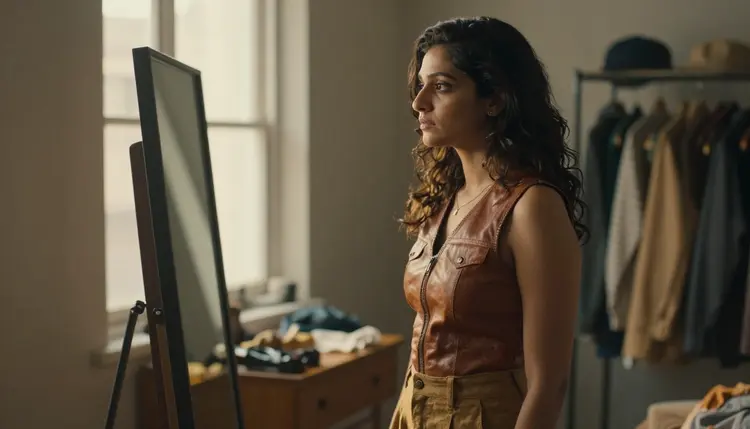
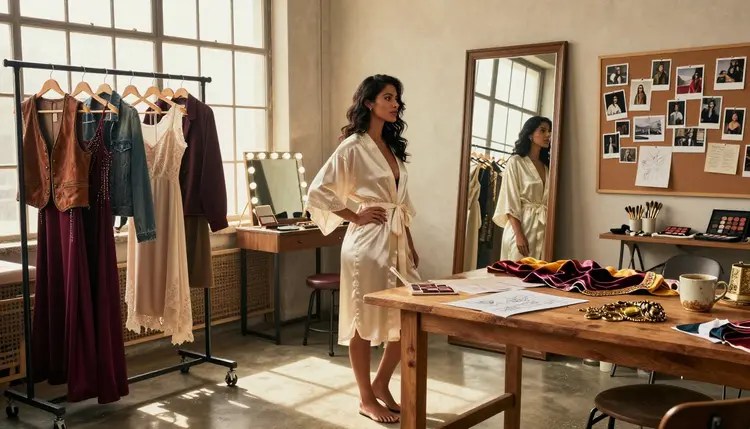
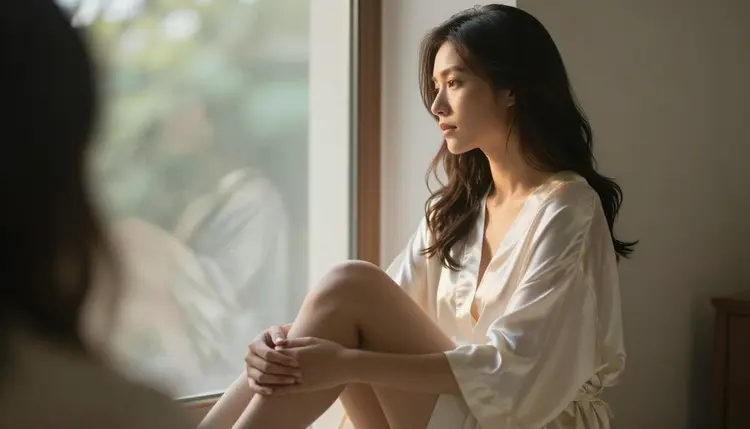
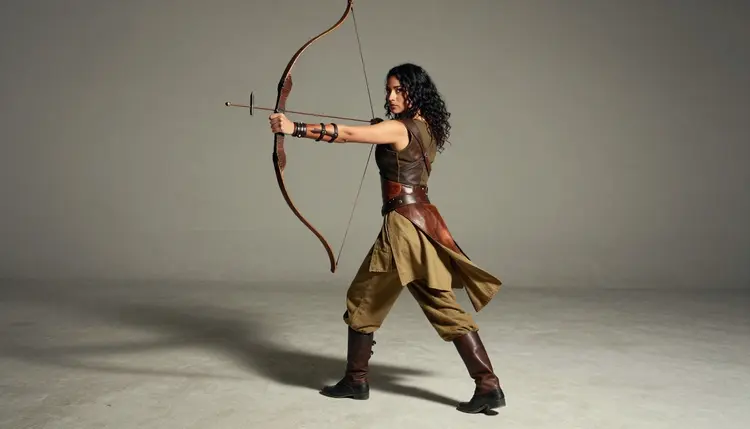
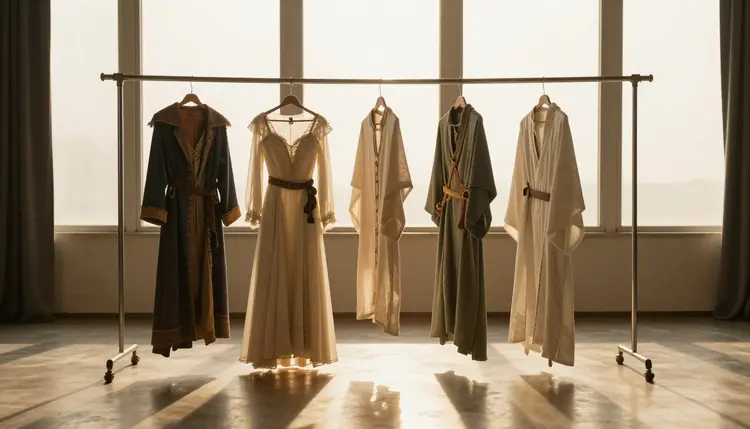
Wardrobe is where most characters actually take shape. A leather vest and boots read as guarded and a little dangerous. A silk robe reads as private, almost caught mid-thought rather than posed. Testing the same fixed identity against two or three very different outfits early on shows which register actually fits the character in mind, faster than describing a personality in the abstract ever could.
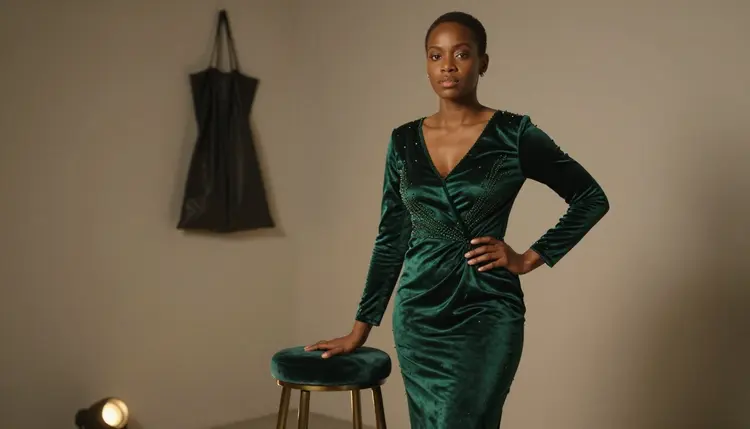
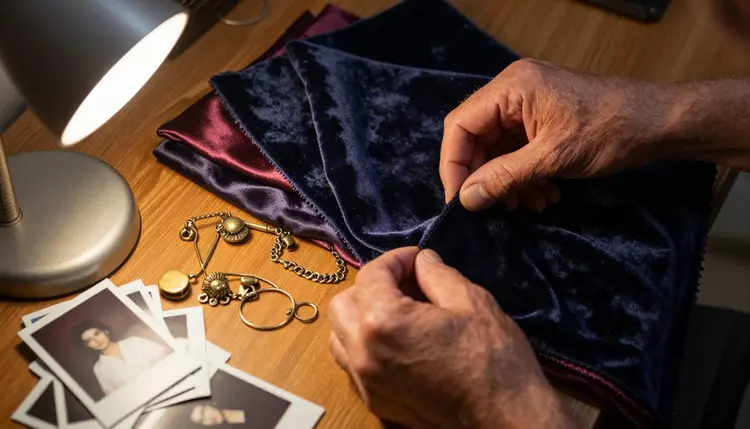
A formal look, an emerald velvet gown against a plain velvet stool, tells a different story than the leather vest does, and generating both under the same fixed traits is how a builder finds out whether the character is someone who commands a room or someone who watches it from a corner. Neither answer is right on its own; the point is that the images should decide it, not a guess made before any of them existed.
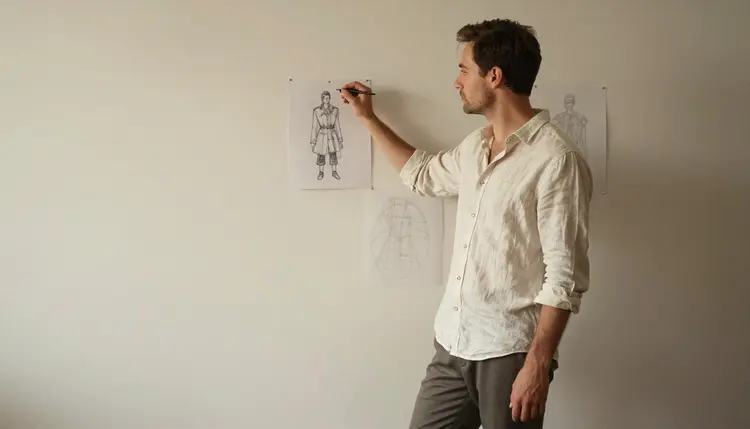
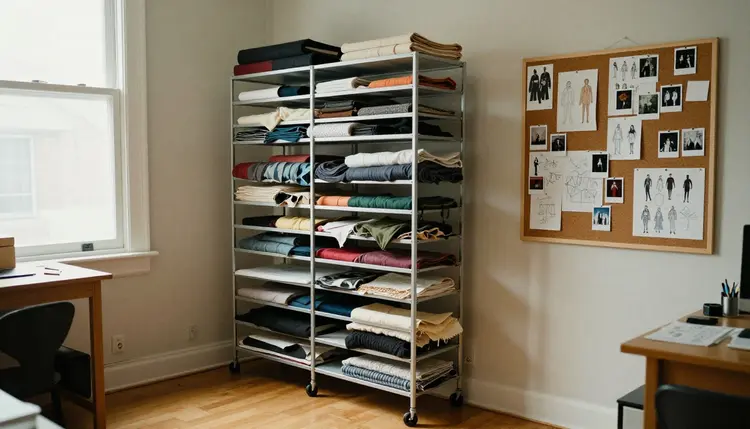
None of this is limited to a female character. A man sketching his own costume on a studio wall, planning a wardrobe the same deliberate way, produces a character built with exactly as much intention, and the fixed-traits approach works identically regardless of who is being designed. A quick sketch or a written moodboard, even three lines describing a silhouette, gives the model a stronger starting point than a single adjective ever will.
Turning a vague idea into a character with an actual reference set takes a short amount of planning before the first image, and the generation itself moves quickly once that planning is done.
- Fix the Character's Core Identity. Write down a name, an age of eighteen or older, a build, a hair color and length, and one signature detail before touching the toolkit, so every prompt afterward can repeat the same description.
- Build a Small Moodboard First. Gather two or three reference words for fabric, color, and mood, a written line works as well as a pinned image, so the character has a visual direction before the first generation instead of after it.
- Open the Toolkit and Select Seedream 4.5. Picking the filter-free model before writing the prompt avoids spending a first generation on a model that refuses a mature look outright.
- Generate a Range of Looks Around the Fixed Identity. Keep the core traits identical across every prompt and vary only the wardrobe, the pose, or the setting, so the results read as one person tried several ways rather than several different people.
- Review the Set and Lock the Reference Sheet. Line the results up side by side, keep the two or three that most consistently look like the same person, and treat that shortlist as the character's reference sheet for every future generation.
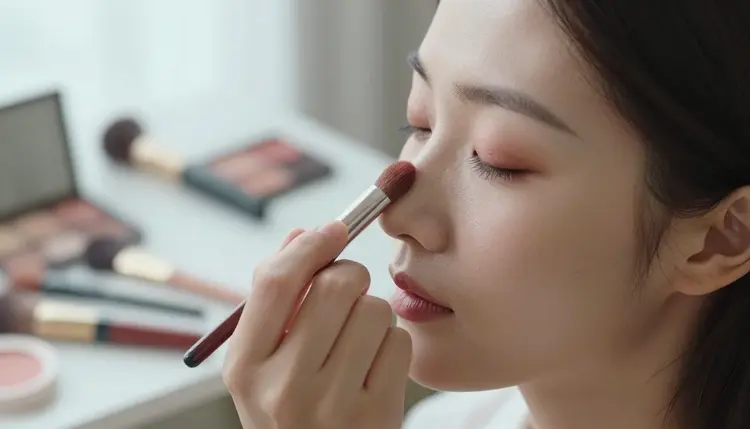
Small, concrete details carry a character's identity better than a mood word does. A closed-eye close-up while a makeup artist blends warm eyeshadow shows exactly how a character's face reads under soft light, a level of specificity that a word like pretty can never give the model to work from.
Framing matters as much as wardrobe once a character is meant to feel like a real person rather than a pose. A quiet moment by a window, knees drawn up, a silk robe loosely tied, reads as intimate and private in a way a straight-on portrait never does, and it is often the frame that ends up defining a character more than any action shot does.
A short reference table for prompting a character build:
| Say this | Instead of this | Why it helps |
|---|
| a fictional woman, dark hair to the shoulder, one gold nose ring, eighteen or older | a beautiful woman | gives the model a fixed trait set it can repeat across every later prompt |
| a leather vest and boots, arms crossed, guarded posture | a tough character | names the wardrobe and the pose instead of leaving the mood to chance |
| seated by a window, knees drawn up, silk robe loosely tied | a sultry photo | describes an actual scene the model can render instead of a vague feeling |
| close up on the eyes as warm eyeshadow is blended | a glamorous close-up | gives the model the exact framing and action instead of a generic label |
Once the fixed traits and one strong wardrobe choice are locked, pushing a character into motion is where a build really proves it holds together. A leather archer costume with a bow drawn mid-action tests whether the same face and build still read clearly under movement and a dynamic pose, not just in a calm, static portrait.
Every character built here is for adults, eighteen and over, and has to be entirely fictional: an invented person, never a real celebrity, never a public figure, and never built to resemble a real, identifiable individual without that person's consent. No character that reads as a minor is allowed, in any wardrobe, pose, or art style, and prompts that cross that line are refused outright.
Seedream 4.5 running with no content filter changes what kind of mature content it will render, not who it can be rendered of. That rule against real people and against minors applies across the entire catalog, on every model, filtered or not, with no exception for an uncensored one.
Generations on Picasso IA stay private by default, visible only in your own account unless you choose to download or share them, so testing several outfits, poses, and framings while a character is still taking shape does not put any of it on public view. That privacy-by-default setting is what makes it reasonable to generate a wide, exploratory range before settling on a final look.
Generations on Picasso IA are paid for with credits spent per image, not a separate subscription tier for every model. A new account starts with free credits, enough to run the five-step process above across a handful of outfits and poses before deciding whether a character concept is worth taking further. Image generations sit toward the cheap end of what the app offers, well below the cost of a video generation.
Exact credit amounts and plan pricing change as the catalog evolves, so current numbers live on the pricing page rather than printed here where they would go stale. Fixing a character's traits early and testing them across a small range of wardrobes is the efficient way to land on a design worth keeping past the first afternoon.
Does Seedream 4.5 really build an NSFW character with no content filter?
Yes. Seedream 4.5 is one of six models on Picasso IA confirmed to run with no content filter, alongside Qwen Image 2, Recraft V4.1 Pro, Picasso Image Editor Pro, Picasso Video, and LTX 2.3 Pro. A character built around an open robe, a fitted corset, or bare shoulders under a jacket generates the same way any other prompt does, and every character produced must still be a fictional adult, eighteen and older.
How many traits should I fix before generating the first image?
Three or four is usually enough: a build, a hair color and length, and one signature detail such as a scar, a piece of jewelry, or a birthmark. Fixing more than that tends to make prompts unwieldy without making the results any more consistent, while fixing fewer leaves too much for the model to decide on its own from one generation to the next.
Can I build a male character the same way as a female one?
Yes. The fixed-traits approach, a build, a hair description, one signature detail repeated in every prompt, works identically regardless of the character's gender, and nothing about the process favors one over the other.
What if two generations of the same character look like different people?
That almost always means the description drifted between prompts rather than staying fixed. Go back to the exact wording used in the first successful generation, keep it unchanged, and vary only the wardrobe, the pose, or the setting from there instead of rewriting the identity each time.
Should I sketch the character before generating anything?
It helps but is not required. Even a short written moodboard, two or three lines describing a silhouette, a color palette, and a mood, gives the model a stronger starting point than jumping straight to a single detailed prompt with no plan behind it.
Is it possible to keep one character consistent across dozens of images over time?
Yes, as long as the original fixed description is saved and reused rather than reconstructed from memory each time. Keeping that description, along with the two or three reference images that came out closest to it, in one place is what makes a character usable for a long-running project rather than a one-off set.
Can Picasso Image Editor Pro fix one detail without redoing the whole character?
Yes. If a hand, a strap, or a piece of jewelry comes out wrong in an otherwise strong result, Picasso Image Editor Pro can adjust just that area with a plain instruction instead of regenerating the entire image. It also runs with no content filter, so a mature look can be touched up the same way it was generated.
Can a finished character be turned into a short video?
Yes, as a separate step once the design is locked. Picasso Video can animate a finished character into a short clip, and LTX 2.3 Pro generates cinematic video directly from a prompt; both run with no content filter. Settling on a still reference set first is the more efficient order, since an image generation costs less than a video one.
Are illustrated or stylized characters possible, not just photorealistic ones?
Yes. Seedream 4.5 is the filter-free pick for a photographic, realistic look, while Recraft V4.1 Pro is the better starting point for an illustrated or painted character closer to concept art than a photograph. Pick whichever style the rest of the project actually needs rather than defaulting to photorealism by habit.
Is building an NSFW character free to start on Picasso IA?
New accounts start with free credits, enough to test several traits, outfits, and poses before anything needs to be purchased. Beyond that, generations are paid for with credits rather than a flat subscription per model. Current numbers live on the pricing page rather than stated here.