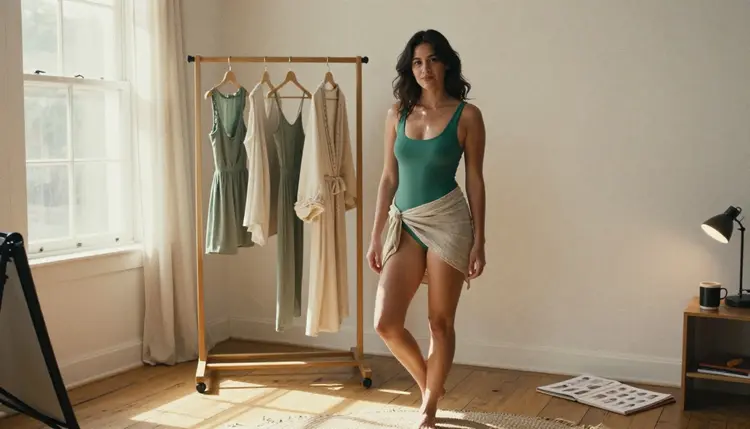
One striking portrait proves a character can look good once. It does not prove that the same face, the same build and the same presence survive a change of outfit, a new location or a different mood, and that gap is exactly what a full character set is built to close: the same person, generated again and again, in enough different looks that a viewer flipping through them reads one continuous character instead of nine strangers who happen to share a hairstyle.
This guide builds a nine-look set from the ground up on Recraft V4.1 Pro, one of six models Picasso IA confirms as uncensored across its entire catalog, and shows every finished look inline so you can see the consistency rather than take a claim about it on faith. Along the way: the five steps that keep a character locked while everything around them changes, and the rules that keep the whole set fictional and strictly adult.
A single good image can happen by accident. A character set cannot, because it asks the same face, the same hair and the same build to survive nine separate prompts instead of one, and drift shows up fast when it is there to find. That makes a set the actual test of whether a character is usable beyond a single lucky generation: for an original character profile, a companion persona, a tabletop hero, a webcomic cast member or an avatar meant to appear across many scenes, one portrait is a proof of concept and a full set is the deliverable.
The order matters less than the range. A useful set moves through casual, athletic, formal and relaxed looks so the character has already been tested in the kind of scene a story or a profile will eventually ask for, instead of discovering the face falls apart the first time someone tries a new outfit. Decide that range before the first prompt goes in, not after the third image comes out looking like someone else.
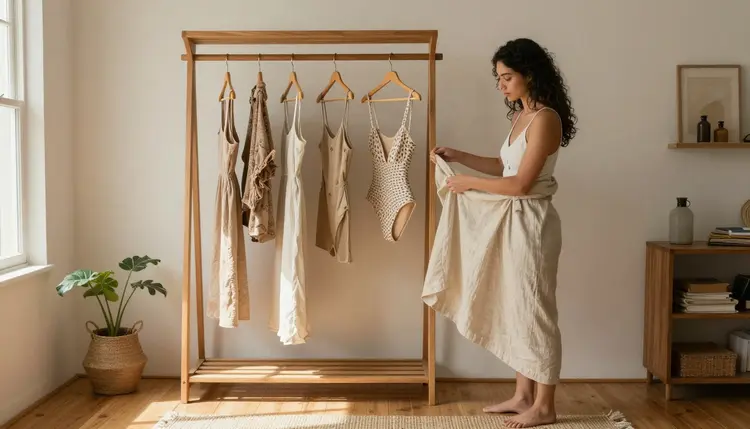
Picasso IA does not filter every model in its catalog the same way. Most of the more than 100 models on the site apply a safety layer somewhere in the pipeline and reject an adult prompt outright, no matter how carefully it is written. Six models are confirmed to generate this kind of content directly, with no filter stepping in, and this guide builds its set on the one made for repeatable, described characters.
Recraft V4.1 Pro is built as an illustration and design engine rather than a photorealism one, and that is exactly what a character set rewards: a model that treats a described face and outfit as instructions to follow, not a photo to approximate a little differently each time. Every other model on the site, including well known names outside this list, is not confirmed to behave the same way and should be treated as filtered until proven otherwise, which matters more across a nine-image set than for a single picture, since one rejected prompt in the middle stalls the whole session.
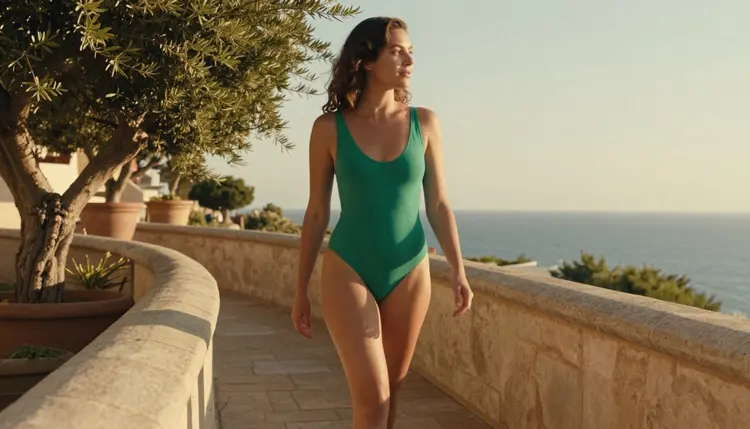
None of this depends on a long prompt or a special trick. It comes down to five decisions, made in order, before the first look gets generated.
- Write one fixed character description first. Before opening Recraft V4.1 Pro, put the character's face, hair, build and any signature detail into a single sentence you will reuse word for word in every prompt, because that sentence, and not the outfit, is what makes nine images read as one person.
- Generate the first look on Recraft V4.1 Pro. Pick the simplest outfit in the set, pair it with the fixed character sentence, and treat this first image as the reference every later look gets checked against.
- Change only the wardrobe and setting for each new look. Keep the character sentence untouched and swap the outfit, the location and the light for every new prompt, so the model has one fewer variable to drift on between generations.
- Compare each new image to the first before moving on. Check the face shape, the hair and the build against look one, and if a detail has shifted, regenerate that single image rather than letting the drift carry into the rest of the set.
- Close the set with a portrait and fix small errors in the editor. Finish with a close-up face shot to confirm the character reads correctly up close, and send any look with a stray detail, like a hand or a fold of fabric, to Picasso Image Editor Pro instead of starting that look over.
The character in this set wears nine looks and answers to one description the whole way through: same face, same build, same hair, a wardrobe that changes and nothing else that does.
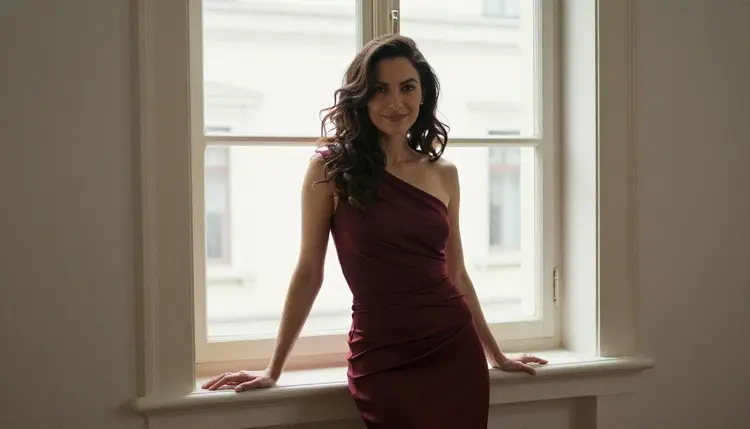
A burgundy cocktail dress by a tall window is the formal register of the set, and it is where a character sheet usually earns its keep: the same face that worked in a casual look now has to read as composed and confident in soft daylight, without becoming a different person in the process.
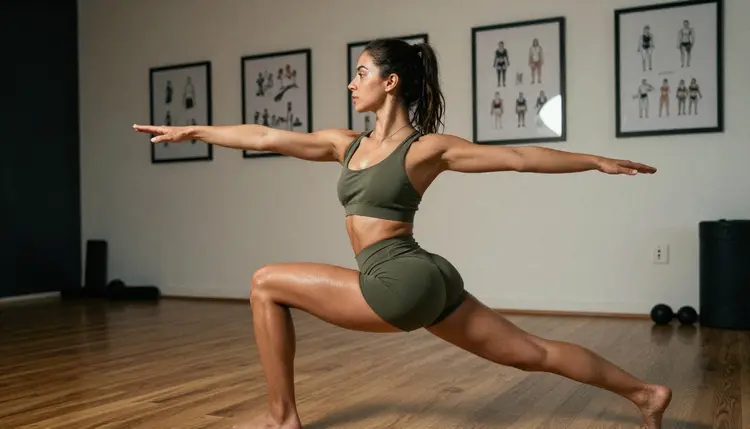
Athletic wear in a sunlit gym studio tests something a static portrait never does: a pose with real tension in it. A lunge is a harder shape to keep proportioned than a standing figure, and if the build holds through a pose like this one, it tends to hold through almost anything softer that comes after it.
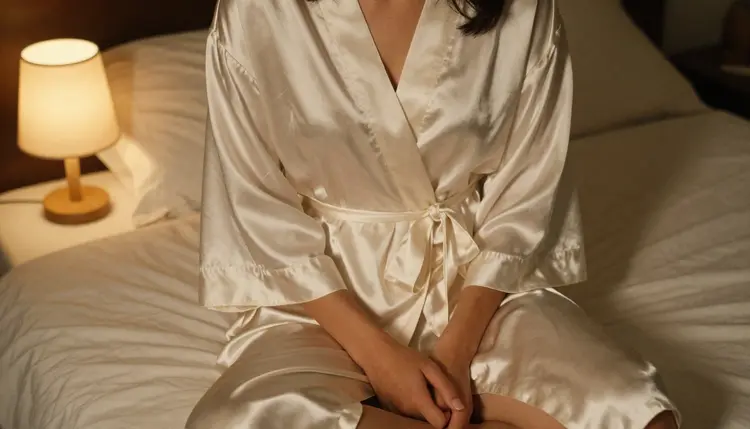
A silk robe by a warm lamp brings the set back to something quieter and more intimate, the kind of look most people actually build a character set for, and it is worth generating deliberately rather than treating it as an afterthought once the more demonstrative looks are already done.
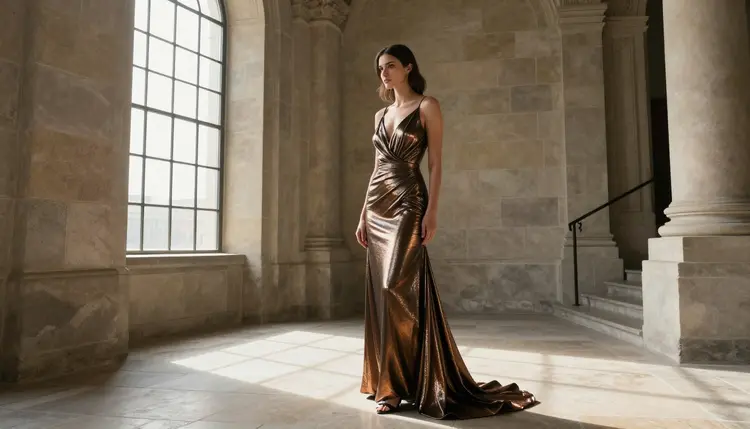
A metallic bronze gown on a stone staircase is the set's showpiece: full length, dramatic light, a pose with real movement running through it. If the earlier, simpler looks were generated with a tight character description, this is where that discipline pays off, since a demanding scene like this one leaves the least room for a face to drift unnoticed.
Keeping the Same Face and Body in Every Look
Consistency in a set like this does not come from a special setting or a hidden toggle. It comes from writing the character once and refusing to reword it, look after look, even when a new outfit or a new setting makes a different phrasing tempting.
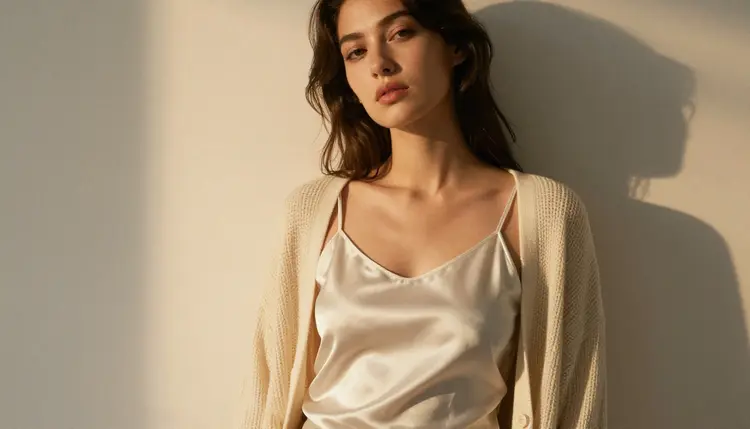
An ivory satin camisole and cardigan against a plain studio wall is a useful check precisely because there is nowhere for inconsistency to hide: no dramatic light, no busy background, just the character and the outfit. If the face and build still match the first image here, the set is holding.
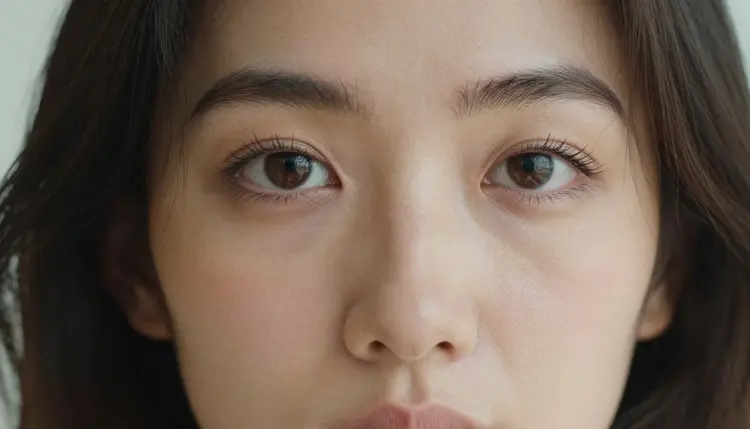
Finish the consistency check with a close-up: eyes, face and expression, filling most of the frame. A face that matches at full length can still drift at this distance, and a close-up is the fastest way to catch it before it becomes the tenth image instead of a quick regeneration of the eighth.
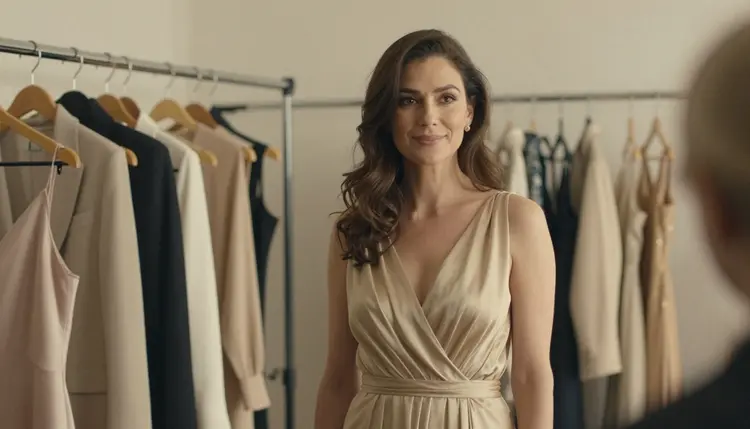
The set closes on a champagne gold gown beside an empty wardrobe rack, the visual bookend to where it started: every look has been tried, the same character answered to all nine, and the rack has nothing left hanging on it.
Everything in a set like this has to stay fictional and strictly adult, with no exceptions built in around it. Every character has to be invented, described from imagination rather than copied from someone real, and nothing in the character description should read as anyone who could be mistaken for a minor, however the wording is dressed up. This is 18+ content by definition, not a policy bolted on afterward, and it is the actual boundary of what a character set on Picasso IA is for.
Do not name a real person, base a description on a real face or body, or use a fictional label to describe someone who is not clearly an adult. None of the six confirmed models change any of that rule. They only change whether an adult prompt gets filtered before it reaches generation, nothing about who is allowed to appear in the result. Privacy works the same way it does everywhere else on Picasso IA: a character set you build is yours by default, not published, browsed or shared with anyone unless you choose to.
What actually counts as a full character set instead of a handful of images?
A set that holds the same face, build and hair across a deliberate range of looks, casual, formal, athletic and relaxed among them, rather than a few similar portraits generated back to back. Nine looks, like the ones in this guide, is a practical size: enough range to prove the character holds, small enough to build in one sitting.
Why is Recraft V4.1 Pro the recommended model for this kind of set?
Recraft V4.1 Pro is built as an illustration and design engine rather than a photorealism one, which makes it treat a described character as a set of instructions to repeat instead of a photo to reinterpret each time, and it is one of six models confirmed to run with no content filter on Picasso IA.
How many outfits should a first character set include?
Five to nine is a workable range for a first attempt, enough to cover casual, formal and at least one demanding pose without turning the session into an afternoon. The nine looks in this guide are closer to a complete set than to a minimum one.
What is the fastest way to fix one image that has drifted from the rest of the set?
Send that single image to Picasso Image Editor Pro rather than regenerating it from the original prompt. Editing the one look that slipped keeps the other eight untouched instead of risking a new round of drift across the whole set.
Can the same character carry over into a video instead of only still images?
Yes. Picasso Video and LTX 2.3 Pro read a very similar character description, so a finished look from this set can become a moving clip without rewriting who the character is from scratch.
Do I need to reword the character description for every new outfit?
No, and rewording it is usually what causes drift in the first place. Keep the sentence describing the face, hair and build identical across every prompt and change only the wardrobe, the setting and the light.
What happens if a set like this is attempted on a model outside the six confirmed ones?
The model applies its own filter and rejects the prompt, usually partway through the set rather than on the first image. Picasso IA offers to carry the same character description over to one of the six confirmed models instead of asking the prompt to be retyped.
Can a real person's face be used as the basis for a character in the set?
No. Every character built through Picasso IA's confirmed models has to be a fictional, invented adult, never the likeness of a real, identifiable person and never anyone who could read as underage, 18+ only regardless of how the description is phrased.
Is a finished character set private, or can other people see it?
Private by default. What you generate on Picasso IA is not published, browsed or shared with anyone else unless you choose to share it yourself, the same policy that covers every other kind of generation on the site.
Is it free to try building a small set before subscribing?
New accounts on Picasso IA start with free credits that work across the whole catalog, including Recraft V4.1 Pro and the other confirmed uncensored models, so a first few looks can be tested before deciding whether to build the complete set. Current plans are listed on pricing.