A still image can fake desire with one good look. A video has to earn it with movement, and most NSFW video prompts fall apart the second the subject actually moves: fabric clips through itself, a turn kills the framing, hair goes stiff as a helmet. LTX 2.3 Pro is one of six models on Picasso IA confirmed to run with no content filter, and it is built specifically for motion, so a spicy, suggestive scene reads as one continuous take instead of a slideshow with extra steps.
This page hands over the actual template: the five parts every working motion prompt carries, two worked examples filled in, a five-step process for building one with LTX 2.3 Pro, and the specific cues, wind, walking, a shared turn, that separate a clip that moves naturally from one that looks like a photo somebody nudged. Every example stays intimate and suggestive rather than explicit, and every character in it is a fictional adult. None of it requires guesswork once the pattern clicks, since the same five-part sentence keeps working after the wardrobe or the setting changes.
Most of the 488 models in the Picasso IA catalog carry a safety filter that a suggestive prompt trips the moment real movement enters it, an open robe catching a breeze, a dress swirling as someone turns. Send that same prompt to LTX 2.3 Pro and it generates the motion directly: no rewritten prompt, no euphemism swapped in, no Content Not Supported message to work around. That single difference, generating the scene instead of rejecting it, is the reason a repeatable template is worth building around this specific model.
It shares that filter-free status with five other models. Seedream 4.5 and Qwen Image 2 cover the photoreal still image, Recraft V4.1 Pro the illustrated one, Picasso Image Editor Pro touches up a still afterward, and Picasso Video is the other confirmed motion model, closer to a handheld, documentary feel where LTX 2.3 Pro leans cinematic and controlled. For a template built around a repeatable sentence structure rather than a single one-off prompt, LTX 2.3 Pro is the model this page is written around.

A photo prompt describes a single moment. A motion prompt has to describe a change across a few seconds, and that is the one habit most people carry straight over from image prompting without realizing it costs them a flat, stiff clip. A template that works on LTX 2.3 Pro reliably has five parts, written as one flowing sentence rather than five separate clauses. Skip one of the five and LTX 2.3 Pro fills the gap on its own, usually with a pose that holds still rather than a scene that actually moves.
Character and wardrobe, then one continuous action, then what the environment does at the same time, then how the camera moves, then the light and the mood. Keep the action to something a body actually completes in three or four seconds, turning toward a doorway, walking away down a hall, glancing back over a shoulder, rather than a whole scene's worth of plot packed into one clip.
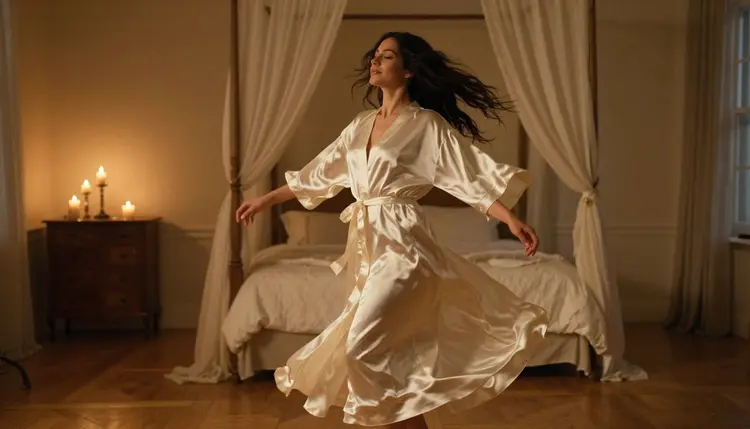
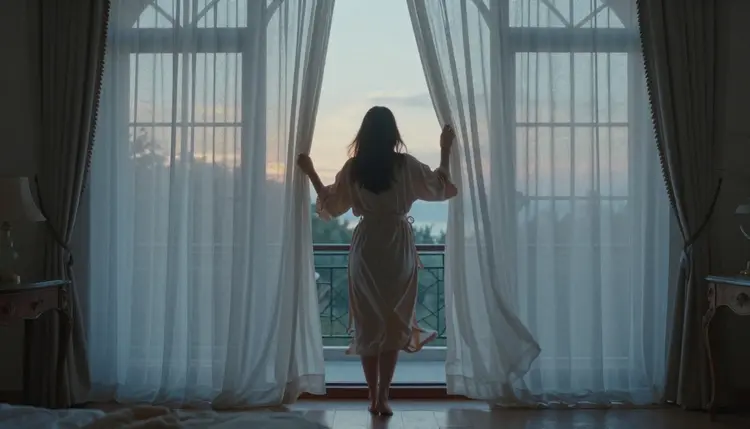
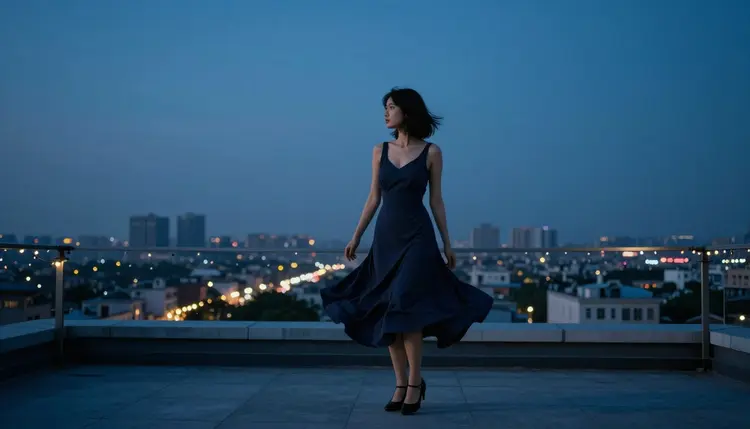
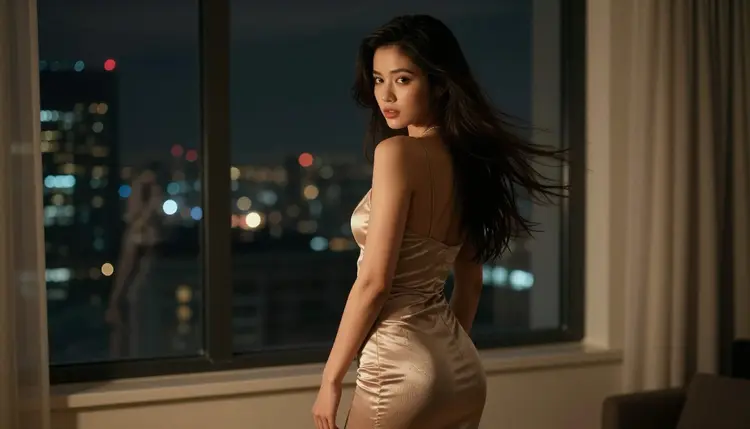
Two examples of the template filled in show why the order matters. First: "A woman in a silk robe pulls open tall curtains as dawn light spills into the room, the robe fluttering as a breeze moves through the window, camera holding in a slow push toward her, soft golden light, a calm and private mood." Second: "A woman on a rooftop terrace turns toward the skyline as her fitted dress swirls with her, wind picking up at dusk, camera circling slowly at eye level, warm dusk light, a confident and intimate mood." Both sentences name a cause for every piece of motion instead of asking LTX 2.3 Pro to invent one. Notice that neither one spends a word describing the body directly; the intimacy comes from the setting, the light and the motion itself.
Turning the five-part template into an actual clip takes a short setup, and after the first one the process gets fast.
- Pick a Fictional Adult and Fix the Wardrobe. Decide on hair, build and one signature garment, a robe, a slip dress, a coat, up front, so the character reads as the same person across every clip built from the template.
- Write the Five-Part Sentence in Order. Follow character and wardrobe, one continuous action, environmental motion, camera behavior, mood, as a single sentence rather than a list of separate ideas.
- Open the Toolkit and Select LTX 2.3 Pro. Choosing the filter-free model before writing the final prompt avoids spending a generation on a model that rejects the scene outright.
- Generate and Watch for Where the Motion Breaks. Fabric clipping through a limb, hair that does not move with the head, a turn that loses the framing halfway through, these are the tells that one clause in the sentence was too vague.
- Rewrite Only the Weak Clause. If just the environmental motion or the camera clause failed, correct that phrase alone and regenerate rather than starting the five-part sentence over from nothing.
The five-part template stays fixed, but which clause carries the most weight changes with the scene, and three situations cover most of what this template gets used for.
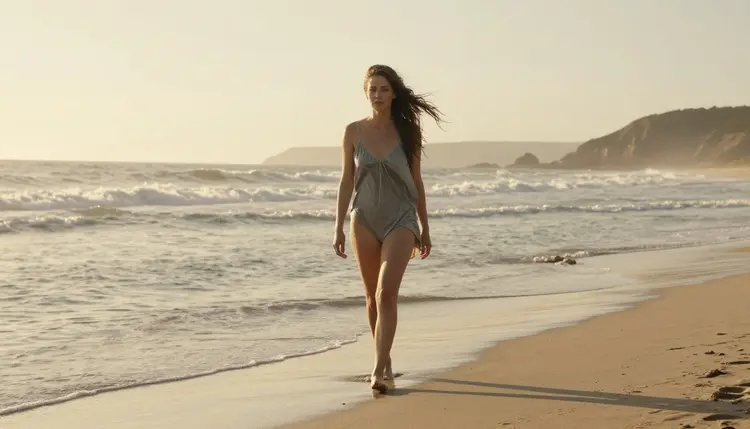
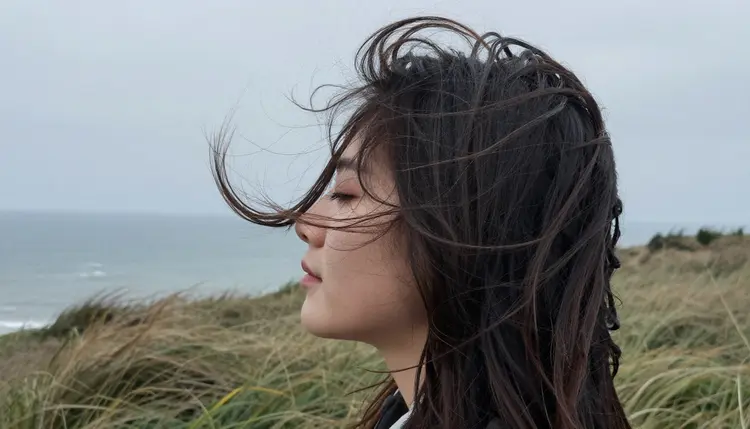
Wind is the cheapest environmental clause in the template and the most reliable. Naming a breeze, an open window or an exposed terrace gives hair, a hemline or a loose robe a reason to move, and LTX 2.3 Pro renders that kind of motion convincingly, strand by strand rather than as one stiff clump. A close, tight frame that also names the wind's direction keeps the camera clause and the environmental clause agreeing with each other instead of fighting for attention. A curtain or a robe with no wind clause at all tends to hang exactly where it started, which is the flattest result the template can produce.
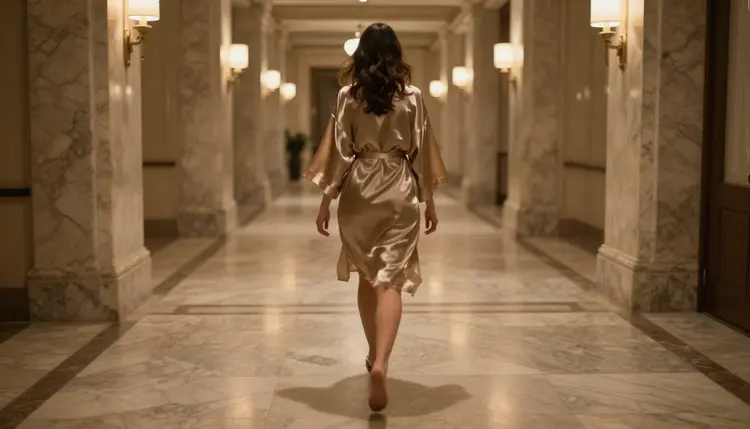
Walking and turning are the two actions that read best across a full three or four second clip, because a body naturally moves through several silhouettes in that time without needing a second action stacked on top. "Walks away down a marble hallway" or "turns toward the doorway as the dress swirls" both give LTX 2.3 Pro one continuous motion with a clear start and end, instead of an ambiguous pose asked to hold still and look suggestive at the same time. Both examples also give the camera something to track, which matters more than the wardrobe once the body is actually moving through the frame.
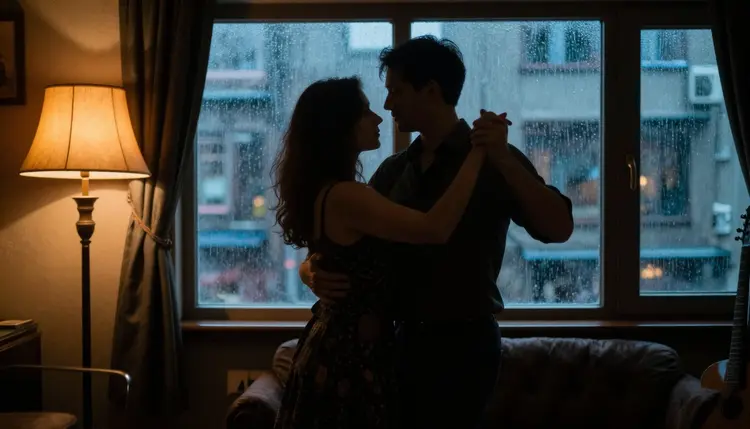
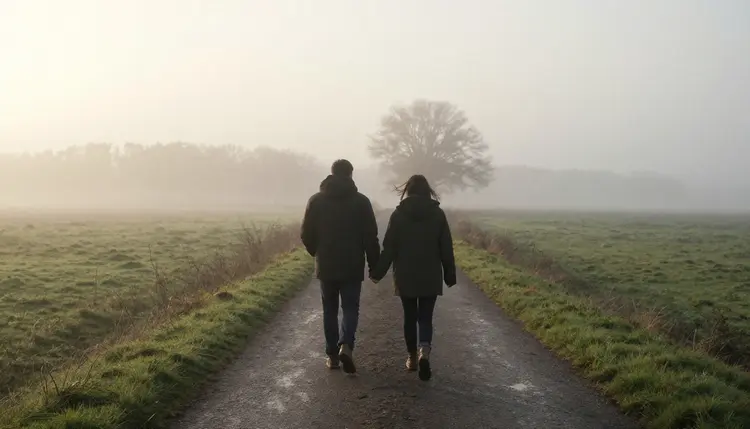
Two characters move differently than one. A close embrace or a slow dance reads as natural, intimate motion when the prompt names one shared action, swaying, holding, turning together, rather than describing each person's movement separately as if they belonged to two different clips stitched into one. Silhouette and low, warm light also forgive the small motion mismatches between two figures that a fully lit close-up would expose. Naming which partner leads the movement, one steps first, one turns first, keeps the pair from feeling like two solo clips overlapping instead of one shared moment.
Every clip built from this template is for adults, eighteen and over, and every character in it has to be entirely fictional: an invented person, never a real actor or public figure, and never built to resemble a real, identifiable person without their consent. No figure that reads as a minor, in any wardrobe, pose or lighting. This applies the same way to every clip the template produces, regardless of how the wardrobe, the setting or the camera behavior is described, and prompts that cross these lines are refused, with attempting them violating the platform's terms.
LTX 2.3 Pro running with no content filter changes what kind of adult motion it will render, not who it can be rendered of. That boundary applies on every model in the catalog, filtered or not, and no camera choice or lighting cue moves it.
Generations on Picasso IA stay private by default, visible only in your own account unless you choose to download or share a clip, so testing several versions of the same template before keeping one does not put anything on public view.
Picasso IA runs on one shared credit system across the catalog, and LTX 2.3 Pro draws from it the same way every other video model does, priced by the clip's length rather than a separate NSFW tier, since a suggestive scene costs the same as any other scene of the same length. New accounts start with free credits, enough to test the five-part template, watch where a first clip's motion breaks, and rewrite the weak clause before anything needs to be purchased.
Beyond the free credits, generations are paid for with credits rather than a flat monthly fee tied to one model, and current numbers for every plan live on pricing rather than repeated here, since they change more often than this page does.
Does LTX 2.3 Pro really generate NSFW video motion with no content filter?
Yes. LTX 2.3 Pro is one of six models on Picasso IA confirmed to run with no content filter, alongside Seedream 4.5, Qwen Image 2, Recraft V4.1 Pro, Picasso Image Editor Pro and Picasso Video. A suggestive motion prompt, wind through an open robe, a turn that swirls a dress, generates the same way any other prompt does, and every character rendered must still be a fictional adult, eighteen and over.
What is the five-part motion prompt template exactly?
Character and wardrobe, one continuous action, what the environment does at the same time, how the camera behaves, and the light and mood, written as a single flowing sentence rather than five separate ideas. That order gives LTX 2.3 Pro a clear cause for every piece of motion instead of leaving it to guess.
Why does fabric or hair sometimes not move at all in the clip?
Usually because the prompt described the fabric or the hair without naming what moves it. A breeze, a fast walk or a turn all give the model a reason; a robe or a curtain described only as flowing with nothing acting on it often renders closer to static, since the model has no cause to invent movement the sentence never asked for.
Should the camera be named separately from the action?
Yes. A slow push in, a static shot that holds while the subject moves, and a handheld follow each produce a different feeling clip even from an identical subject and action, so naming the camera behavior is one of the five parts of the template, not an optional extra.
Can this template be used for two characters instead of one?
Yes. Describe the shared action, swaying, holding, walking hand in hand, rather than each person's motion separately, and let silhouette or low light do some of the work of blending two figures into one continuous movement.
How long should a single generated clip be?
Keep the action to something a body completes naturally in three or four seconds, a turn, a few steps, a glance back, rather than packing a longer sequence into one generation. A longer scene works better as two or three linked clips than one clip asked to do too much, with each new clip keeping the same character and wardrobe clause so the sequence still reads as one continuous scene.
What happens if this template is sent to a model that isn't on the confirmed list?
The model applies its own safety filter and refuses the prompt. Picasso IA shows a message explaining the content is not supported by that model and offers to carry the same prompt to one of the six confirmed models instead, LTX 2.3 Pro among them, without retyping anything.
Can a still image be turned into this kind of motion afterward?
Yes. A still generated with Seedream 4.5 or Recraft V4.1 Pro can be carried into a motion prompt on LTX 2.3 Pro or Picasso Video, so a wardrobe and character locked in a photo do not need to be redescribed from scratch for the clip.
Is it legal to generate this kind of content?
Picasso IA's uncensored models are built for fictional, adult content only, and every character produced through them has to be an invented adult, never a real person's likeness and never anyone who could read as a minor. Responsibility for how a finished clip is used, stored or shared still sits with the person who generated it, and the same fictional-adult rule applies whether the clip stays private or gets shared elsewhere.
Is there a free way to try the template before paying?
New accounts start with free credits that work across the catalog, including LTX 2.3 Pro, so the five-part template can be tested and refined over a few generations before deciding whether to subscribe. Current plans live on pricing.