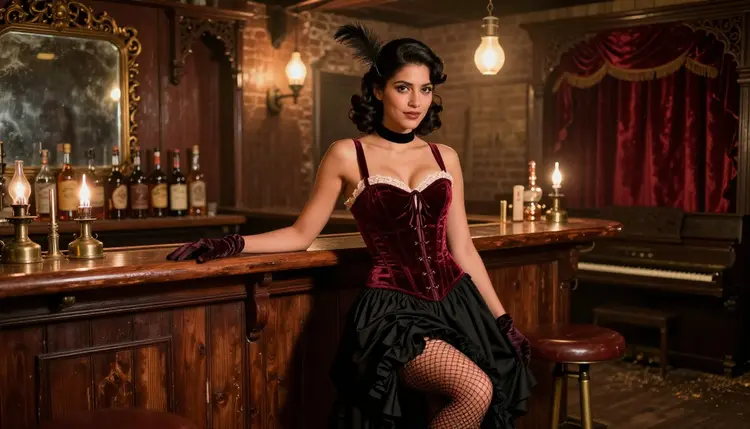
A saloon at night runs on details a plain portrait never earns on its own: lamplight catching brass buttons, a corset laced tight before the night's first hand of cards, dust hanging in a shaft of window light. Recraft V4.1 Pro is one of six models on Picasso IA confirmed to run with no content filter, and its illustrated, painterly finish treats a Western saloon scene like a poster commissioned for the actual venue instead of a generic costume photo.
This page covers why the model fits a saloon brief, what actually makes the setting read as convincing rather than a costume rack with a barrel behind it, a five-step process for generating a full scene, and the rules every fictional adult in frame has to follow.
Most of the 488 models in the Picasso IA catalog run a content filter, and a saloon scene built around a laced corset, an open dance hall dress, or a card game turning intimate is exactly the kind of prompt that filter exists to catch. Try it on a filtered model and the app returns a Content Not Supported by This Model message, then offers to carry the prompt to a model that will actually run it. Recraft V4.1 Pro is one of those alternatives, confirmed filter-free, so a suggestive saloon scene generates the same way a plain portrait does.
It shares that filter-free status with five other models, each suited to a different piece of a saloon scene. Seedream 4.5 is the photoreal pick when the brief wants an actual photograph rather than a painted poster. Qwen Image 2 handles a prompt stacking several period details, corset, card table, brass lamp, in one line. Picasso Image Editor Pro touches up a finished scene afterward, useful for fixing a hand around a deck of cards. Picasso Video and LTX 2.3 Pro turn a chosen scene into a short moving clip, two dancers near the stage or a hand of cards being dealt across a table. Recraft V4.1 Pro is the one to reach for first when the brief calls for an illustrated, poster-like image rather than a photograph. See the full catalog for everything else the app offers.
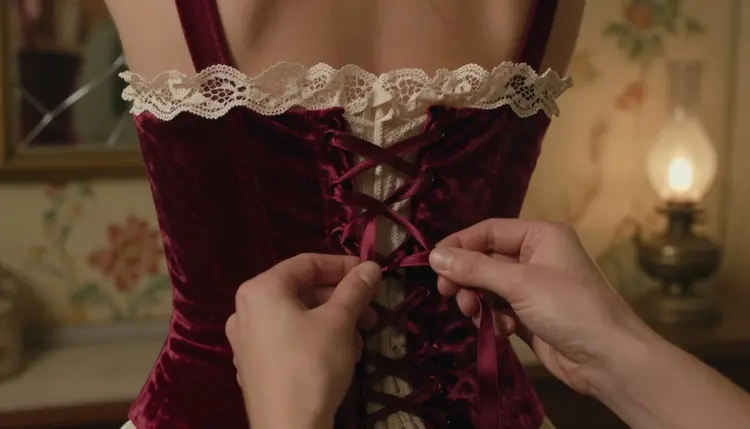
A saloon scene lives or dies on period detail, not on how little a dress covers. Velvet, satin and lace read as considered wardrobe, while a generic "sexy cowgirl" prompt reads as a costume shop rack. Naming an actual garment, a burgundy corset with cream lace trim, a green lace-trimmed dance hall dress, a brocade vest, gives the model something exact to render, and it is what separates a scene that feels like a real 1880s saloon town from one that feels like a Halloween aisle.
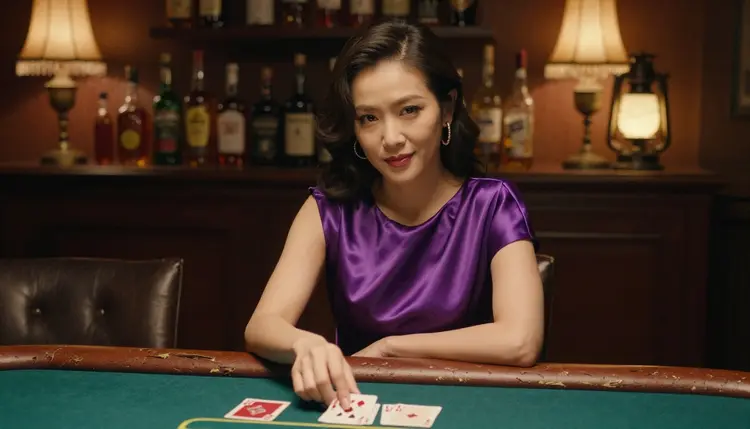
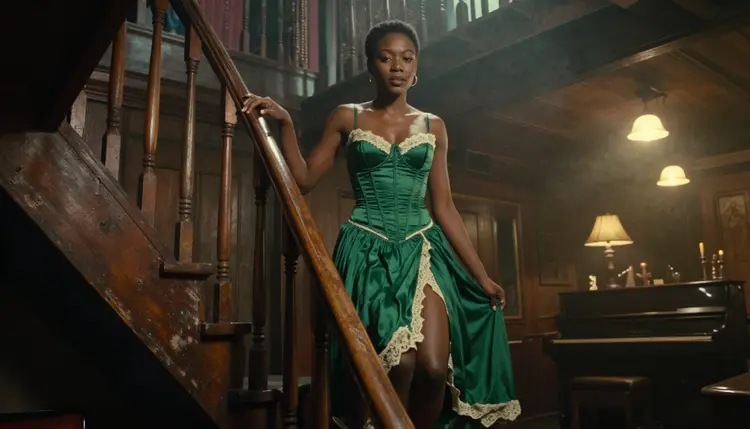
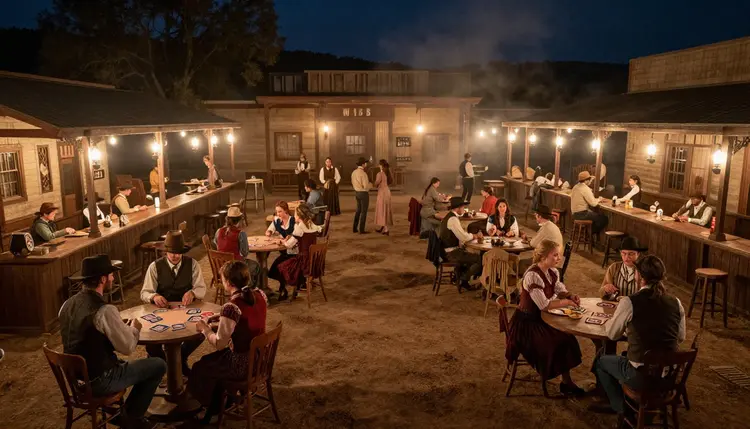
Props carry the setting as much as wardrobe does. A poker table with cards mid-deal, a bar counter with bottles lined up behind it, a wooden staircase leading to a balcony, a small stage where a couple dances close together, each one turns a generic portrait into a scene with a story already happening in it. Naming the prop and what a character is doing with it, dealing a hand, leaning on the counter, descending the stairs, gives Recraft V4.1 Pro an activity to render instead of a static stance.
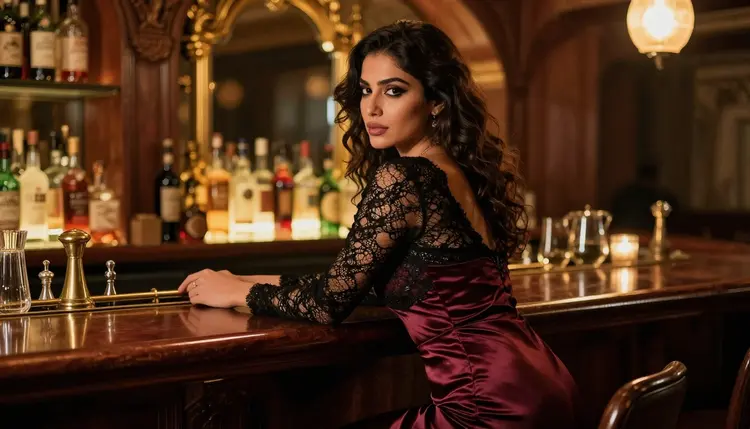
The cast does not have to be one woman standing alone. A dealer at the card table, a bartender, a couple mid-dance near the stage, a second player watching the hand, each added character turns a single figure into a scene with its own small drama. Men belong in this setting exactly as often as women: a dealer in a brocade vest, a piano player, a patron leaning back in his chair, and describing him with the same specific wardrobe detail keeps him as convincing as any other figure in the frame.
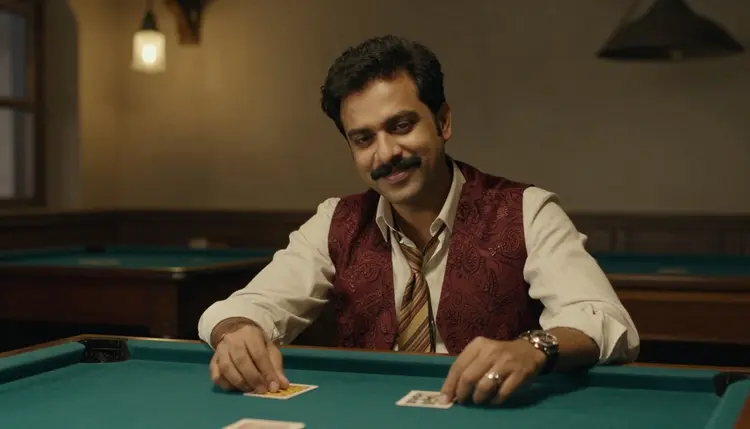
Turning a saloon concept into an actual scene, rather than a single lucky generation, comes down to naming a handful of period details before the first prompt.
- Fix the Setting Before the Character. Decide whether the scene is a card table, a bar counter, a staircase, or the dance floor near the stage, so the wardrobe and pose described next have somewhere to actually happen.
- Name the Garment, Not Just the Mood. Describe a specific piece, a laced corset, a satin dance hall dress, a brocade vest, its color and trim, instead of a vague word like sexy, so Recraft V4.1 Pro has an exact garment to render.
- Open the Toolkit and Select Recraft V4.1 Pro. Picking the filter-free, illustrated model before writing the prompt avoids spending a first generation on a model that refuses a saloon scene outright.
- Add One Activity to the Pose. Dealing a hand, lacing a corset, leaning on the bar, descending the stairs; an activity reads as a moment caught mid-story instead of a static stance.
- Generate and Compare the Lighting. Run the prompt a few times and compare warm lamplight against a sunlit window or a wide night view of the town, since the same scene reads differently depending on which light source is named.
Material and trim carry more of a saloon scene's period feel than pose does. Velvet, satin, lace trim, brocade: naming the fabric and its color gives the model something exact to render, and it is what makes a costume read as tailored for the venue rather than pulled off a rack. A vague word like hot describes a feeling, not a garment, and leaves the actual look to chance.
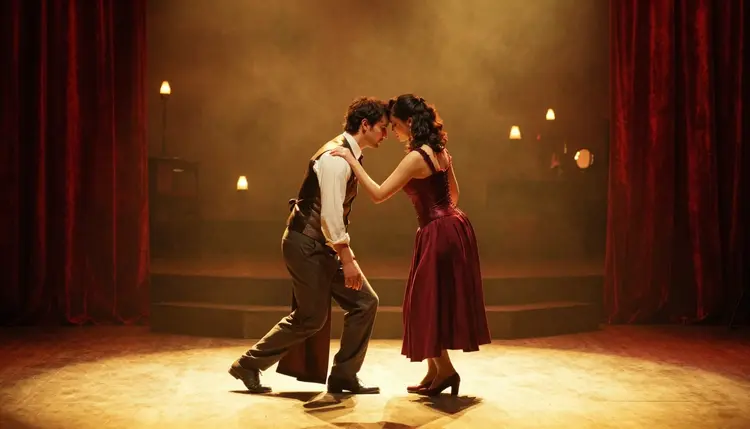
Camera distance changes the mood as much as wardrobe does. A close shot on hands lacing a corset or dealing a hand of cards reads as intimate. A wide shot of two dancers near the stage, or the whole town lit up at night, reads as cinematic. Deciding which register a given image needs, before writing the prompt, keeps a set of saloon images from feeling like the same distance repeated nine times.
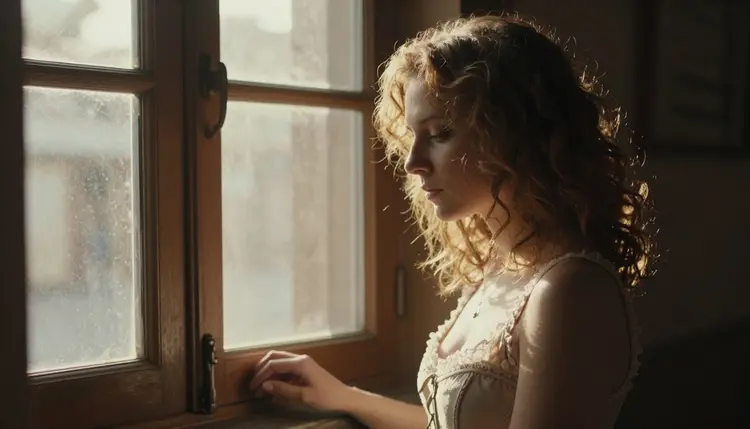
A short reference table for prompting a saloon scene:
| Say this | Instead of this | Why it helps |
|---|
| a fictional woman lacing a burgundy velvet corset with cream lace trim | a hot saloon girl | gives the model an exact garment, color, and action instead of a vague type |
| dealing a hand of cards at a poker table, lamplight from above | a sexy card dealer | names the prop, the pose, and the light source together |
| descending a wooden staircase in a green lace-trimmed dress | a saloon dress | describes the exact garment, its trim, and the setting it moves through |
| leaning over a balcony railing, warm interior light behind her | a moody portrait | reads as a caught moment instead of a static pose |
The cast is not limited to a single woman at the bar. A brocade-vested dealer, a couple dancing close near the stage, a second player at the table, each reads exactly as well as a lone figure, and naming a specific garment for a male character works the same way it does for a female one. A wide night view of the whole town, lit windows and patrons in the street, closes a set the way an establishing shot closes a film scene.
Every scene generated here is for adults, eighteen and over, and every character in frame must be entirely fictional: an invented person, not a real historical figure, not a public figure, and never built to resemble a real person without their consent. No character that reads as a minor, in any costume or setting. Prompts that cross these lines are refused, and attempting them violates the platform's terms.
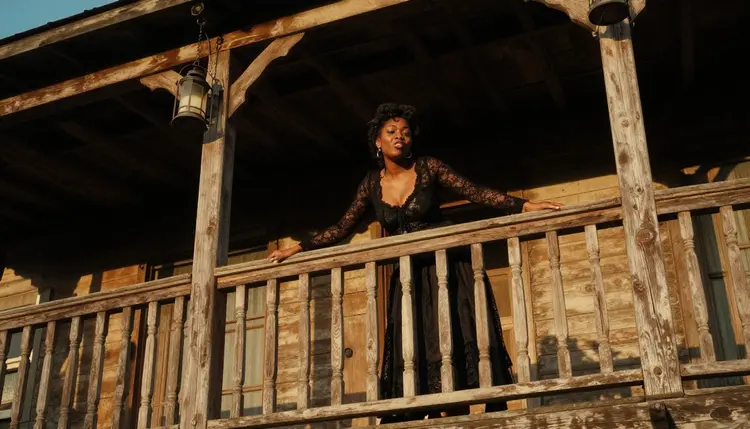
Recraft V4.1 Pro running with no content filter changes what kind of adult content it will render, not who it can be rendered of. The rule against real people and minors applies on every model in the catalog, filtered or not.
Generations on Picasso IA stay private by default, visible only in your own account unless you choose to download or share them, so testing several wardrobe or lighting choices before settling on a final scene does not put anything on public view.
Generations on Picasso IA are paid for with credits spent per image, not a separate subscription tier for each model. A new account starts with free credits, enough to run the five-step process above across a handful of saloon scenes before deciding whether to buy more. Image generations sit toward the cheap end of what the app offers, well below the cost of a video generation.
Exact credit amounts and plan pricing change as the catalog evolves, so current numbers live on the pricing page rather than printed here where they would go stale. Naming an exact garment and one activity per prompt, then comparing a couple of lighting choices, is the efficient way to land on a saloon scene worth keeping.
Does Recraft V4.1 Pro really generate a NSFW saloon scene with no content filter?
Yes. Recraft V4.1 Pro is one of six models on Picasso IA confirmed to run with no content filter, alongside Seedream 4.5, Qwen Image 2, Picasso Image Editor Pro, Picasso Video, and LTX 2.3 Pro. A saloon scene built around a laced corset, a dance hall dress, or a card table turning intimate runs the same way any other prompt does, and every character generated must still be a fictional adult, eighteen and over.
Why does an illustrated model suit a Western saloon scene better than a photoreal one?
A saloon scene often reads closer to a period poster or a painted advertisement than a photograph, and Recraft V4.1 Pro's illustrated finish matches that look directly, while a photoreal model like Seedream 4.5 is worth comparing when the brief calls for an actual photograph instead of a painted style.
Can the saloon scene include more than one character?
Yes. A dealer and a player at the card table, a couple dancing near the stage, or a bartender behind the counter all work in one prompt. Describe each character's wardrobe separately before describing what they are doing together, so the model does not blend their features into one person.
Can the character in the scene be a man instead of a woman?
Yes. A dealer in a brocade vest, a piano player, or a patron at the bar reads exactly as well as a female character, and the same approach, a specific garment plus one activity, works the same way regardless of who is in frame.
What garments work best for a Western saloon prompt?
A laced corset, a satin dance hall dress, lace trim, and a brocade vest are period-accurate choices that Recraft V4.1 Pro renders clearly. Naming the color and material, burgundy velvet, cream lace, green satin, gives the model something exact instead of a vague word like sexy.
Can I turn a saloon scene into a moving clip instead of a still image?
Yes. Picasso Video and LTX 2.3 Pro are the two confirmed models for adult motion, and both work from the same kind of prompt used for a still image, so a scene generated with Recraft V4.1 Pro can be reworked as a motion prompt for either video model.
What happens if this kind of prompt is sent to a model that isn't on the confirmed list?
The model applies its own safety filter and refuses the prompt. Picasso IA shows a message explaining the content is not supported by that model and suggests switching to one of the six confirmed models, carrying the same prompt over so it does not need to be retyped.
Is it legal to generate NSFW art of a fictional saloon character?
Picasso IA's adult generation is built for fictional, adult characters only. Responsibility for how output is used, stored, or shared still sits with the person generating it, and every character produced through these models has to be an invented adult, never a real person's likeness and never anyone who could read as a minor.
Can I edit a generated saloon scene afterward instead of starting over?
Yes. Picasso Image Editor Pro is one of the six confirmed models and edits an existing image directly, so if one detail, a hand of cards, a fold of fabric, comes out wrong, the result can be sent there instead of regenerating the whole scene from scratch.
Is there a free way to try this before paying?
New accounts on Picasso IA start with free credits that work across the catalog, including the six confirmed models, so a saloon prompt can be tested with Recraft V4.1 Pro before deciding whether to subscribe. Current plans and what they include are listed on the pricing page.