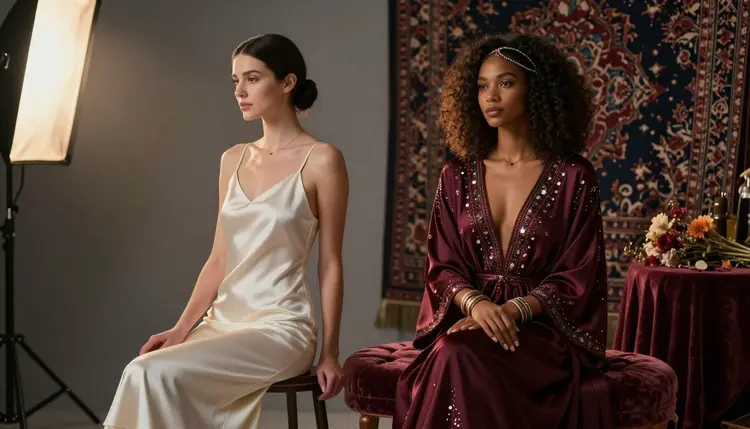
Comparing two uncensored models for portrait work usually means trusting a name over an actual look at the result, since most side by sides either borrow marketing copy or invent a score. Seedream 4.5 and Qwen Image 2 are both confirmed to run on Picasso IA with no content filter, so a close portrait, a robe left loose at the shoulder, a hand adjusting a strap, a full length shot in satin, runs on either one exactly the way any other prompt does.
This page compares the two on portrait work specifically: which one holds skin and fabric texture in a single close shot, which one keeps every described detail, a beaded strap, an embroidered hem, a headwrap, when a prompt names several at once, and how the two answer differently depending on whether the brief is a headshot, a three quarter turn or a full length standing portrait. A five step way to test both on the same portrait follows, along with the rules that apply to every image either model makes.
Every portrait on this page shows a fictional adult character, eighteen and over, and the same rule applies to anything generated after reading it.
Of the roughly 490 models in the Picasso IA catalog, most apply a content filter and refuse a portrait the moment it reads as intimate or adult, a robe worn loosely, a slip instead of a dress, skin shown at a collarbone or a shoulder. When that happens the app shows a message that the model does not support the content and offers to carry the prompt to one that will actually run it, so nothing typed gets lost. Seedream 4.5 and Qwen Image 2 are two of exactly six models on the platform confirmed to run with no content filter at all, alongside Recraft V4.1 Pro, Picasso Image Editor Pro, Picasso Video and LTX 2.3 Pro. A close, suggestive portrait runs on either one the same way any other prompt does, nothing to reword, nothing to disguise to sneak past a filter that simply is not there.
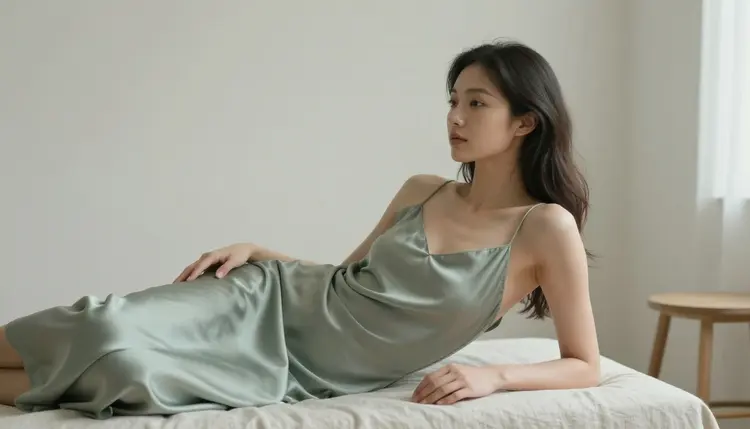
Being filter free is the floor both share for portrait work, not the whole story. Seedream 4.5 is built for a hyper realistic, photographic look, skin that holds its texture at a close crop, silk or satin that catches light the way real fabric does. Qwen Image 2 is an open source model built to hold onto a longer list of details in one portrait, a beaded strap, an embroidered bodice, a hand mid adjustment, without quietly dropping one of them. Both are confirmed, both are current, and neither claim here is a guess.
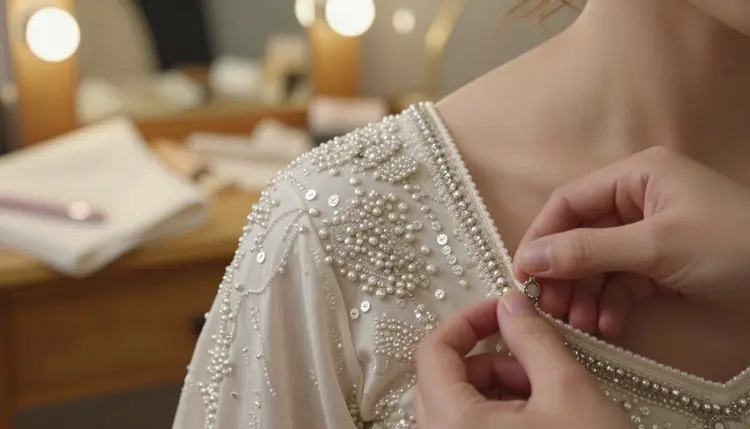
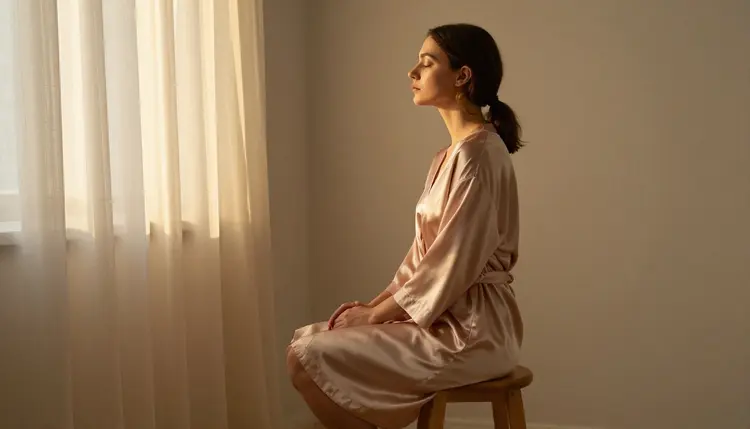
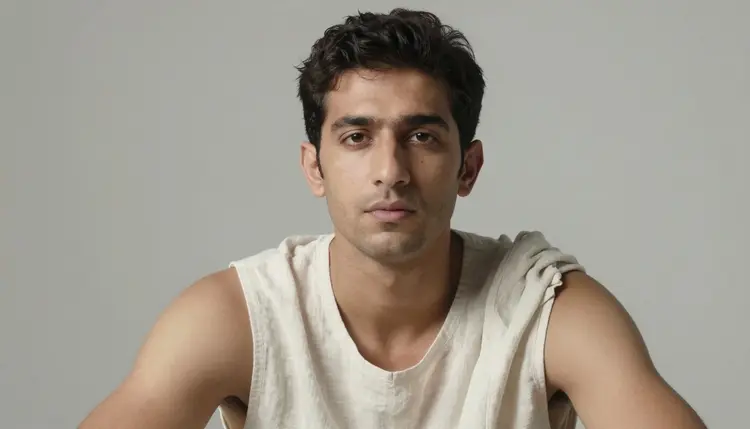
Seedream 4.5's strength shows most in a single, tightly framed portrait: a standing shot in ivory satin against a plain studio wall, where the fabric's sheen and the skin's texture both need to read as photographed rather than drawn. Ask it for one clear subject in one well lit setting and it tends to deliver something a viewer would mistake for a real photograph, which is why it is the pick on this platform for a boudoir style headshot or a full length standing portrait.
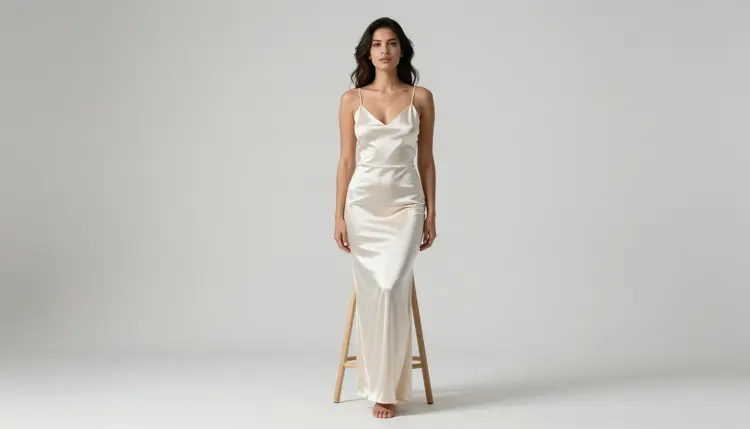
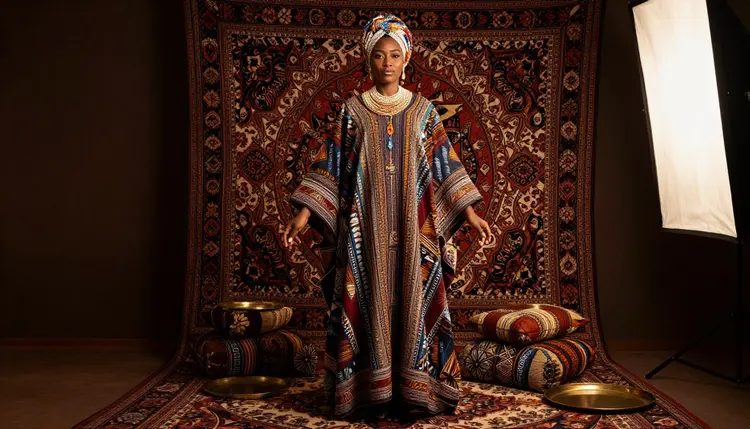
Qwen Image 2 earns its place on a busier portrait brief, the one that names five or six things at once: a festive robe with gold embroidery, the exact rug it is draped across, the fold of the fabric at the knee, the jewelry at the wrist. Where a model built around one photographic style can drop a detail from a crowded description, Qwen Image 2 was built to hold onto more of them, which matters for a richly dressed, reclining portrait more than for a plain headshot.
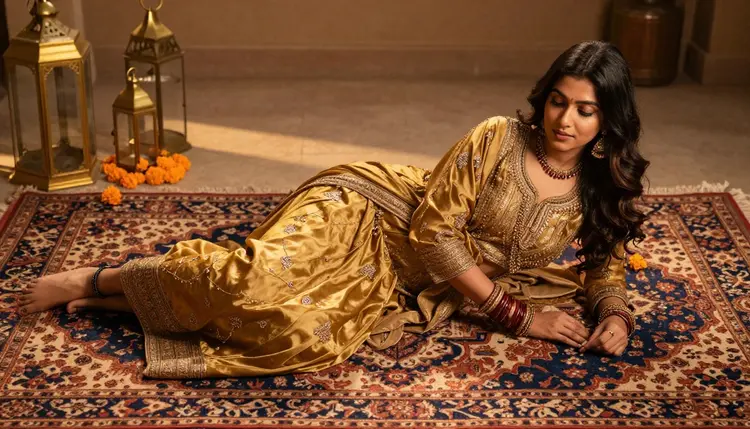
Neither wins outright. A single striking headshot or standing portrait favors Seedream 4.5's photographic lean; a portrait carrying several described layers, an embroidered gown, a patterned wrap, visible jewelry, favors Qwen Image 2's ability to track them all. The honest answer depends on which portrait is being written, not on either model's name.
Comparing the two on one actual portrait is more useful than reading about them, and it takes five short steps.
- Write One Portrait Brief, Not Two. Describe the subject, the framing, close up, three quarter or full length, the garment and the light in the same level of detail, so both models are judged against the identical brief.
- Open the Toolkit and Run It on Seedream 4.5 First. Generate a small batch and note how closely the skin and fabric read as photographed rather than generated.
- Run the Exact Same Prompt on Qwen Image 2. Nothing changes in the wording, only the model, so any difference in the portrait comes from the model itself.
- Set the Two Portraits Side by Side. Look for which one kept every described detail, an embroidered hem, a beaded strap, a headwrap, and which one delivered the stronger single, photographic image.
- Pick the Winner for That Framing, Not for Every Portrait. A plain headshot and a richly dressed, layered portrait tend to have different winners, and the right call is per brief, not a permanent choice of one model over the other.
The same words do not always read the same on both models, so a portrait prompt written for one benefits from a small adjustment for the other. For Seedream 4.5, name the framing first, close up, three quarter turn or full length standing, then the light source and the fabric, window light at dusk, a bedside lamp, silk against satin. The more concrete the framing and the light, the more the photographic quality shows in the face and the fabric.
For Qwen Image 2, list every element of the portrait in the order it should matter: subject and pose first, then the garment, then any accessory, headwrap, jewelry, embroidery, then the background. Because it is built to track a longer list, giving it a longer, ordered list of what the portrait is wearing tends to produce a more complete result than a short, vague line.
Neither model needs an explicit word to produce a strong, suggestive portrait. A robe left untied at the collar, a hand adjusting a strap, a direct gaze under soft studio light say more than a blunt term would, and both models handle that kind of implication well. Describe every character, even briefly, as a fictional adult, and keep a portrait to one clear pose rather than a sequence of them, since a prompt trying to describe several moments tends to blur the face on either model.
This applies to every portrait either model makes, no exception: everything here is for adults, eighteen and over, and every character, in every portrait, must be a fictional adult. No real person's likeness, no celebrity, no public figure, with or without a claimed resemblance, and no minor or character made to look like one, in any style or any framing. Prompts that cross these lines are refused on both models, filter free or not, because removing the content filter never removed the rules about whose likeness can be generated or how old a character has to read as.
Generations on Picasso IA are private by default: a portrait made here does not appear on a public feed or get attached to an account name anywhere else on the platform, and it stays that way unless it is actively shared elsewhere. That privacy does not extend past the platform, though. What happens to a portrait once it is downloaded, where it is posted and to whom it is shown, is governed by local law and by the rules of wherever it lands, and legal to generate on Picasso IA is never the same thing as fine to publish anywhere.
Both models are paid for the same way every generation on Picasso IA is paid for: with credits spent per image, not a separate subscription tier locked to one model. A new account starts with free credits, enough to run the five step comparison above more than once, generate a headshot and a full length portrait on each model and actually look at the difference rather than take anyone's word for it.
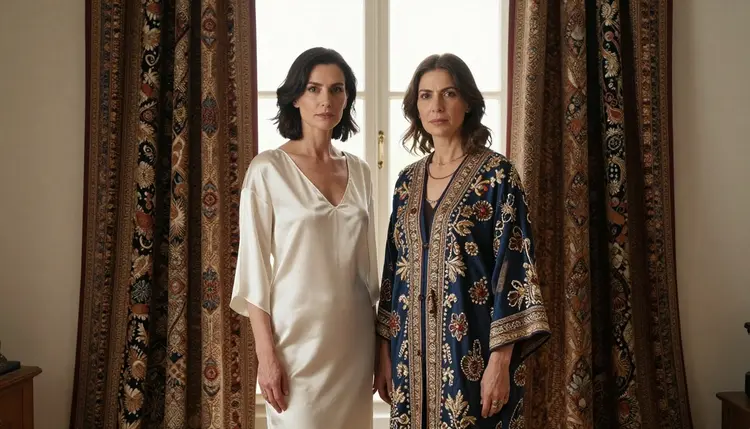
Exact credit amounts change as the catalog grows, so current numbers live on the pricing page instead of being printed here where they would go stale fast. What does not change: running the same portrait brief on both Seedream 4.5 and Qwen Image 2 before committing to one, even a paired portrait with two subjects in frame, is a cheap way to spend a handful of credits and a fast way to learn which model actually fits a given brief.
Are Seedream 4.5 and Qwen Image 2 both really uncensored for portrait work?
Yes. Both are two of exactly six models on Picasso IA confirmed to run with no content filter, alongside Recraft V4.1 Pro, Picasso Image Editor Pro, Picasso Video and LTX 2.3 Pro. A close, suggestive portrait runs on either one the same way any other prompt does, with nothing to reword or disguise to get it through.
Which model is better for NSFW portraits, Seedream 4.5 or Qwen Image 2?
Neither wins outright, it depends on the portrait. Seedream 4.5 tends to produce the stronger result for a single, tightly framed headshot or standing portrait, while Qwen Image 2 tends to hold together a richly dressed portrait that names several details at once, an embroidered garment, a headwrap, visible jewelry.
Can I run the same portrait prompt on both models to compare them myself?
Yes, and it is the most honest way to decide between them. Writing one portrait brief, running it unchanged on both, and setting the two results side by side shows the real difference for that specific framing rather than a general claim about which model is better.
What kind of portraits does Seedream 4.5 handle best?
A single, well lit headshot or full length standing shot where skin and fabric need to read as photographed rather than drawn, like a boudoir style portrait against a plain studio wall. Its strength is photographic realism on one clear subject rather than a portrait carrying many separate described layers.
What kind of portraits does Qwen Image 2 handle best?
A portrait that names several distinct details at once, an embroidered robe, a beaded headwrap, jewelry, a specific rug or background, since it was built to track a longer list without dropping pieces of it. That makes it a stronger fit for a richly dressed, reclining portrait than for a plain headshot.
Does portrait framing change which model wins?
Yes. A close up or a plain standing portrait tends to favor Seedream 4.5's photographic lean, while a three quarter or reclining portrait carrying several garment details tends to favor Qwen Image 2's ability to hold onto all of them, so the right pick shifts with the framing.
Do I need different prompt wording for each model when writing a portrait?
A small adjustment helps. Seedream 4.5 responds best to naming the framing and the light source before anything else, while Qwen Image 2 responds best to a longer, ordered list of what the portrait's subject is wearing, the garment, any accessory and the background.
Are Seedream 4.5 and Qwen Image 2 free to use on Picasso IA?
New accounts start with free credits, which cover comparing both models on the same portrait more than once before anything needs to be purchased. Beyond that, generations are paid for with credits rather than a subscription tied to one model, and current numbers are kept up to date on the pricing page rather than stated here.
Can I generate a real person or a celebrity portrait with either model?
No. Every character in every portrait generated on Picasso IA, on Seedream 4.5, Qwen Image 2 or any other model, must be a fictional adult, eighteen and over. A real person's likeness, including a celebrity or any other public figure, is not permitted, and prompts that attempt it are refused regardless of which model is running.
Can a portrait made with either model become a video afterward?
Yes, through a separate step. Picasso Video can animate a still portrait from either model into a short clip, and LTX 2.3 Pro generates video directly from a prompt, both running with no content filter, so the efficient order is settling on a still portrait first and animating it once it is the one worth keeping.