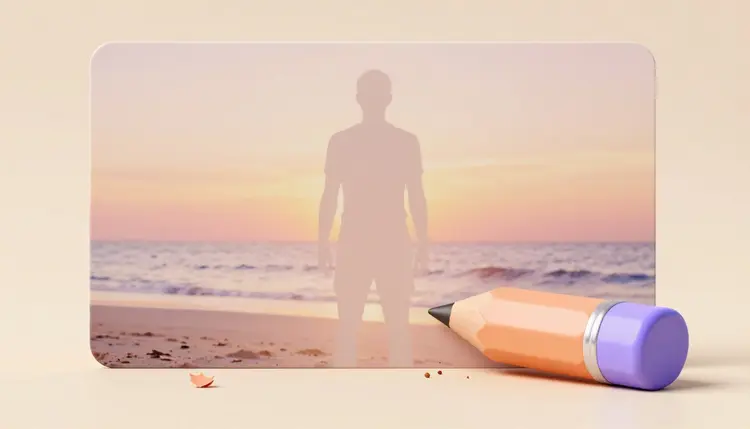
Every photo album has one picture that would be perfect if not for the stranger at the edge of the frame, or the trash can nobody noticed until the shutter clicked. For years the fix meant a clone stamp, a steady hand and patience. Object removal models do the same job from a rough mask and a few seconds of processing, and the part that used to take longest, matching the texture and light behind whatever gets erased, is the part they are built for.
A photo is rarely wrong because of what it shows, it is wrong because of what else got in the shot. A tourist wandering into a landscape, a second face in a portrait meant for one person, a cable left on a kitchen counter in a listing photo, none of it is the subject, all of it pulls the eye. Cropping only works when the intruder sits near an edge, and most of the time it does not.
Object removal models solve the part that made manual retouching slow, which was never the erasing but the filling. A human retoucher spends most of the time sampling nearby texture, checking the light direction and blending the seam. A model trained on this exact problem does that matching automatically, from context in the pixels around the mask, which is why a removal that once took twenty minutes in an editor now takes the time it takes to paint a rough shape and press generate. Picasso IA runs 488 models behind one interface, including dedicated removal and fill tools, and new accounts get free credits to test a few images first; the full catalog is worth browsing once you see what one mask can do. If the job is a full transparent cutout instead of erasing one thing, background removal is the closer match.
Two different problems hide under "remove this from my photo," and the models split along that line. The first is erasing something and getting plain background back in its place, a fence rail, a photobomber, a date stamp burned into an old scan. The second is replacing it with a different, described object, an empty chair where a person stood, a plain wall where a poster hung. Picasso IA runs a dedicated model for each.
Eraser takes a photo and a mask, painted by hand or supplied as a file, and reconstructs the masked area from the surrounding pixels: their texture, color and lighting. Leave the prompt blank and it fills in what is statistically likely to belong there, sky continuing sky, sand continuing sand. Genfill takes the same kind of mask but adds a text prompt describing what should appear instead, so a gap in a shelf can become a plant, or a doorway can become a closed door. Both preserve everything outside the mask, and both can keep the alpha channel intact for a result that drops into a layered file. For a case where the whole backdrop needs to change, Generate Background swaps the entire scene behind a subject from a text description, a different job from erasing one element out of an otherwise-finished photo.
Pro tip: mask a little wider than the object itself. A tight mask that hugs the edge of a person or a sign often leaves a faint outline behind, because a sliver of the original pixels survives at the border; a few extra millimeters of margin gives the model clean surrounding texture to rebuild from and the seam disappears completely.
The removal task decides which model to reach for, and picking wrong just means a second pass. This is the quick way to match the job to the tool.
| What you want gone | Best model | What to give it |
|---|
| A person in the background | Eraser | Mask the person, leave the prompt empty |
| A watermark or timestamp | Text Removal | No mask needed, it finds text on its own |
| A power line or thin wire | Eraser | Mask the line, let it rebuild the sky |
| An object, replaced by another | Genfill | Mask the area, describe the replacement |
| A logo on clothing or packaging | Eraser | Mask just the logo area |
| The whole backdrop | Generate Background | Describe the new scene, no masking |
Text Removal is worth calling out separately because it needs no mask at all: it scans the image for anything readable, from a street sign to a caption burned into a screenshot, and clears it automatically. Everything else on this list works from a mask, and a mask you paint yourself in the toolkit beats an automatically guessed one whenever the edges of the unwanted object are irregular.
This is the path from a photo with something wrong in it to a clean file, using the removal and fill models inside the Picasso IA toolkit. None of it requires design software.
- Upload the photo you want to clean up. Open the toolkit, pick Eraser for a plain removal or Genfill if the gap needs to become something else, and load the original image.
- Paint a mask over what has to go. Trace the person, the object or the mark with a little margin around its edge, wider than feels necessary rather than tighter.
- Add a prompt only if you are replacing, not erasing. For a plain removal leave it blank; for Genfill, describe what belongs in the masked space in one plain sentence.
- Generate and check the seam at full zoom. Look at the border of the masked area first, since that is where texture mismatches or a faint outline would show up.
- Run a second pass if a trace remains. Mask the same spot again with slightly wider margins, since a second attempt on a stubborn edge usually finishes the job the first one started.
Real estate listings are the clearest commercial case: an agent photographing an occupied home runs into parked cars, a neighbor's trash cans, or a relative who wandered into frame during a walkthrough. A masked pass with Eraser clears the distraction in the time it takes to paint the shape.
Product photography leans on the same tools differently. A studio shot with a stray reflection, a competitor's packaging left in frame, or a price sticker nobody peeled off are all fixable without a reshoot. Because Eraser and Genfill preserve everything outside the mask, a team can fix one flaw instead of discarding the frame and starting over.
Personal photo archives are the quieter use case but arguably the most common one: a vacation photo with a stranger in the background, a portrait with a distracting exit sign behind someone's head, or an old scan with a date stamp in the corner. None of these were the reason to take the photo, and none need to survive into the version that gets printed or shared. The effects catalog is worth a look afterward, once the unwanted element is gone, for restyling the result.
The tool solves the tedious part of retouching, not every part. A few situations still trip it up, worth knowing before you count on a single pass.
- Busy, high-detail backgrounds: a mask over a person in front of a crowded market stall or dense foliage gives the model less clean context to rebuild from, and the fill can come out soft or repetitive next to open sky or plain wall.
- Large objects near the frame edge: removing something touching the border leaves the model guessing what continues past it, since there is no pixel data on that side to learn from.
- Shadows and reflections left behind: erasing a subject does not always erase its shadow on the ground or its reflection in a window, so check for both and mask them separately.
- Fine detail inside the fill: a plain removal reconstructs texture convincingly, but Genfill's replacements can look generic up close, especially anything with intricate structure like patterned fabric.
- Multiple overlapping subjects: masking one person out of a tight group where limbs overlap is the hardest case, since the model has to guess where one person ends and the next begins.
None of this makes the tool unreliable, it makes a quick zoom-in check part of the job, the same way a human retoucher would look over their own work before calling it finished.
Is there a free way to remove people from photos with AI?
Picasso IA gives new accounts free credits, and a single object removal is one of the cheaper generations available, since it processes one still image rather than video. That is enough to test the workflow on a handful of photos and see whether the result holds up before spending anything further. Paid plans and current limits live on the pricing page, the only place worth trusting for numbers that change over time.
Do I need to draw the mask myself?
For Eraser and Genfill, yes, you paint or supply the area to remove or replace, which is what gives you control over exactly what changes and what stays untouched. Text Removal is the exception: it detects readable text on its own, so no mask is needed for watermarks, captions or signs. For anything with an irregular outline, like hair or foliage, a hand-painted mask with extra margin outperforms an automatic guess.
Can it remove a person and fill the background convincingly?
Yes, that is the specific job Eraser does. It reconstructs the masked area from the texture, color and lighting of the pixels around it, so a person in front of open sky, sand or a plain wall tends to disappear cleanly. Busy, high-detail backgrounds are harder, since there is more surrounding pattern to match, so check those results at full zoom before you use them.
What is the difference between erasing an object and replacing it?
Erasing removes something and fills the space with more of what is already around it, a wall continues as wall, a sky continues as sky. Replacing swaps it for something new you describe, an empty chair where a person stood, a plant where a box used to sit. Eraser handles the first case with no prompt required, and Genfill handles the second with a mask plus a short description of what should appear instead.
Will the removal leave a visible outline or ghost image behind?
Sometimes, and it is almost always a masking issue rather than a model limit. A mask that hugs the object too tightly leaves a thin sliver of original pixels at the edge, which can read as a faint outline once the fill is generated. Painting the mask with more margin nearly always clears it, and a second pass over any stubborn edge finishes what the first attempt started.
Can I remove a watermark or text from a photo?
Yes, Text Removal is built for this and needs no mask, it scans the image for anything readable and clears it automatically, matching the background behind the text. It handles printed labels, overlaid captions and stamped dates about equally well, whether the text is straight, curved around a product or partially obscured.
Does object removal work on old or scanned photos?
It does, and it is a common use for family archive cleanup, clearing a date stamp burned into a scan or a stray finger in the corner of an old print. Scan quality matters more than the model here, since heavy grain or fading gives the fill less clean texture to match, so an old photo restoration pass before removal often produces a cleaner result.
Is the removed object gone for good, or can I undo it?
The model works on the file you upload and returns a new image, it never edits your original in place, so keep the source photo and treat every generation as a new version rather than an overwrite. If a result does not look right, going back to the original and trying a wider mask costs nothing but a little time.
Can I use this for product photos, not just people?
Yes, and it is one of the more common commercial uses, clearing a stray reflection, a competitor's logo in the background, or packaging debris without reshooting. Eraser and Genfill were both trained on licensed image data, which matters for anyone using the output in client work or a published listing. Weighing a full toolkit against a single-purpose app is a separate question; the Picasso IA vs Photoroom breakdown covers that ground.
How much does it cost to remove something from a photo?
Removal and fill run as single-image generations, which sit toward the cheaper end of what the catalog charges compared to video or 3D work, and the exact cost depends on the model and settings you use. New accounts start with free credits that cover a first batch of tests, and current plan pricing is on the pricing page rather than repeated here, since it is the number most likely to be out of date.
The next photo that almost works deserves the five minutes it takes to fix it. Open the Picasso IA toolkit, paint over what does not belong, and see the gap fill in before you decide whether to keep the shot.