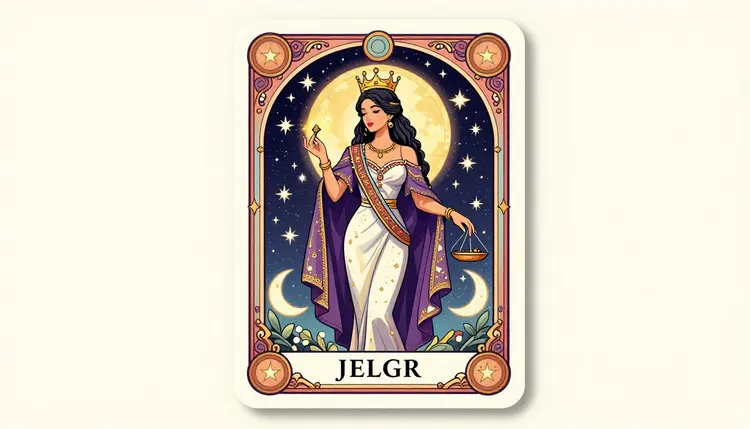
Tarot art is one of the most popular styles people ask an AI image model to produce: a bordered card, a symbolic figure at the center, ornate linework, a title banner at the bottom. Turning that format into a fictional, adult themed deck is a natural next step for anyone building a personal NSFW tarot set, but most of the 488 models in Picasso IA's catalog will not do it. They apply a content filter, and an adult prompt gets refused with a message like "Content Not Supported by This Model."
Recraft V4.1 Pro is different. It is one of six models in Picasso IA confirmed to generate adult content directly, without a safety filter blocking the request: Recraft V4.1 Pro, Seedream 4.5, Qwen Image 2, Picasso Image Editor Pro, Picasso Video, and LTX 2.3 Pro. No other model in the catalog is confirmed to work this way, so if a tarot prompt gets flagged elsewhere, one of these six is the actual fix, not a rewritten prompt.
For a tarot card specifically, Recraft V4.1 Pro's illustration leaning output style is the reason it is the pick of the six for this project rather than, say, a photorealistic model. A tarot card reads as an illustration, not a photo, and Recraft V4.1 Pro's tendency toward clean composition and structured linework maps more naturally onto that format than a model built for photoreal skin and lighting.
Recraft V4.1 Pro is a text to image model available in the toolkit. Within Picasso IA's six confirmed filter free models, each has a different center of gravity. Seedream 4.5 leans photorealistic. Qwen Image 2 is a versatile general purpose generator that handles a wide range of styles competently. Recraft V4.1 Pro leans toward illustration and design style output: flatter color work, clear shapes, and compositions that hold together as a poster or a card rather than a photograph.
That matters for a tarot deck because the format has fixed expectations: a vertical rectangle, a decorative border, a single symbolic figure or scene in the middle, sometimes a roman numeral or a card name banner along the bottom edge. Recraft V4.1 Pro tends to keep those compositional elements legible instead of drowning them in photographic noise, which is why it is the better starting point of the six for this specific project, even though Seedream 4.5 and Qwen Image 2 are equally valid confirmed choices for other adult content styles.
None of this means Recraft V4.1 Pro is guaranteed to nail a tarot layout on the first try. It is a general text to image model, not a tarot specific tool, so the border, the banner text, and the exact pose still depend on how the prompt is written. The next section covers the actual generation flow.
- Open the toolkit and select Recraft V4.1 Pro. Go to the toolkit and choose Recraft V4.1 Pro from the text to image models. This step matters because starting on a model that applies a content filter will get the prompt rejected before it ever renders.
- Describe the tarot format first. Write the composition before the character: a vertical tarot card, ornate border, symbolic background elements (moons, roses, swords, cups, whatever suits the card), and a name banner if wanted. Setting the frame first keeps the model from defaulting to a plain portrait.
- Describe the fictional character explicitly as fictional and adult. State that the figure is a fictional adult character, describe her or him in your own words (hair, clothing or lack of it, pose, expression), and never reference a real celebrity, influencer, or public figure by name or by a "looks like" description.
- Pick the card's theme and symbolism. Ground the scene in an actual tarot archetype, The Empress, The Lovers, Strength, The Star, whatever fits, so the composition has a reason for its pose and props rather than being a generic nude with a border pasted on.
- Generate, review, and refine. Run the prompt, check the result against the brief (border intact, pose readable, no unintended text artifacts), and adjust wording or regenerate as needed. If the card needs cleanup or a second pass, Picasso Image Editor Pro can edit the existing image instead of starting over.
Order matters. Recraft V4.1 Pro, like most text to image models, weights earlier words in the prompt more heavily, so lead with the format ("vertical tarot card, ornate gold border") and the archetype before the character details. A prompt that opens with the nude description and adds "tarot card" at the end tends to come back as a portrait with a border added rather than a real tarot composition.
Name the archetype's actual iconography instead of leaving it vague. "The Empress, wreath of flowers, flowing gown falling open, pomegranates and wheat in the background" gives Recraft V4.1 Pro real objects to compose around. "Sexy woman tarot card" gives it almost nothing to work with beyond a generic pose.
Keep the adult content and the fictional framing in the same sentence, not as an afterthought. Something like "a fictional adult woman, bare chested, reclining" reads clearly to the model as a deliberate, adult, fictional request, which is the honest and also the more reliable way to prompt on a model that does not filter for adult content in the first place.
If the first generation comes back close but not quite right, small wording changes usually move it further than a full rewrite. Swap one adjective, add one prop, or specify the pose more precisely, then regenerate. Recraft V4.1 Pro runs fresh each time, so there is no memory of the previous attempt to fight against.
For a full deck rather than one card, keep a consistent style phrase (the same border description, the same color palette words) across every prompt so the cards read as a set instead of unrelated images. Copy that phrase from the first successful card into every card after it.
Every character generated through this workflow must be a fictional adult. That is a hard rule, not a suggestion: no real person's likeness, no public figure, no celebrity, and nothing built to resemble a minor, regardless of claimed age in the prompt. If a description could plausibly be mistaken for a real, named individual, rewrite it as clearly fictional instead.
Recraft V4.1 Pro's lack of a content filter exists specifically for adult fictional content. It is not an exemption from those identity rules, and it is not a workaround for content that any model would refuse for other reasons. Do not use it to try to slip a rejected prompt through under a different model by rewording it to disguise what it is describing.
If a different model in the catalog refuses a tarot prompt with a "Content Not Supported by This Model" message, that is the filter doing its job, not a bug. The message carries the prompt over automatically and points to the confirmed alternatives, so the fix is switching to one of the six models listed above, Recraft V4.1 Pro among them, not rephrasing the same request to try to get past the block on the original model.
Wanting to animate a finished tarot card into a short video clip is a reasonable next step, and Picasso Video and LTX 2.3 Pro are the two confirmed filter free video models for that. The same fictional adults only rule applies there without exception.
Picasso IA gives new accounts free credits to try generation before paying for anything, so a first tarot card or two can be tested without committing money up front. Exact credit amounts and plan pricing change over time, so check pricing for the current numbers rather than relying on a figure quoted elsewhere.
Recraft V4.1 Pro is priced like the rest of the catalog: credits are spent per generation, and a full tarot deck built one card at a time will use more credits than a single test image, so it is worth nailing the prompt structure on one card, as covered above, before running the same setup across an entire deck. The full catalog lists every one of the 488 models available if a different style or a video pass ends up being the better fit for a particular card.
Can Recraft V4.1 Pro actually generate NSFW tarot cards without being blocked?
Yes. Recraft V4.1 Pro is one of six models in Picasso IA confirmed to generate adult content directly, without a content filter refusing the request, alongside Seedream 4.5, Qwen Image 2, Picasso Image Editor Pro, Picasso Video, and LTX 2.3 Pro.
Why did a different model refuse my tarot prompt?
Most models in Picasso IA's catalog apply a content filter and will refuse a prompt flagged as adult, showing a "Content Not Supported by This Model" message. That is expected behavior for those models, not an error, and the fix is switching to one of the six confirmed filter free models rather than rewording the prompt to try to slip past the filter.
Do I lose my prompt when a model refuses it?
No. When a model shows the "Content Not Supported by This Model" message, it carries the prompt over and points to the confirmed alternatives, so switching to Recraft V4.1 Pro or another confirmed model does not mean retyping the description from scratch.
Can I generate a tarot card of a real celebrity or public figure?
No. Every character generated through this workflow must be fictional. Real people's likenesses and public figures are not permitted, regardless of the model used.
What if I want the character to look like a specific real person?
That is not allowed. Describe a fictional adult character in your own words instead, without referencing a real, named individual or using a "looks like" description of one.
Is Recraft V4.1 Pro better than Seedream 4.5 or Qwen Image 2 for tarot cards?
For this specific format, yes, in the sense that Recraft V4.1 Pro leans toward illustration style, structured compositions that suit a bordered tarot card better than a photorealistic model. Seedream 4.5 and Qwen Image 2 are equally valid confirmed filter free choices for other adult content styles, just not the closest match for a tarot card look.
Can I animate a finished tarot card into a video?
Yes. Picasso Video and LTX 2.3 Pro are the two confirmed filter free video models in the catalog, and either can turn a finished tarot card image into a short video clip under the same fictional adults only rule.
How many credits does a NSFW tarot card cost?
Costs vary by model and are spent per generation. Check pricing for current numbers rather than an estimate, since plans and credit amounts change.
Can I edit a tarot card after generating it instead of starting over?
Yes. Picasso Image Editor Pro is built for editing an existing image, including one generated by Recraft V4.1 Pro, so a border fix, a pose adjustment, or a color change can be done as a follow up edit rather than a full regeneration.
Do I need any special settings to make Recraft V4.1 Pro generate adult content?
No special settings or workarounds are needed or supported. Recraft V4.1 Pro does not apply a content filter to adult prompts in the first place, so a direct, clearly written, fictional adult prompt is the correct approach, not a disguised or reworded one.