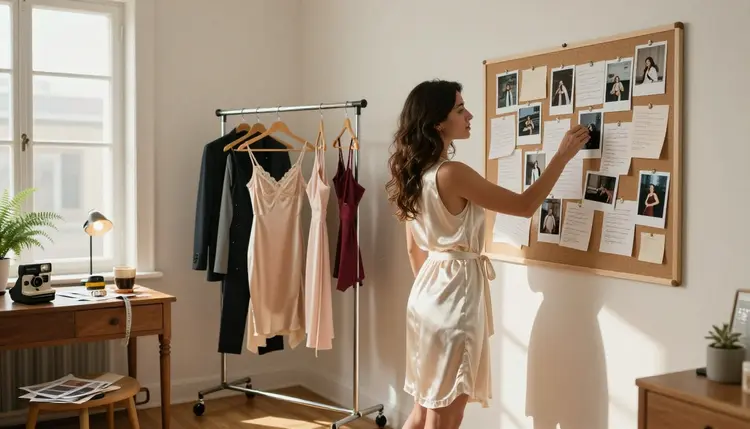
One generated image only needs a good prompt. A photo set, the same character carried through ten or fifteen different shots, in a robe by a corkboard, then a swimsuit by a pool, then a slip dress on a staircase, needs a plan that exists before the first prompt gets typed. Skip that step and the set drifts: the wardrobe stops matching, the light swings from scene to scene, and the character herself starts to look like three different people wearing the same name.
Planning a set is not extra work bolted onto generation, it is what makes generation fast. A locked wardrobe list, a fixed location order and a written light description turn each new prompt into a small edit of the last one instead of a fresh guess, and that is what keeps a fifteen image set looking like one afternoon rather than fifteen unrelated tries.
This page walks through why planning beats improvising, the five steps to build a set outline before opening the Toolkit, how to turn that outline into a mood board, seven specific locations worth planning into a set, the confirmed uncensored models built for this kind of work, and the rules every image on this page follows: 18+ only, fictional adults only, private by default.
A photo set fails in three predictable places: wardrobe, light and face. A robe in one shot becomes a dress in the next because the prompt never wrote down what the robe looked like. Afternoon light in one frame sits next to a night scene two prompts later because nobody decided on a time of day for the set. And the character's face drifts a little wider or a little older with every regeneration because the description keeps getting paraphrased instead of repeated exactly.
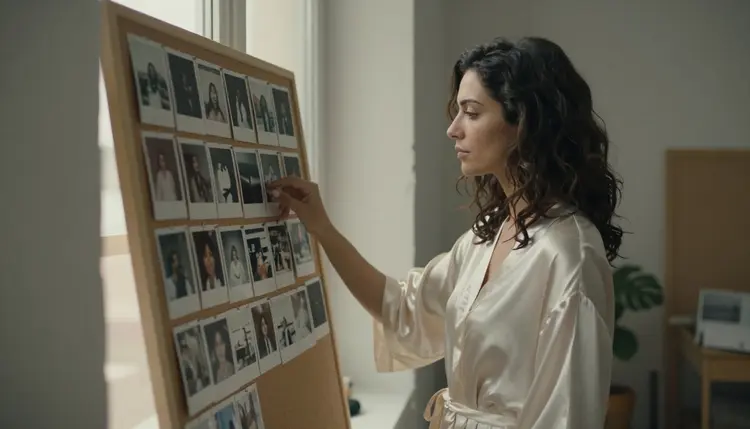
A short planning pass fixes all three before a single credit gets spent. Pin down one wardrobe list, one lighting rule and one fixed face description on a board like the one above, an actual corkboard or just a running note, and every prompt after that becomes a variation on a locked idea instead of a new guess. It also means a session runs faster: instead of regenerating a shot because the light turned out wrong, the plan already ruled that mistake out before the prompt was written.
Seedream 4.5 is the confirmed uncensored model this page is built around, and it rewards this kind of planning more than most: it follows a detailed, specific prompt closely, which means a well planned description carries over from shot to shot almost exactly, while a vague one drifts the same way an unplanned set does.
Building the plan itself takes five steps, done once before the Toolkit opens.
- Pick One Character and Write Her Down. Fix the hair, build, age range and any defining detail as one exact sentence, and reuse that same sentence in every prompt across the set instead of rewriting it each time.
- List Every Location Before Writing a Single Prompt. Decide on the full run of settings first, bedroom, poolside, staircase, bathroom, rooftop, window seat, greenhouse, so the set reads as one afternoon moving through a place rather than a pile of separate ideas.
- Assign One Wardrobe Piece per Location. Match each setting to a specific garment, a camisole to the bedroom, a swimsuit to the pool, so nothing has to be reinvented mid prompt and nothing clashes with the shot next to it.
- Write the Light Once per Time of Day. Decide whether a block of the set is afternoon, golden hour or evening, and carry that one lighting phrase into every prompt in that block instead of describing light fresh each time.
- Generate in Location Order, Not Random Order. Run prompts through the list in the order planned, comparing each new result against the one before it, since a set generated out of order is the hardest one to catch drift in.
A mood board does not need to be fancy. A corkboard with a handful of test Polaroids and a few fabric swatches, or a single note with the same information typed out, works exactly the same way: it is a place the wardrobe list, the lighting rule and the character description live outside of memory, so they do not quietly change between shot four and shot eleven.
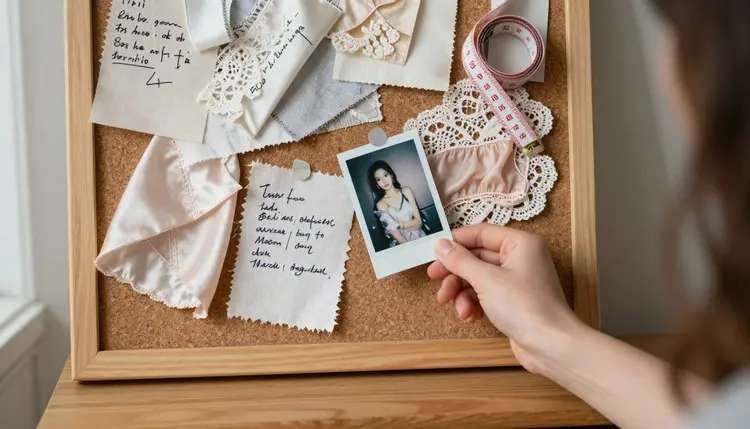
The habit worth building is pinning the test shot next to the note it came from. Generate a first pass with Seedream 4.5, save the result as a reference, and pin it beside the wardrobe and light notes it used. Every shot after that gets compared against the board instead of against memory, and a drifted detail, a strap in the wrong place, a light that reads a shade too warm, shows up immediately next to the reference rather than three shots later.
For anyone starting from an existing reference photo rather than a blank prompt, Picasso Image Editor Pro edits it directly instead of regenerating the whole scene, useful for correcting one detail on a pinned reference before it gets reused across the rest of the set.
The seven scenes below, all generated for this page with Seedream 4.5, show how one plan can move a single character through a full afternoon without a single shot repeating.
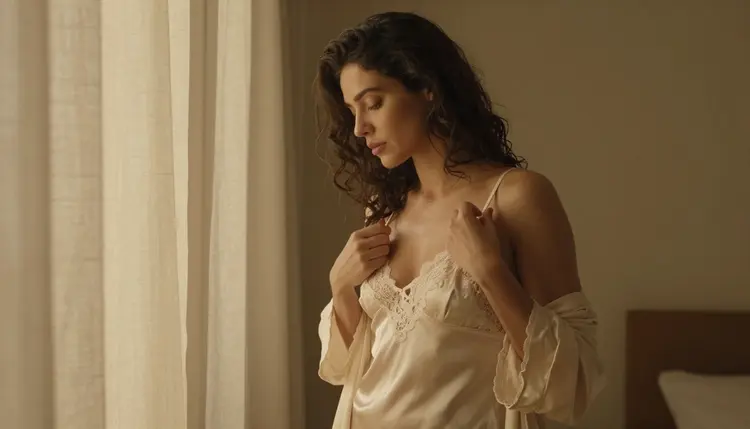
A bedroom mirror shot works well as an opener: soft afternoon light, a lace camisole, a small gesture like adjusting a strap. It sets the wardrobe and the light for the whole set in a single frame, which is exactly what the plan should lock in before moving anywhere else.

Moving to a pool at golden hour trades the soft interior light for a warmer, more saturated one, and the swimsuit replaces the camisole entirely rather than layering over it, a clean wardrobe swap the plan should call out ahead of time instead of leaving it to the prompt to decide.
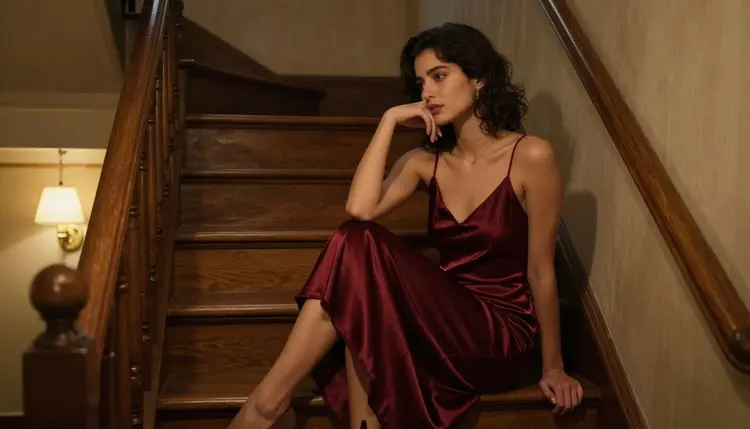
A staircase and a velvet chaise bring the set back indoors for an evening feel, a slip dress standing in for the swimsuit and the light dropping toward lamp tones instead of daylight, the kind of transition that only reads smoothly when the plan already decided the order these scenes fall in.
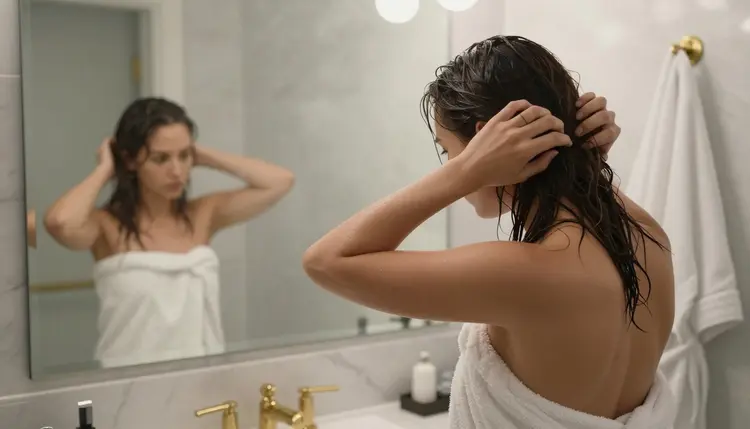
A bathroom mirror scene, a towel standing in for a full wardrobe piece, works as a quieter beat between two busier locations, and it is also the shot most likely to expose a face that has started to drift, since a mirror doubles the angle a viewer checks it from.
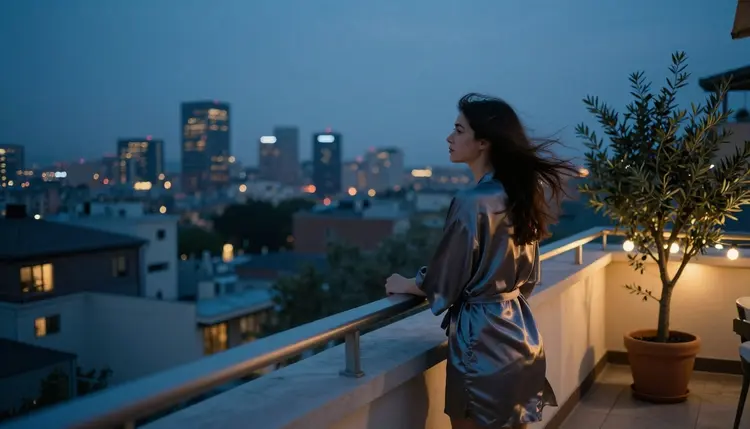
A rooftop at dusk, robe open, skyline behind her, reads as the set's turning point toward something bolder, and it works precisely because every location before it already established the same character, the same build, the same face, so the mood can shift without the identity shifting with it.
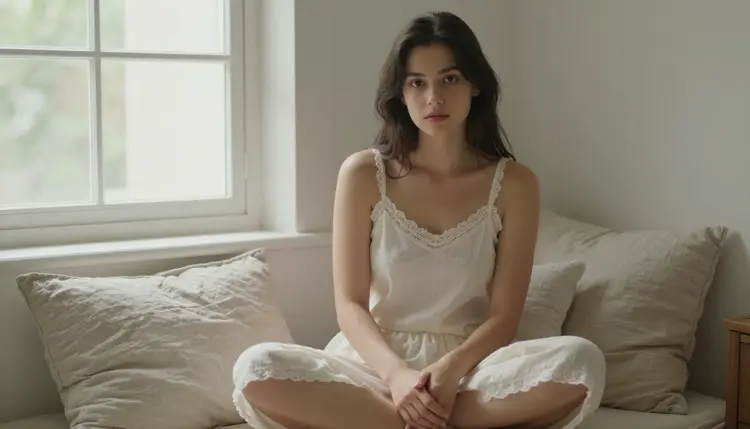
A window seat shot that meets the camera directly is the one place in a set worth breaking the wide shot pattern for: a closer frame and a direct gaze work as a highlight precisely because the six locations before it did not use either.
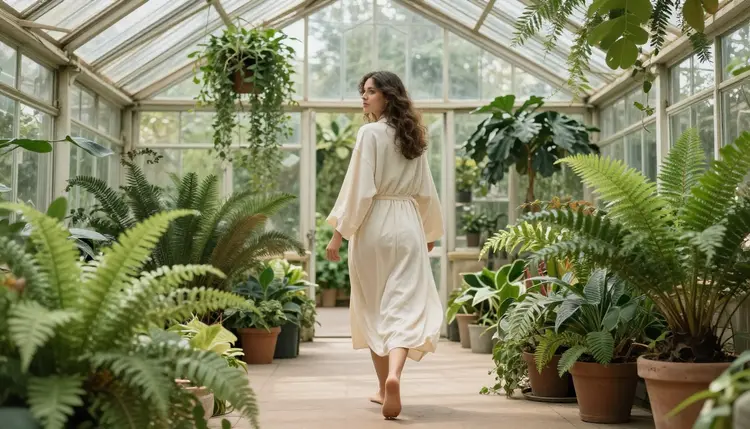
Closing on a greenhouse walk, natural light through glass, greenery instead of a bedroom or a rooftop, gives the set a soft landing point, and it reuses the same robe silhouette the set opened with, a small callback that makes the whole run feel planned rather than assembled after the fact.
Picasso IA runs close to 500 models, and most apply a safety filter that rejects an adult prompt outright, which makes them a poor fit for a planned set that depends on the same wording working across ten or more prompts in a row. Only six models are confirmed to generate NSFW content without that filter stepping in, and Seedream 4.5 is the one this page is built around because it holds a fixed description more precisely across a long run of prompts than the others.
Every other model in the catalog, including names that come up often for this kind of prompt like Seedance 2.5 and LTX 2 Pro, is not confirmed to behave the same way across a planned set. They are untested for this kind of content and worth a try on a single image, but treating either as filter free across a whole ten shot plan is a guess this page will not make. For the generation pass itself once the plan is set, the companion photo set generation guide walks through running it end to end with Seedream 4.5.
Every image in a planned set has to follow the same limits as a single generation, regardless of how many locations or wardrobe changes are involved. Picasso IA's NSFW generation is 18+ only, and every character across every shot in a set, mirror scene, poolside scene or rooftop scene alike, has to read as a clear adult in age, build and context throughout. Nothing that could be read as a minor is allowed at any point in the set, no matter how far the plan has moved from the first shot.
Every character in a planned set must also be fictional. No real, identifiable person, celebrity or public figure can be described, referenced or implied at any location in the set, with or without consent, and a fictional frame never excuses a description that reads as underage.
Generations made on Picasso IA are private by default, which matters more for a multi shot set than for a single image: the board, the notes and every generated frame stay tied to the account that made them and are not surfaced publicly or shared without being asked for.
Why plan a photo set instead of generating one image at a time?
A set generated one image at a time with no plan tends to drift: the wardrobe changes without meaning to, the light shifts scene to scene, and the character's face gets a little different with each new prompt. A short planning pass before the first prompt fixes a wardrobe list, a lighting rule and a fixed character description once, so every generation after that is a small edit of the plan instead of a fresh guess.
How many locations should a planned set include?
Somewhere between five and ten works well for most sets: enough to give the set variety, a bedroom, a pool, a staircase, a bathroom, a rooftop, without so many locations that the wardrobe and lighting rules become hard to track on one board.
Is Seedream 4.5 actually uncensored for this kind of planned set?
Yes. Seedream 4.5 is one of six models on Picasso IA confirmed to generate NSFW content directly, without a safety filter rejecting the prompt, and it holds a fixed character description more consistently across a long run of prompts than most of the catalog, which is exactly what a planned set depends on.
Which other models are confirmed uncensored besides Seedream 4.5?
Five more: Qwen Image 2, Recraft V4.1 Pro, Picasso Image Editor Pro, Picasso Video and LTX 2.3 Pro. Together with Seedream 4.5 that is the full confirmed list across Picasso IA's catalog, and every other model, including Seedance 2.5, should be treated as untested for this kind of content until proven otherwise.
What belongs on a mood board for an NSFW photo set?
Three things at minimum: the fixed character description used in every prompt, the wardrobe assigned to each location, and the lighting phrase used for each time of day block, pinned or written next to a test shot from that location so drift is visible at a glance.
Can I mix indoor and outdoor locations in one set?
Yes, and doing so on purpose, moving from a bedroom mirror to a poolside scene to a rooftop, tends to read better than staying in one type of location the whole way through, as long as the plan decides the order in advance instead of jumping between them at random.
What is the most common mistake in an unplanned photo set?
Rewriting the character description from memory in every prompt instead of reusing the exact same sentence. Even a small paraphrase, a slightly different hair length or build, compounds over ten or fifteen prompts into a character who looks noticeably different by the last shot.
Are the characters in these planning images real people?
No. Every image on this page is 18+ and strictly fictional: no real, identifiable person, celebrity or public figure is depicted at any location in the set, and every character has to read as a clear adult with nothing that could suggest a minor.
Can a planned photo set include video as well as stills?
Yes. Picasso Video and LTX 2.3 Pro are the two confirmed models for adult motion, and both can pick up the same wardrobe, setting and lighting notes from a planned set's board and carry them into a moving scene once the stills are locked.
Is my planning board and generation history private?
Yes. Generations on Picasso IA are private by default, and that applies to a full planned set the same way it applies to a single image made on any of the six confirmed models.