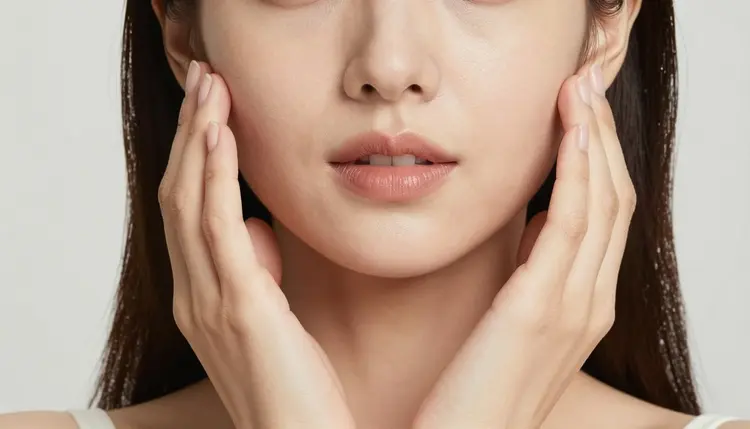
An NSFW AI generator does not get a free pass on hands. Turning off a content filter changes what a model is willing to draw, not how well it draws a hand, a face, or a joint bent the way a human body actually bends. Six models on Picasso IA are confirmed to generate or edit adult content with no safety filter blocking the prompt, and every one of them can still put out six fingers on one hand, an ear at the wrong height, or a wrist folded a direction a wrist cannot fold. Filter free and anatomically correct are two separate properties of a model, and mixing them up is the most common reason someone blames the wrong thing when a keeper comes out with a broken hand.
The real cause sits somewhere else. Hands, faces, and any pose with overlapping limbs are hard for almost every image model in existence, adult content or not, uncensored or not. A crossed arm, a hand resting on a hip, fingers wrapped around an object, these are exactly the shapes that ask a model to reason about depth and occlusion at once, and that is where quality drops across the board, from a filtered flagship model down to a fully open one. An NSFW prompt does not make this worse by being adult; a body in an unclothed pose simply shows more joints and more skin at once, giving more surface area for a small error to land on.
This page treats the problem the way it behaves: broad, across every model, tied to how images render rather than to what content is in them. It covers which models on Picasso IA skip the content filter, why a bad hand or warped face shows up regardless of which one made the image, the five step loop for turning a near miss into a finished keeper, and where Picasso Image Editor Pro fits in once a generation is close but not quite right.
Picasso IA runs 488 AI models. Only six are confirmed to generate or edit NSFW content with no safety filter blocking a fictional adult prompt. Every other model in the catalog, however capable, is not confirmed filter free.
| Model | Type | Role in an anatomy fix |
|---|
| Seedream 4.5 | Image | Photoreal generation; hands still need a check afterward |
| Qwen Image 2 | Image | Holds a dense prompt together; a crowded pose can still misrender |
| Recraft V4.1 Pro | Image | Illustration and anime; stylized hands are not exempt from the problem |
| Picasso Image Editor Pro | Image editing | The fix itself: edits the exact flawed region on a keeper |
| Picasso Video | Video | Motion can carry a small anatomy flaw across every frame |
| LTX 2.3 Pro | Video | Same; check the source still before animating it |
None of these six is more or less likely to render a correct hand than the others by virtue of being filter free. Choosing between them is a question of look and format, photoreal versus illustrated, still versus motion, not a question of which one skips anatomy problems. That is why Picasso Image Editor Pro appears here as a role rather than a style: the step that comes after any of the other five, not a seventh alternative to pick instead of them. All six sit in the toolkit next to the rest of the full catalog, under the same account and credit balance.
The path from a first prompt to a corrected keeper is the same five step loop no matter which of the five generators opened it, and no matter whether the flaw turns out to be a hand, a face, or a joint further down the frame.
- Generate with the model that fits the look you want. Pick Seedream 4.5 for a photoreal result, Recraft V4.1 Pro for illustration or anime, Qwen Image 2 for a prompt with several elements at once, or Picasso Video and LTX 2.3 Pro for motion.
- Check the whole frame, not only the face. Look at every hand, every joint, and any point where two limbs or a limb and an object overlap; a flaw at the edge of the frame is just as common as one in the center and gets missed far more often.
- Name the exact flaw in plain words. Which hand, which finger, what is wrong with it, and what it should look like instead; a specific description gives the next step something concrete to correct rather than a vague sense that something is off.
- Send the image to Picasso Image Editor Pro for a single region edit. Open the toolkit, choose Picasso Image Editor Pro, and describe only the flaw named in the step above; the rest of the image, pose, lighting, and background, stays as it was.
- Compare the result against the original, then stop or repeat. Zoom into the fixed region specifically before calling it done, and if a second flaw remains elsewhere in the frame, run a second pass naming that one flaw rather than trying to fix everything in a single instruction.
Most attempts to fix a bad hand start with regenerating the whole image from the same prompt and hoping the next batch lands better. That throws away everything that was already right, the pose, the lighting, the outfit, the background, along with the one part that actually needed work, and there is no guarantee the next attempt gets the hand right either. It treats anatomy as a generation problem to be solved by luck rather than a correction problem to be solved directly.
The approach here is different because it separates two things that get conflated constantly: whether a model will generate adult content at all, and whether that content renders correctly. The six models above answer the first question, they will not refuse a fictional adult prompt for being adult. None of them, and no model in the wider catalog, answers the second question by default, since rendering a hand correctly is a hard problem for the whole field, independent of any content policy. Confusing the two leads to swapping models looking for one that "does hands better," when the fix is editing the specific flaw on an image that is otherwise already close.
That is the role Picasso Image Editor Pro plays, and it is narrow on purpose. It does not compete with Seedream 4.5, Qwen Image 2, or Recraft V4.1 Pro for the better first image; it takes whichever image is closest to a keeper and repairs the one part that missed, without gambling the rest of the frame on a fresh roll. The same logic applies to video: a small flaw on a still frame from Picasso Video or LTX 2.3 Pro reads as more obvious once moving, one more reason to catch it on the still first.
Every image and video generated or edited on Picasso IA, across all six confirmed filter free models and the rest of the catalog, is for adults only, eighteen and over, and every subject must be a fictional character. No real person's likeness, with or without a claimed resemblance, no public figure, and no minor or anyone made to look like one, in any art style. A prompt or an edit instruction that crosses these lines is refused, and attempting one violates the platform's terms.
Filter free describes content type, not permission to ignore this rule. Skipping the content filter means a model will not refuse a fictional adult scene for being adult; it says nothing about whose likeness can appear or how old a character has to read as, and that boundary holds on every one of the six models the same way it holds everywhere else, generation and edit alike.
Outside the six confirmed models, most of the catalog applies its own content filter and is likely to refuse a flagged adult prompt outright. When that happens, Picasso IA shows a "Content Not Supported by This Model" message instead of an image, and it carries the prompt over automatically while recommending the confirmed models instead. Switching to one of the six is the sanctioned move, not rewording the same prompt to slip past the filter that just refused it.
What happens to a finished image afterward is on the person who made it. Local law decides what is legal to generate, and each destination's own rules decide what is allowed to be posted there.
Picasso IA runs on credits spent per generation or per edit rather than a separate subscription tier per model, so a repair through Picasso Image Editor Pro is charged the same way a fresh generation is. New accounts start with free credits, enough to run the five step loop above across more than one image before anything needs to be purchased.
Because an anatomy fix changes only one region of an image rather than producing a new scene from scratch, a second or third pass to correct a remaining flaw costs the same as any other single edit, not a multiple of a full regeneration. That matters here specifically, since the loop above expects at least one edit pass on most keepers, not as a rare exception. Exact credit amounts move as the catalog and the plans change, so current numbers live on pricing rather than printed here where they would go stale.
Does turning off the content filter also fix bad hands and faces?
No. A filter free model will generate or edit a fictional adult scene without refusing it, but that is separate from how accurately it renders a hand, a face, or an overlapping pose. All six confirmed models can still produce a flawed hand; fixing one takes a follow up edit, not a different generator.
Why do hands and faces go wrong on almost every AI image model?
Hands involve many small parts in a huge range of positions, and any overlapping pose asks a model to reason about depth and occlusion at once, which is difficult across the whole field of image models, adult content or not. It is not unique to NSFW generation or to any one model on Picasso IA; it shows up on filtered and filter free models alike.
Which models on Picasso IA are confirmed to generate NSFW content without a filter?
Six: Seedream 4.5, Qwen Image 2, Recraft V4.1 Pro, Picasso Image Editor Pro, Picasso Video, and LTX 2.3 Pro. Every other model in the catalog is not confirmed filter free and may refuse a flagged adult prompt with its own content filter.
What is the difference between fixing a hand with Picasso Image Editor Pro and regenerating the image?
Regenerating produces an entirely new image from the same prompt, putting everything that was already right, the pose, the lighting, the background, back at risk along with the hand that needed fixing. Editing changes only the named region, so a correct pose or background is never gambled again just to repair one part.
Can Picasso Image Editor Pro fix a face without changing the rest of the image?
Yes, that is the point of an edit rather than a new generation. Naming the specific feature, an eye, a jawline, an ear, keeps the change local to that area while the pose, the lighting, and the rest of the face stay as they were in the source image.
What happens if a model refuses my NSFW prompt outright?
The generation stops and a "Content Not Supported by This Model" message appears in place of the image. Picasso IA carries the prompt over and recommends switching to one of the six confirmed models, the intended fix, rather than rewording the prompt to get it past a filter.
Does the anatomy problem also affect NSFW video, not just images?
Yes. Picasso Video and LTX 2.3 Pro are the two confirmed filter free video models, and a small anatomy flaw on a still frame reads as more visible once carried across motion. Checking the still for hands and joints before animating it catches most of what would otherwise show up moving.
Can I use Picasso Image Editor Pro on an image I made outside Picasso IA?
Yes. The editor works on any uploaded image, not only one generated on the platform, as long as it follows the same rules as everything else here, a fictional adult character, never a real person or anyone resembling a minor. Upload it through the toolkit and select Picasso Image Editor Pro.
Can I generate or fix an image of a real person or a celebrity?
No. Every subject on Picasso IA must be a fictional adult character. A real person's likeness, including a celebrity or any other public figure, is not permitted, with or without a claimed resemblance, and an instruction that attempts it is refused and violates the platform's terms.
How much does fixing a hand or face cost, and are there free credits?
An edit through Picasso Image Editor Pro costs credits the same way a fresh generation does, and new accounts start with free credits, enough to try the five step loop across more than one image first. Exact amounts are kept on pricing rather than stated here, since plans change more often than this page does.