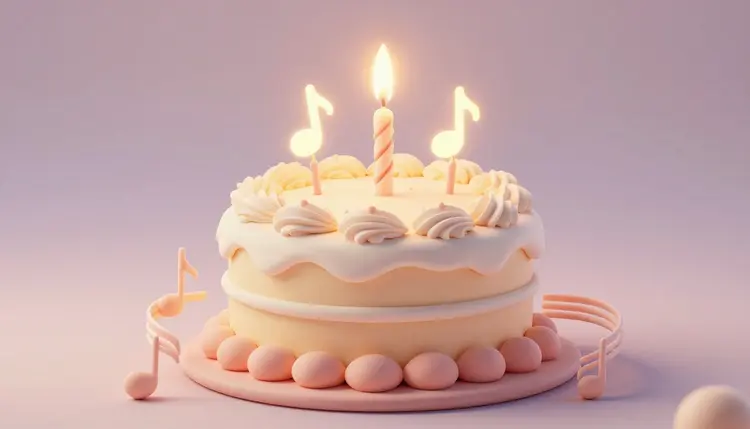
A birthday card says happy birthday to someone you love. A personalized AI birthday song says it back to them in a melody built around their name, their year and the joke only your group chat understands. Making that used to mean hiring a jingle writer or fumbling through a guitar cover yourself. Now you type the details into a prompt and get back an actual sung track in a couple of minutes, not a card set to a beat.
Everyone has opened a generic birthday video with a stock template and a name badly stitched onto a title card. It reads as effort spent on the wrong thing. A song built specifically around one person reads differently, because the details could not belong to anyone else: the year they turned, the nickname only three people use, the trip you took together, the terrible pun about their job.
Picasso IA runs several models built for exactly this in the ai-music-generation category of the 488-model catalog, including minimax's music-2.6 and music-2.5 and Google's lyria-3-pro. Each takes a written brief, plus lyrics you supply or ask it to draft, and returns a full track with a sung vocal and real instrumentation, not a synthesized voice reading words over a loop. New accounts start with free credits, which is enough to try two or three genres on the same lyrics before you pick a favorite.
The model does the composing, but you still write the words, and the words are where a birthday song stops sounding generic. A name dropped into an otherwise stock verse feels bolted on. Specific, small, true details woven through the whole verse feel written for that person, because they are: the coffee order, the show they will not stop talking about, the year that number on the cake actually lands on.
Keep sentences short enough to sing. Lyrics are performed on a clock, and a line with too many syllables gets crushed or slurred to fit the bar, which is the single most common reason a generated song sounds off. Read your draft out loud at a normal singing pace before you submit it; if you run out of breath, so will the vocal.
- Lead with the name early: put it in the first verse or the chorus, not buried at the end, so it lands the first time someone listens.
- Use one real detail per line: an inside joke, a place, a habit, rather than stacking three facts into one crowded sentence.
- Keep the rhyme scheme loose: a forced rhyme reads worse than an honest line that does not rhyme at all, and the model handles near-rhymes fine.
- Write the chorus as the one line they will remember: short, singable, repeated, built around the name or the wish itself.
- Match the tense to the moment: present tense for who they are now lands warmer than a resume of the past year.
Genre carries as much of the personality as the lyrics do. The same words about turning thirty read completely differently over a stripped-down acoustic guitar than over a synth-pop beat, and naming the genre and instrumentation in the prompt is what steers the model toward one or the other.
| Style | What to put in the prompt | Good for |
|---|
| Acoustic folk ballad | fingerpicked guitar, warm male or female vocal, gentle, sincere | A parent, a partner, a quiet thank-you |
| Upbeat pop anthem | bright synths, four-on-the-floor beat, catchy singalong chorus | A close friend, a big group celebration |
| Disco-funk | funky bassline, rhythmic guitar, horns, high energy | A milestone birthday, a party opener |
| Lo-fi hip-hop | mellow piano, vinyl texture, laid-back beat, chill vocal | A low-key friend, a video call surprise |
| R&B ballad | smooth vocal runs, warm bass, soft drums, intimate mix | A romantic partner, a slow reveal |
| Cinematic orchestral | strings, swelling brass, dramatic build | A big group video, a milestone montage |
The workflow below turns a name and a few facts into a finished track you can send the same day. None of it requires singing ability, an instrument or editing software, only the details you already know about the person.
- Collect the real details first. Their name, the age or milestone, an inside joke, a shared memory, the thing they will not stop talking about lately. Write them as a short list before touching a prompt.
- Draft lyrics with structure tags. Write a verse and a chorus using [Verse] and [Chorus] tags, working the name and details into the verse and a short, repeatable line into the chorus.
- Pick a model and a genre in the Toolkit. Open the Toolkit, choose a music model such as music-2.6 or lyria-3-pro, and describe the genre, mood and tempo in the style prompt.
- Generate two or three takes. Run the same lyrics through more than one genre or model, since the same words can land very differently depending on the arrangement underneath them.
- Listen back and pick the winner. Play each version through once without judging, pick the one that actually feels like a gift, then download it to send.
A finished song file is not yet a birthday gift; it is a file on your phone until it reaches the person it was written for. The simplest delivery is the most effective one: send the audio file directly, in the moment, with a short message about why you made it. A generated track lands harder as a surprise sent at midnight than as a link buried in a group chat three days later.
For a bigger moment, the song works as a soundtrack rather than the whole gift. Pair it with a slideshow of photos, play it at the start of a video call before anyone says anything, or use it as the backing track under a short compilation clip. The song lyrics to music workflow covers the same lyrics-to-track process in more depth if you want to iterate the demo further before the reveal, and a short, punchy version of the same idea sits in the jingle maker workflow for a fifteen-second sting instead of a full track.
Send the plain audio file first, before any video or slideshow around it. A song stands or falls on its own in the first ten seconds, and wrapping it in visuals before you know it works just hides whether the lyrics actually landed.
An honest page says where this stops being magic. Four places matter here:
Unusual names, especially ones outside common English phonetics, sometimes get mispronounced or stressed on the wrong syllable in the sung vocal, so listen to the exact line with the name before sending it to anyone. Long or complicated details compress badly into a singable line; a joke that needs three sentences of setup will not survive being crammed into one bar of music, so simplify before you write it into the lyrics. Generation is genuinely a few takes, not one perfect result on the first try, and budgeting time for two or three passes matters more than picking the perfect prompt on attempt one. And a generated vocal, however warm, is still a synthetic performance: for someone who would specifically want your own singing voice on a recording, however rough, no model replaces that.
None of this argues against using it. It argues for listening to the exact take before you hit send, the same way you would proofread a card before sealing the envelope.
Can I put a real name and inside jokes into an AI birthday song?
Yes, that is the entire point of the workflow. You write the lyrics yourself, including the person's name, an inside joke, a shared memory or any other real detail, and the model sets those exact words to music with a sung vocal. The generator does not swap in generic placeholders; it sings whatever text you give it, so the specificity comes from what you write, not from the model guessing at it.
Which AI model should I use for a birthday song?
There is no single right answer, which is the case for trying more than one. Minimax's music-2.6 is free to start with and handles full songs with structure tags well, music-2.5 is a close sibling worth comparing on the same lyrics, and Google's lyria-3-pro supports longer, more structured arrangements up to three minutes. Running the same lyrics through two of these and comparing the results costs only a couple of minutes and usually settles the question fast.
Do I need to know how to write song lyrics?
No, though a little structure helps. Short lines, one detail per line, and a repeatable chorus line all set the model up to sing something that scans naturally, but you do not need rhyme scheme knowledge or songwriting training. Several music models can also auto-generate lyrics from a style description if you leave the lyrics field empty, which is a reasonable starting point to edit rather than write completely from scratch.
How long is a generated birthday song?
Length depends on the model and how much lyric content you supply. A short version with one verse and a chorus can land under a minute, while a full arrangement with two verses, a chorus and a bridge typically runs closer to two or three minutes. If you are sending it as a phone message rather than a background track, a shorter, tighter song usually lands better than a long one nobody finishes listening to.
Can the song sound like a specific genre the person actually likes?
Yes, and naming the genre precisely is what gets you there. Describe the genre, the lead instruments, the tempo feel and the vocal style in plain language, the same way you would describe a song to a friend, rather than leaving it vague. A prompt like acoustic folk ballad, fingerpicked guitar, warm male vocal, gentle and sincere produces something recognizably different from bright synth-pop with a catchy singalong chorus, using the exact same lyrics underneath.
What if the AI mispronounces the name?
It happens more often with uncommon names or ones with unusual spelling, and the fix is usually a respelling rather than a different model. Try writing the name phonetically in the lyrics, generate again, and listen specifically to that one line before judging the whole take. If a name consistently comes out wrong across attempts, a simpler nickname or a phonetic approximation in the lyrics often solves it without changing the meaning for the listener.
Can I turn the song into a video to send instead of just audio?
Yes, once you have a finished track you like, it pairs naturally with a slideshow of photos or a short video, and the song lyrics to music page walks through that pairing in more detail. Many people still send the raw audio first, though, since a song stands on its own and a video wrapped around it can end up feeling like a bigger production than the moment calls for.
Is a personalized AI song better than just buying a gift?
It is a different kind of gift, not a replacement for one. A personalized song adds something a store-bought item cannot, which is a piece of media built specifically for that person and impossible to buy for anyone else. Most people use it alongside a regular gift rather than instead of one, as the thing that gets played once and remembered long after the object it came with.
How much does generating a birthday song cost?
Generations are paid in credits, and the exact cost depends on which model and settings you choose, so a specific number here would go stale. New accounts start with free credits, which covers trying a few genres and takes before you spend anything, and current plans and their credit allowances live on the pricing page, which is the only place worth trusting for numbers.
Can I use the same lyrics to generate multiple versions before choosing?
Yes, and it is the recommended approach rather than a workaround. Run the identical lyrics through two or three different models or genre prompts, since the arrangement changes how the words land far more than small lyric edits do. Comparing full takes side by side, rather than tweaking one prompt repeatedly, is usually the fastest way to land on the version that actually sounds like a gift.
A name, an inside joke and a couple of real details are all it takes to start. Open the Toolkit and turn them into a song before the candles are even out, and if a generation ever comes back broken, support is a direct line to a human who can help.